


THE VANTAGE
Issue 132 | May 19, 2026
Why your summer drive will still be expensive
Even on the quite days, the pump isn’t catching a break.
In today’s email:
- Why pump prices stay high even when crude drops
- The 2027 number that matters more than the headlines
- We’re planning a long drive this summer. Here’s how we’re budgeting for it.
- Markets hit a record. Then they didn’t. Here’s the read.
The Scoop
The pump always gets there last
If you’ve filled up anywhere in Canada this spring, you already know the punchline. The national average is sitting around 193 cents a litre as of mid-May. Toronto drivers have been bumping up against the $2 mark for weeks. Vancouver is well past it. The federal government suspended the excise tax on April 23, which knocked roughly ten cents off. And yet the receipt at the pump still looks like a sucker punch.
Here’s what’s actually going on.
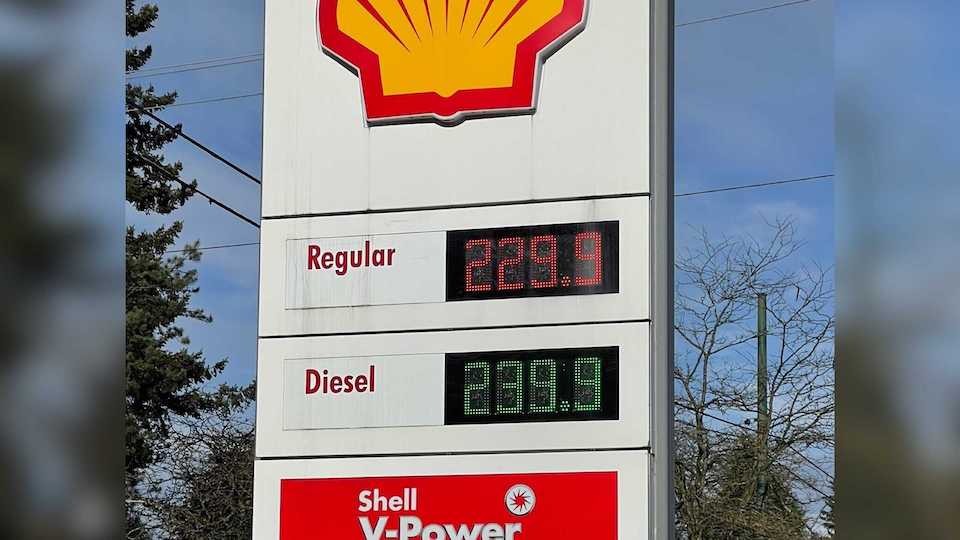
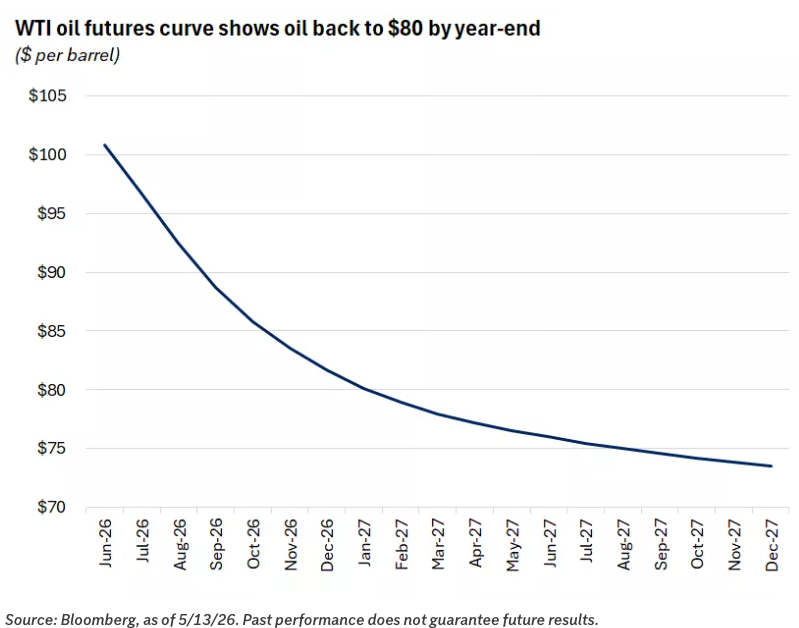
Crude oil is the headline. It moves with the news — a war here, a ceasefire there, a surprise OPEC+ announcement on a Sunday afternoon. Just last week crude punched back above $100 a barrel after Iran rejected a ceasefire proposal, then settled back into the high $90s on Monday after the White House pulled back planned strikes. That kind of choppiness is the new pattern. Up on the bad headlines, down on the good ones, and never quite getting back to where it started.
But the price you pay at the pump isn’t really about what crude does on any given day. It’s about three things that don’t move nearly as fast:
Refining capacity. Crude isn’t gasoline. It has to be processed. North America has been running near the top of its refining capacity for a few years now, and very little new capacity is coming online before the back half of 2027. When demand spikes — say, summer driving season — refineries can’t just turn the dial up. That bottleneck shows up at the pump as a price floor, even on the days when crude drops.
The lag. When crude eases, retailers don’t drop their prices the next morning. It typically takes two to four weeks for a meaningful crude move to flow through to the pump. So on the weeks where the news gets better, you usually have to wait before the receipt does.
The base rate. This is the one most people miss. Even if the war ended tomorrow and crude went back to where it was a year ago, gas prices wouldn’t follow it all the way down. Refining margins, taxes, distribution costs, and the broader supply picture have all moved up together. The new normal is higher than the old normal — probably until refining capacity catches up sometime in 2027.
What does this mean for the summer ahead? Most analysts expect Canadian pump prices to settle into the $1.75 to $1.90 range through July and August. Better than April. Still not what you remember from a few years ago.
If you’re planning a big drive, a stretch of summer at the cottage, or an RV trip out east, build the new number into your budget honestly. Don’t plan around what gas used to cost. Plan around what it actually costs now.
This is the kind of thing we think about in the planning conversations we have with you. Not just the headline-level stuff — markets, portfolios, what the new Fed chair is going to do — but the actual cost of the life you’re living. Travel, fuel, groceries, the things that quietly shift the math on what your year looks like. Those numbers belong in a plan too.
Beyond the Portfolio
Tofino, eventually
We’re finally doing the drive this summer.
I have been hearing about Tofino for years and we’re finally going to make the trip out to the west coast of Vancouver Island.
I am, of course, also the guy who just wrote four hundred words about gas prices. So I’ve done the math on the drive too. We’re heading up to Whistler first, then out to Tofino, and looping back through Vancouver — round trip somewhere around 1,800 kilometres. We’re taking the truck because we’re bringing bikes and most of the gear that makes a trip like this actually fun. At today’s prices, that’s somewhere in the neighbourhood of $500 in fuel, give or take depending on how many side trips my little guy talks us into.
Worth it? Easily. The point isn’t the cost. The point is to know the cost, plan for it, and then stop thinking about it.
Whether your summer drive is up to the cottage, out to the coast, or somewhere you’ve been meaning to get to for a decade — the math is the same. Know the number. Build the room for it. And then get out of your own way long enough to actually enjoy the thing you worked to afford.
That’s most of what good planning is, honestly.
Market Minute
Since We Last Spoke
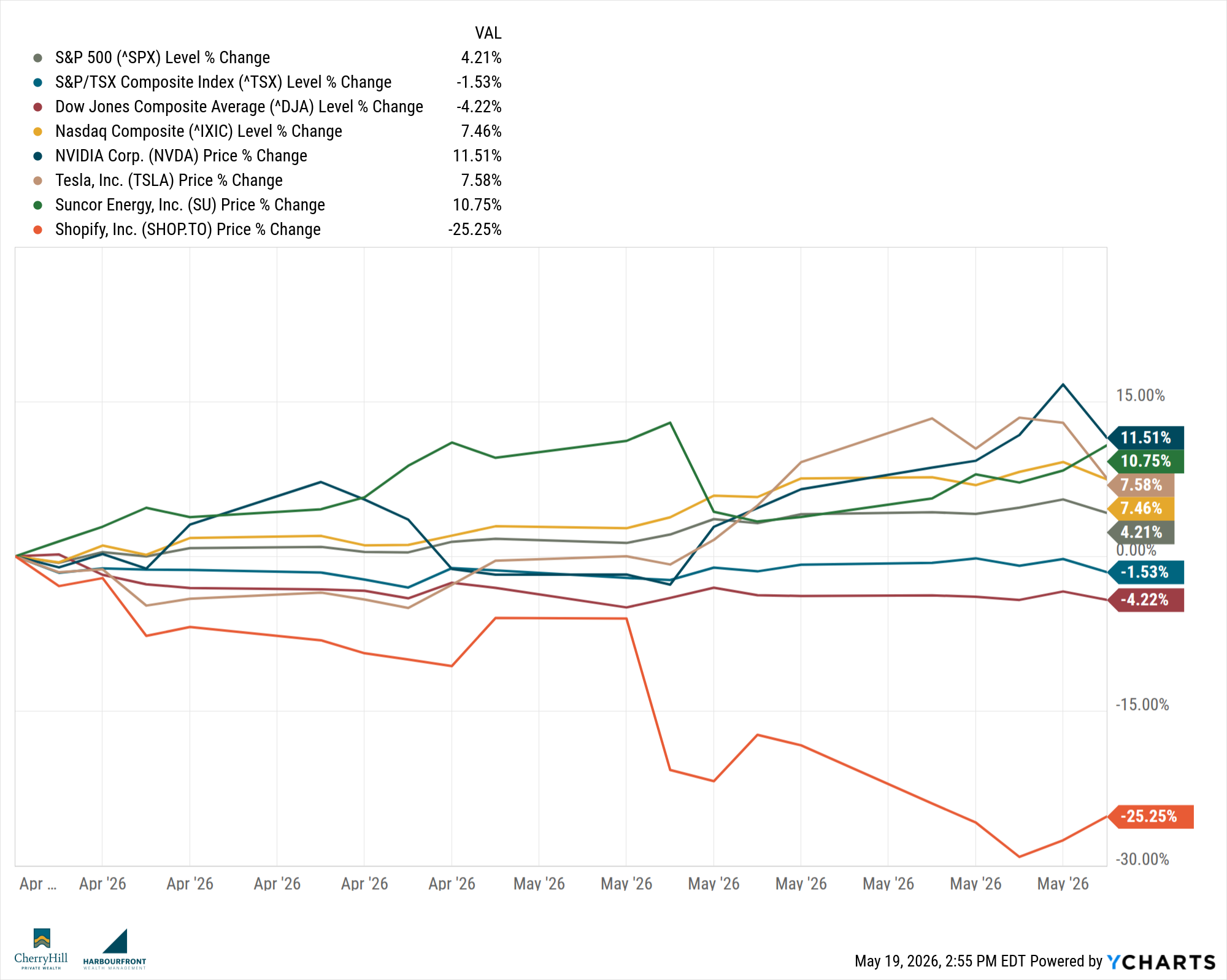
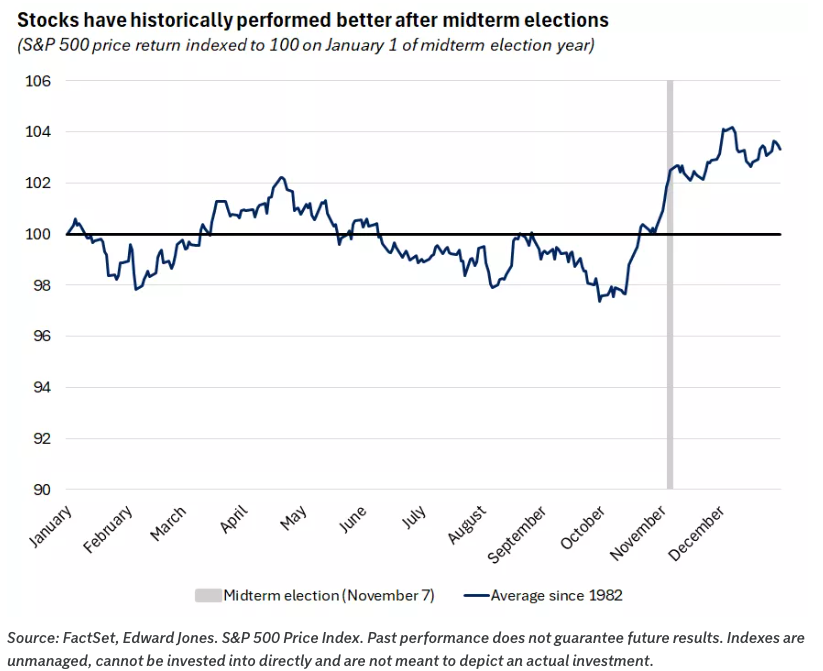
It’s been a busy stretch. The S&P 500 climbed to an all-time record above 7,500 before pulling back over the last two sessions, with chip stocks leading the decline as investors reassessed how much of the AI rally was getting ahead of itself. The TSX touched 34,300 mid-week before dropping nearly two percent on Friday on the back of a global bond selloff and stalled US-Iran talks.
Crude oil briefly punched back above $100 a barrel after Iran rejected an early ceasefire proposal, then eased back into the high $90s on Monday after the White House signalled it was pulling back planned strikes. The ceasefire formally holds, but the economic standoff hasn’t fully unwound — the Strait of Hormuz situation continues to pulse through energy markets.
Bond yields are doing the heavy lifting on the inflation story. The US 10-year Treasury yield hit 4.61% — its highest in a year — and the 30-year is hovering near 5.15%, close to a 2023 high. April US inflation came in hot at 3.8% year-over-year, the highest reading since 2023, largely driven by the run-up in energy. Futures markets are now pricing roughly a 28% chance of a Fed rate hike by December — a sharp reversal from the cuts everyone was penciling in earlier this year.
A couple of other notes worth flagging. Jerome Powell’s term as Fed chair ended last week; Kevin Warsh was confirmed as his successor. First-quarter earnings have been quietly strong — S&P 500 profits are tracking 28% growth year-over-year, the best since late 2021. And in Canada, the Bank of Canada’s April minutes showed policymakers comfortable staying patient on rates, even as the inflation picture gets noisier.
What We’re Watching
The durability of the ceasefire. Iran has retained the option to selectively close the Strait, and markets are taking every headline at face value right now. Expect volatility on any news out of the region.
Nvidia earnings on Wednesday. The AI trade has been the engine of this rally, and after a rough two days for chip stocks, this report is the closest thing to a referendum on whether the leadership cracks or holds.
The Bank of Canada’s next move. The April minutes were patient; the May inflation print and labour data will tell us how long patience lasts.
Bond yields. If the 10-year keeps creeping toward 5%, that puts real pressure on equity valuations and on anything rate-sensitive — utilities, REITs, long-duration tech. We’re watching the path, not the level.
Final Thought
The news will keep moving. Crude will go up, crude will come down, and the headline writers will find a way to make every move sound urgent. None of that should change the way your plan is built.
What we focus on — and what we hope you do too — is the everyday math underneath the headlines. The cost of the trip. The cost of the summer. The cost of the next ten years of the life you’re actually living.
If we’ve done our job, you don’t have to watch the news to feel okay about your money. You just have to live your life and call us when something changes.
Have a good week!
As always, if anything in this email sparked a question or you want to talk through how any of this applies to your situation, just reply. We read every one.
Until next time, stay informed and strategically invested!
Trevor