


THE VANTAGE
Issue 130 | March 24, 2026
When Everything Feels Like a Lot
War in the Middle East. Rising prices. Policy whiplash. Here’s what we’re thinking — and what we’re doing about it.
In today’s email:
- I took a step back from the headlines. Did the plan hold? (Spoiler: it did.)
- Why the worst-feeling moments in history rarely were — and what that means for your portfolio right now
- Where oil, equities, and the Iran situation actually stand this week
- The number from 2022 that says more than we ever could about how we build portfolios
Beyond the Portfolio
Step Away From the Noise
I just got back from a with my family. A week of no headlines, no market updates, deliberately not refreshing anything.
It was exactly what we needed.
I say this not to rub it in — but because it matters. One of the things we think about a lot at Cherry Hill is what it looks like to actually live the financial life you’ve built. Not just protect it. Not just grow it. Actually live it.
That means there have to be weeks where you’re fully present somewhere else, and the plan is still working in the background.
If you’re feeling like you can’t step away right now because things are too uncertain — that’s worth a conversation. A good plan should hold while you’re on your ski vacation. That’s the whole point.
The Scoop
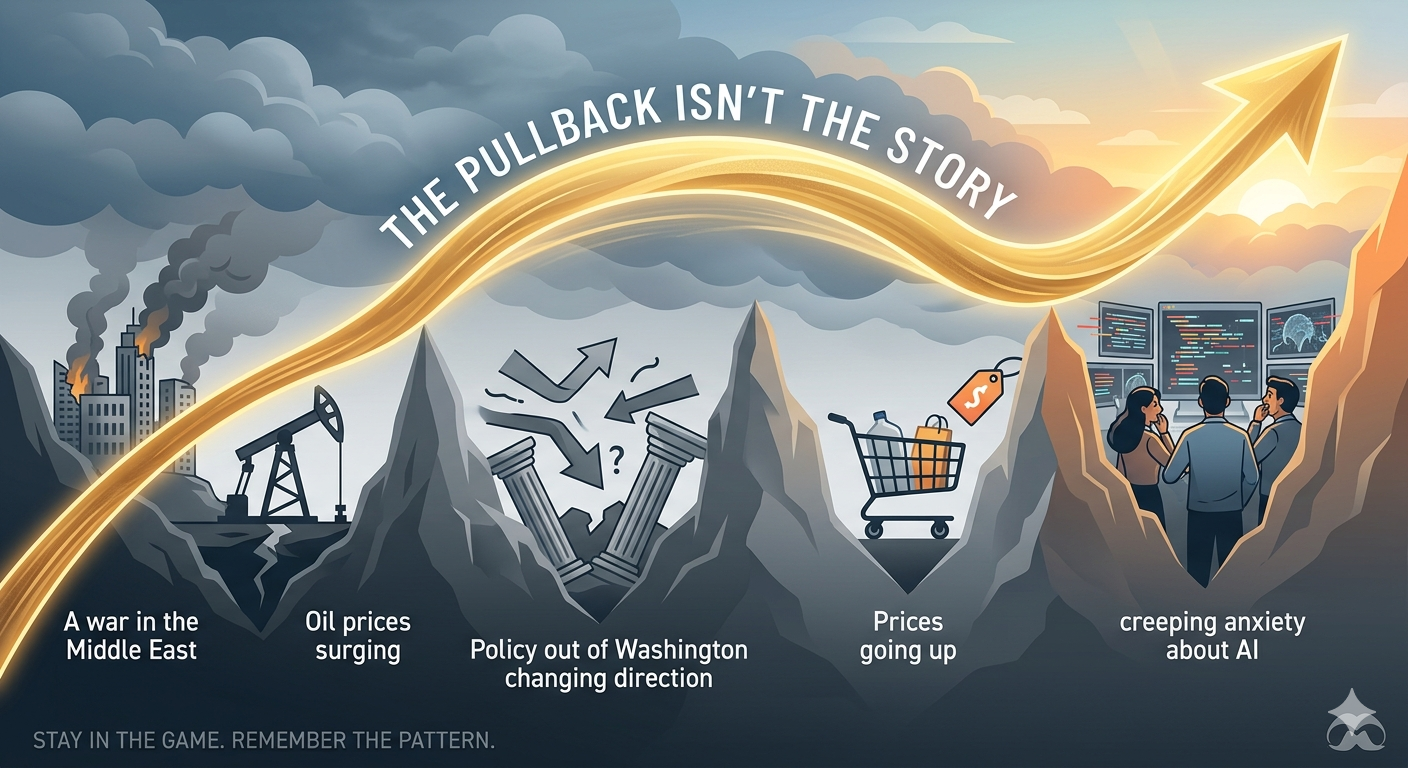
The Pullback Isn’t the Story
Let’s be honest about where we are.
A war in the Middle East. Oil prices surging. Policy out of Washington that changes direction week to week. Prices going up at the grocery store, the gas pump, pretty much everywhere. And a creeping anxiety about AI — what it means for jobs, for industries, for the economy your kids are about to enter.
It’s a lot. And if you’re feeling some version of “the world is on fire right now,” you’re not wrong to feel it.
But here’s something worth sitting with: that feeling — that we’ve reached a point of no return, that things are irreversibly broken — has shown up before. Many times. And every time, the arc eventually bent back.
Think about it. There have been moments in history that looked genuinely hopeless. Where the weight of the evidence suggested things couldn’t possibly get better. And then, slowly or suddenly, they did. Not because people stopped worrying. Not because the problems weren’t real. But because the pullback was never the whole story.
Markets work the same way. They don’t move in straight lines. They move in arcs — sometimes a long, painful arc — but the direction over time has been consistently forward for anyone patient enough to stay in the game.
That’s not a promise. It’s a pattern. And it’s one worth remembering right now.
What 2022 tells us
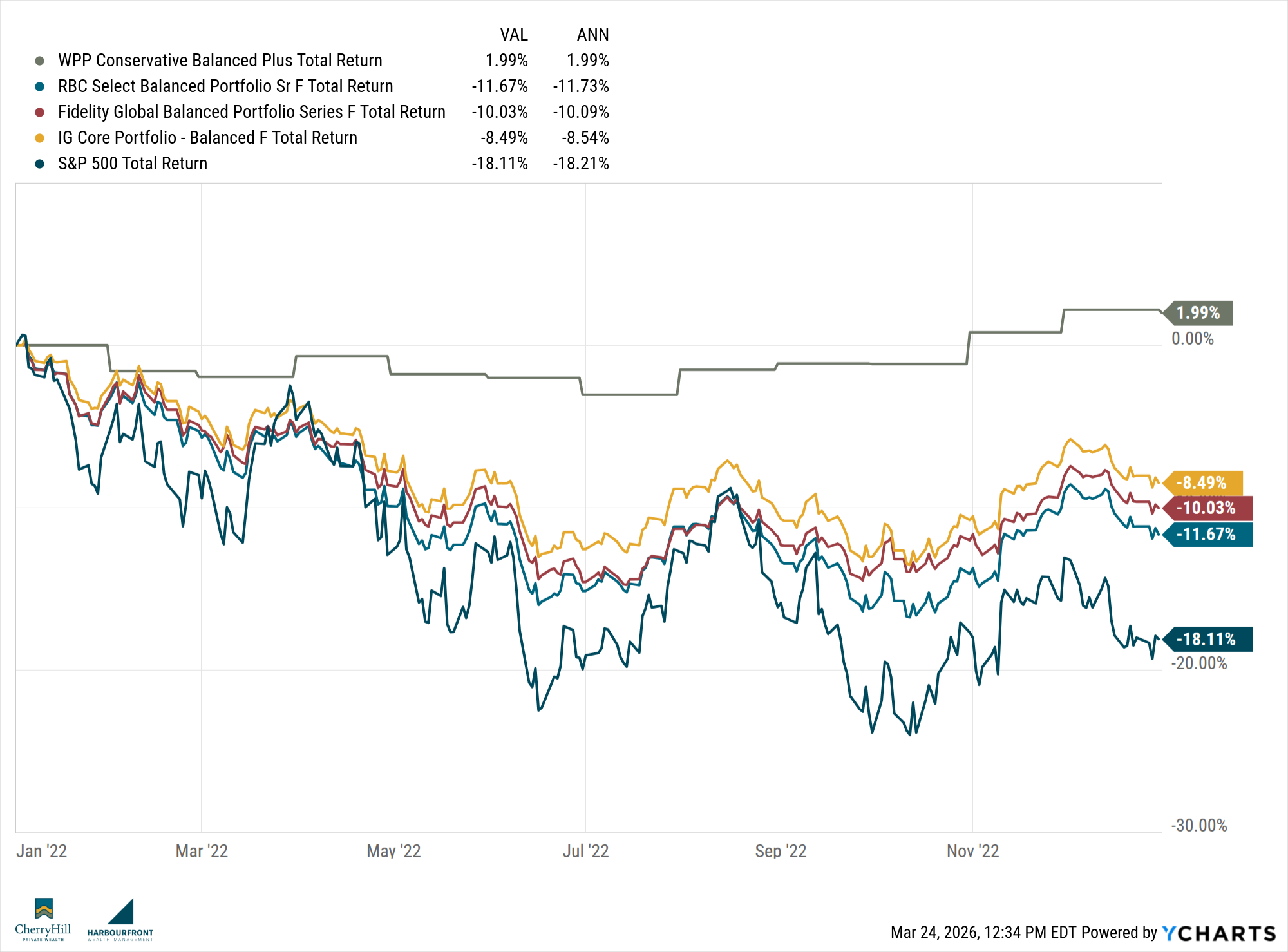
We went through a version of this not long ago. In 2022, the S&P 500 was down roughly 18% for the year. Inflation was hot. Interest rates were rising fast. The mood was genuinely dark.
Our balanced Watermark Private Portfolio was up 1.99% that same year.
That wasn’t luck. It was the direct result of how we build portfolios — with meaningful exposure to private credit, real assets, and alternative strategies that don’t move in lockstep with public equity markets. The diversification isn’t decorative. It’s structural. And it shows up exactly when you need it to.
We’re not suggesting the current environment won’t affect portfolios at all — it already has in places. But when we say we build for moments like this, 2022 is what we mean. You can see it in the numbers.
What we’re doing right now
We’re not making reactive moves. We’re doing what we always do: looking at your full picture, stress-testing the plan against different scenarios, and making sure the portfolio is positioned for the environment we’re actually in — not the one we had six months ago.
If anything changes materially and warrants a direct conversation, we’ll reach out. You won’t have to come to us.
The plan holds. You don’t have to watch this every day. That’s our job.
Market Minute
Since We Last Spoke
The Iran conflict entered its fourth week with markets continuing to price in a volatile and uncertain outlook.
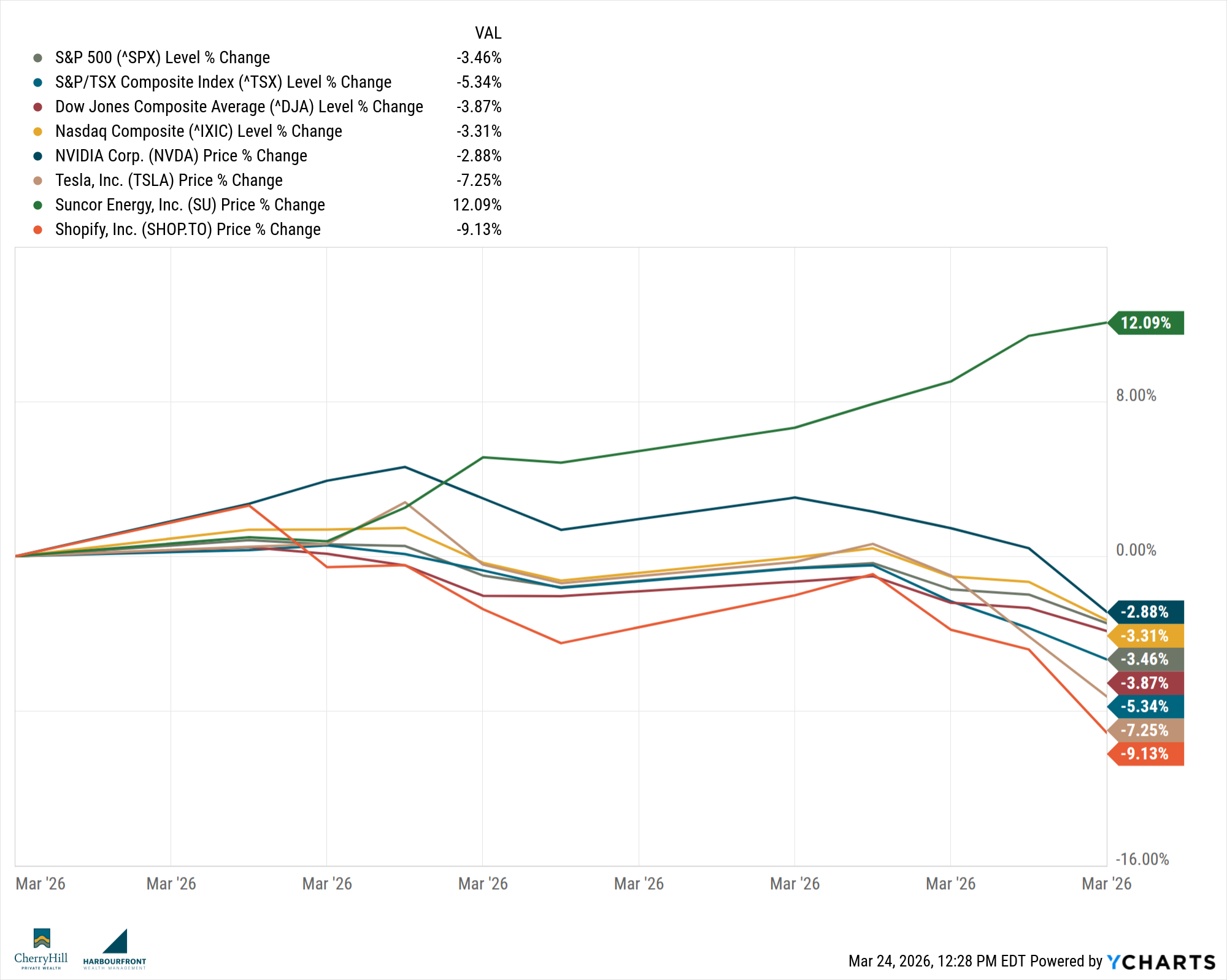
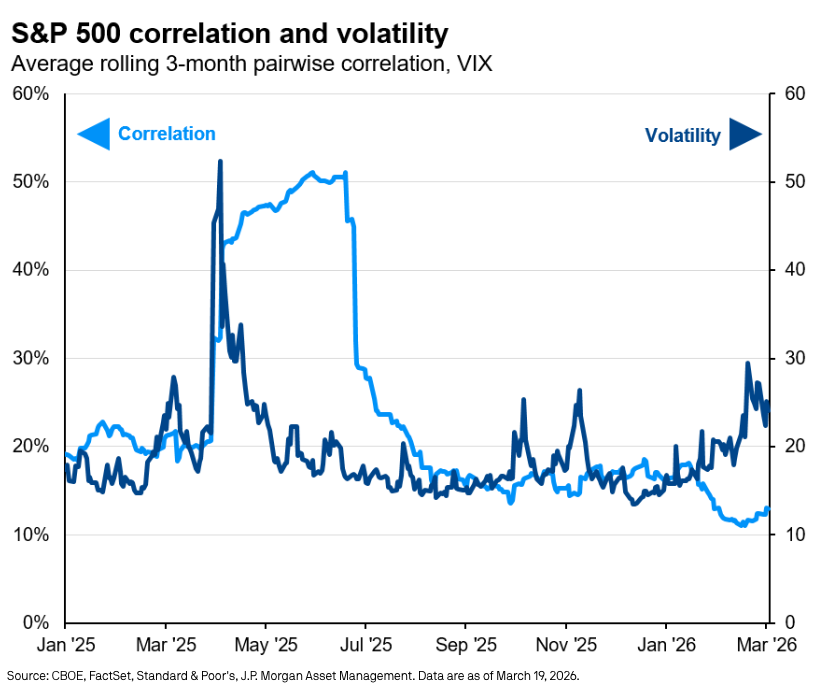
Oil has been the most direct signal throughout. Brent crude climbed roughly 30% in the first three weeks of the conflict, rising from around $81 per barrel in early March to a high near $112 last Friday. Equity markets followed a similar path downward — the S&P 500 peaked near 7,000 in late January and pulled back to around 6,580, roughly a 6% decline. The Dow fell four consecutive weeks, its longest losing streak in three years. North American markets broadly felt the pressure, though the TSX showed relative resilience given Canada’s position as an oil-producing economy — Canadian energy companies benefited as crude prices rose.
The broader concern has been what sustained $100+ oil means for inflation and central bank policy. The European Central Bank has already postponed planned rate cuts and revised its inflation forecasts higher. Closer to home, the same question is live: does the Bank of Canada hold rates longer than expected if energy-driven inflation re-accelerates?
What We’re Watching
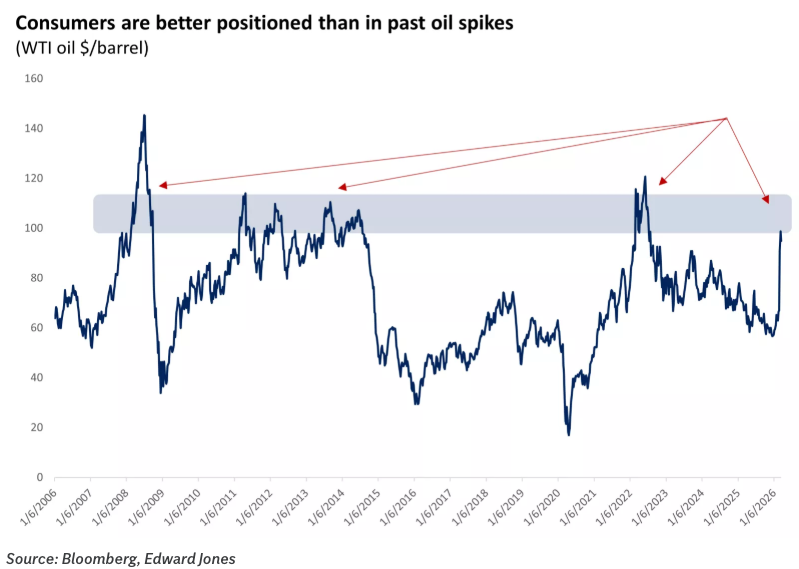
On Monday, President Trump posted on Truth Social that the US and Iran had held “very good and productive” conversations, and that he was pausing strikes on Iranian energy infrastructure. Markets rallied sharply — the Dow jumped over 600 points, Brent crude fell more than 10% to close below $100. By Tuesday morning, some of those gains have tempered. Iranian state media pushed back on the characterization of any direct talks, and oil has partially retraced, trading around $101–103 this morning.
The situation remains fluid and headline-driven. An Israeli official noted Monday that a deal “does not appear tangible right now.” Reports this morning suggest Iran has begun charging transit fees of up to $2 million per vessel on some commercial shipping through the Strait of Hormuz — a signal that the chokepoint dynamic is still very much in play.
Resolution would likely send oil prices back toward pre-conflict levels quickly. Prolonged disruption raises the stakes for inflation, growth, and central bank decisions across most major economies. We’re watching both paths and positioning accordingly.
Final Thought
The noise is real. The uncertainty is real. We’re not going to pretend otherwise.
But uncertainty has always been the condition — not the exception. The financial plans that hold aren’t the ones built for calm markets. They’re the ones built to withstand exactly this.
You’ve worked hard to get where you are. The plan we’ve built together is designed to protect that — and keep working — whether the headlines are good or not.
As always, if anything in this email sparked a question or you want to talk through how any of this applies to your situation, just reply. We read every one.
Until next time, stay informed and strategically invested!
Trevor