


Half of Canadian’s Don’t Have a Will:
Here’s Why That’s a Problem
In today’s email:
- The Norman Jewison estate battle — and why clear planning matters more than ever
- What really happens when someone dies without a will
- The simple mistake that turns a legacy into a family dispute
- A quieter week for the S&P 500 — but signs of a sector rotation are emerging
- Why the TSX’s value-oriented strength stood out
- Need a book (or two) that can help you start the estate conversation?
- A quote worth keeping in mind as we head into the final month of 2025
The Scoop
Over the past couple weeks, a story has been circulating that hits much closer to home than many people want to admit. Toronto Life published a deep dive into the battle over Norman Jewison’s estate — the Canadian filmmaker behind Fiddler on the Roof, Moonstruck, and other classics. Despite his success and resources, his family is now embroiled in a painful public fight over how his estate is being divided.
It’s an eye-opening reminder that even the most accomplished and well-advised individuals can leave behind complexity, confusion, and conflict. And if it can happen at that level, imagine what the average family faces when there’s no clear plan at all.

Half of Canadians Don’t Have a Will
This isn’t a niche issue. According to recent reporting in The Toronto Star, roughly 50% of Canadians don’t have a will. Many of the people I speak with fall into the same camp — not because they don’t care, but because life gets busy, the topic feels uncomfortable, or they assume they’re “not wealthy enough” for it to matter.
But as the Globe and Mail rightly pointed out, estate planning isn’t about wealth. It’s about clarity. It’s about care. It’s about making life easier for the people you love.
The Real Cost of Dying Without a Will
When someone dies without a will, provincial laws take over — and those laws may have nothing to do with what the person would have actually wanted. A few things that often surprise people:
- The government decides who gets what, following a rigid formula.In Ontario, if someone dies without a will leaving a spouse young children, the first $350,000 goes to the spouse, and the remainder is split—half to the spouse and the other half to the children, held in a court-supervised trust until they turn 18.
Families face delays in getting access to accounts or property.
Tax efficiency goes out the window, which can mean less passed on to beneficiaries.
Disagreements become more likely, especially in blended families or situations where expectations were never formally discussed.
This is exactly how estates turn into multi-year legal battles. Not necessarily because of greed, but because grief and uncertainty rarely mix well.

Choosing the Right Executor
One of the most overlooked decisions is who you appoint to carry out your wishes. Many people default to naming a spouse or eldest child, assuming that’s easiest. In reality, being an executor is often a full-time job for months, sometimes years. Even if your chosen executor has the skills — do they have the time and emotional fortitude?
The role includes:
- Filing tax returns
- Closing accounts
- Dealing with lawyers
- Managing property
- Mediating among beneficiaries
- Handling probate and court requirements
It can be overwhelming, especially during a time of grief. This is a big part of why we are building out our Executor Concierge service (stay tuned to early 2026) — to help families avoid burnout, conflict, and costly mistakes.
When Should You Review Your Will?
A good rule of thumb is to revisit your will every 3–5 years, or whenever major life events occur:
- Marriage or divorce
- Birth of a child or grandchild
- Buying or selling property
- Launching or exiting a business
- A change in health, wealth, or family dynamics
I often tell clients: “If your life has changed, your will probably should too.”
The Emotional Side of Planning
Most estate disputes don’t begin with someone trying to be difficult. They begin because a family is grieving and there wasn’t a clear roadmap for what comes next. A well-structured will does more than move assets — it removes uncertainty and prevents the kind of fractures we’ve seen play out in the Jewison family.
Estate planning is one of the most thoughtful acts you can do for your loved ones. It brings clarity during a time when people need it most.
Market Minute
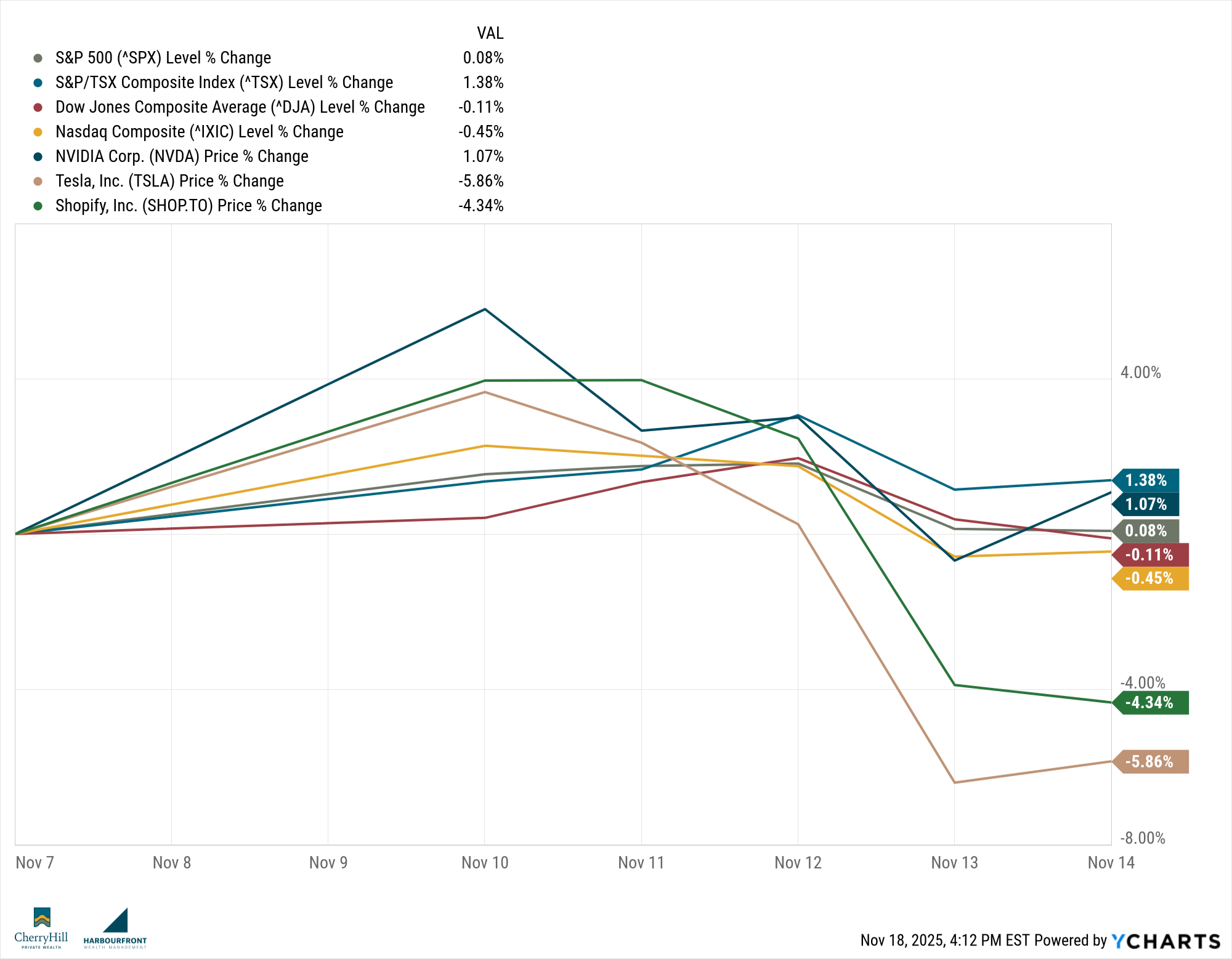
This past week, markets generally pushed higher, but the tone felt a little different. Investors are still optimistic, but we’re starting to see some meaningful rotation beneath the surface as leadership broadens out beyond the usual tech heavyweights.
Canadian Markets:
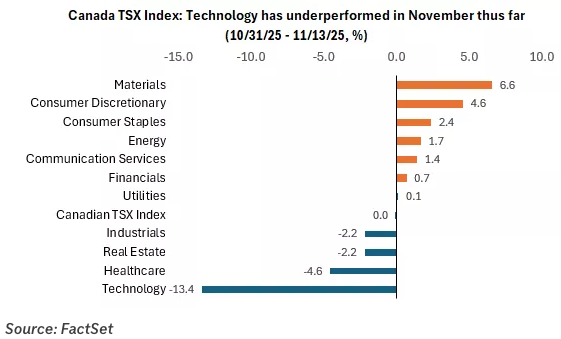
The S&P/TSX gained 1.4% this week and continues to benefit from stronger performance in energy, materials, and financials. With the rotation into more value-oriented sectors gaining momentum, the TSX has been well-positioned to participate. Tech names were quieter, but broad strength across the traditional pillars of the Canadian market helped lift the index.
U.S. Markets:
The S&P 500 finished essentially flat, up 0.1% for the week. While the headline number doesn’t look like much, the real story was under the surface as investors shifted away from the mega-cap tech names that have dominated most of the year. Industrial, financial, and energy stocks held up better, hinting that leadership may be expanding beyond just a handful of companies — a potentially healthy development for market breadth going forward.
Global Markets:
International stocks continued their strong run, with the MSCI EAFE up 1.6% this week and 24.7% year-to-date. Europe and Japan have been steady contributors, and the relative value in international markets remains attractive compared with the U.S. If sector rotation continues, global equities could keep benefiting from renewed investor attention.
Sector Spotlight:
One of the bigger stories this week was the early signs of a rotation away from the high-flying tech names into areas like industrials, financials, energy, and materials. This doesn’t mean tech is suddenly out of favour—AI and innovation remain powerful long-term themes—but it does suggest investors are becoming more selective.
Higher-valuation stocks can wobble when rate expectations shift, and we’re seeing some of that now. The positive takeaway is that broader participation across sectors generally makes for a healthier, more durable market environment.
Quote of the Week:
“An investment in knowledge pays the best interest.”
— Benjamin Franklin
Trends to Watch This Week:
Here’s what were watching this week:
- U.S. Inflation Data: Markets will closely watch upcoming inflation figures to gauge the Federal Reserve’s next move, which could affect rate-sensitive sectors.
- Canadian Housing Market: Continued softening in real estate prices may influence broader economic sentiment and consumer spending in Canada.
- Tech Earnings: Major tech companies will report earnings this week; outcomes will have meaningful implications for the broader market direction, especially given the recent rotation away from high-multiple growth names.
Summary
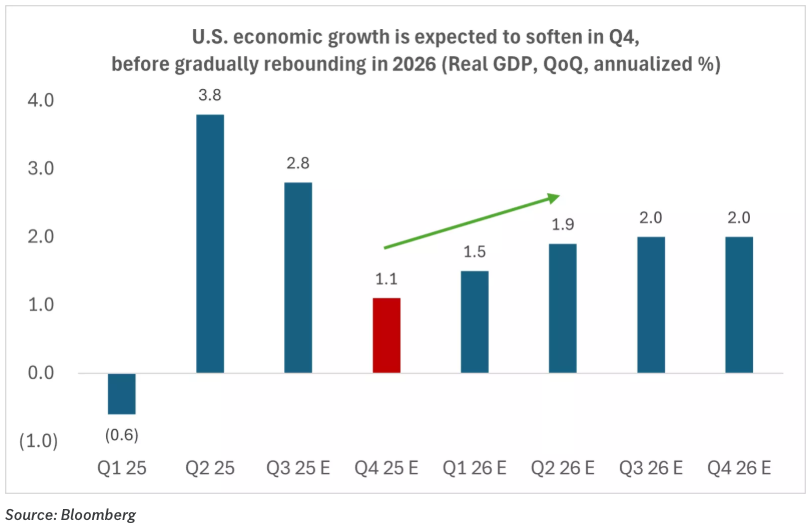
Markets globally remain cautious yet optimistic — buoyed by pockets of strength outside of tech but tempered by valuation concerns and macro uncertainties. The coming days will be important for clarity on inflation, policy and earnings, which could steer portfolio positioning for the year-end and into 2026.
Final Thought
The countdown to Christmas has officially begun (though my wife would argue it started weeks ago). As we head into the final month of 2025 and start looking forward to time with family and friends, I’d encourage you to take just a moment to think about your estate planning.
I know — it’s not exactly a festive topic, and it’s definitely not something most of us want to bring up over the holidays. But the truth is, there’s never a perfect time for these conversations. What matters is simply starting them. I have a couple of great books I’d be happy to send along to help guide the discussion, and we’re continuing to build a resource library to support you with this important, often emotional process.
As always, our team is here to make things easier and to help ensure you’re leaving a legacy — not a mess.
Until next time, stay informed and strategically invested!
Trevor