


Rewriting the Rules:
What Bill C-5 Means for Canada’s Economy
In today’s email:
- The One Canadian Economy Act and what it is, what it’s trying to do, and how it could impact your wallet.
- 2025’s word of the year - tariffs. Does the market still care?
- A resilient market, but the cracks are showing.
- The BoC will likely hold rates after higher-than-anticipated inflation.
The Scoop
If you’ve been following the headlines, you may have heard about Bill C‑5, also known as the One Canadian Economy Act. It was pushed through Parliament with surprising speed and has already become law. Now, the federal government is racing to implement it—and it could have major implications for Canada’s economic landscape.
Let’s break down what it is, why it matters, and how it might affect our economy and investments going forward.
What is Bill C‑5?
Bill C‑5 bundles two significant initiatives:
- **The Free Trade and Labour Mobility in Canada Act: **Aims to remove federal barriers that make it difficult for businesses, workers, and products to move across provincial borders. For example, a company certified in Alberta could more easily operate in Ontario without facing duplicative federal regulations.
- **The Building Canada Act: **Gives the federal cabinet new powers to fast-track “national interest projects” such as energy corridors, infrastructure, and resource developments. These projects will now be reviewed through a centralized Federal Major Projects Office (FMPO) with a target timeline of just two years, instead of the typical five or more.
What It Could Mean for the Economy: Business & Investment Confidence
This bill could be a significant step forward in unlocking productivity and growth:
- Reduced friction between provinces means more efficient movement of goods and services, and fewer regulatory hurdles for skilled workers and entrepreneurs.
- Accelerated approvals for big-ticket projects may attract capital investment, especially in sectors like energy, critical minerals, construction, and clean technology.
If implemented well, this could help lift GDP, increase job creation, and boost business confidence—particularly at a time when Canada is grappling with weak productivity, rising costs, and an increasingly protectionist U.S. trade environment.
The Risks & Pushback
That said, the bill isn’t without controversy:
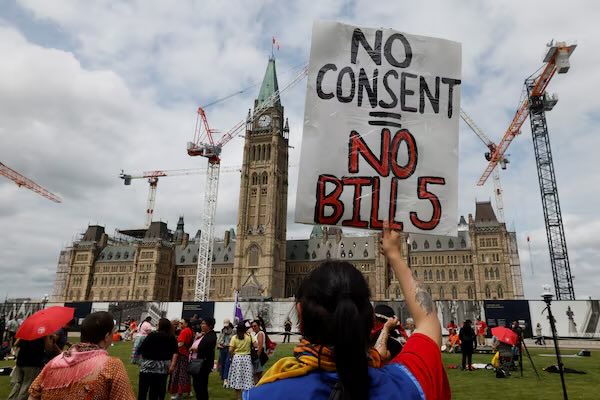
- Indigenous leaders and environmental advocates are already signalling legal action. They’re concerned that the government’s ability to bypass environmental reviews and fast-track projects could infringe on Indigenous rights and environmental protections.
- Investor risk may emerge if opposition turns into prolonged legal challenges or protests that delay major projects.
- Implementation speed is a double-edged sword. While urgency can drive results, poorly coordinated rollouts could lead to confusion, conflict, or costly mistakes.
What This Means for Canadians & Their Wallets
At the household level, here’s what to watch:
- Jobs & wages: If national interest projects roll out quickly, expect a rise in demand for skilled trades, construction jobs, and supporting services.
- Housing & regional economies: Infrastructure builds tend to lift local economies and increase housing demand, especially in smaller regions where these projects take place.
- Energy costs & access: Faster buildouts of energy transmission or resource projects could eventually lead to better energy reliability or even price relief—though that’s a long-term effect.
That said, any economic gains may be tempered if implementation stalls due to legal pushback or political resistance from provinces.
What Comes Next?
The government is already moving quickly:
- The FMPO (Federal Major Projects Office) is now active and accepting proposals.
- Regulations are being written to define what “comparable” provincial standards mean for trade and labour mobility.
- First project list could be announced within months—offering the first test of whether this bold new approach can deliver results.
Final Thoughts
Bill C‑5 represents a rare shake-up of Canada’s internal economic structure. If handled responsibly, it could reduce barriers to doing business, unlock investment, and kickstart long-stalled national infrastructure.
But the devil is in the details—and the next few months will determine whether it lives up to its economic promise, or whether the risks and resistance slow things down.
As always, we’ll be watching carefully to see what this means for your portfolio and financial goals.
Market Minute
Markets hovered near record highs this week despite mounting tariff pressures and growing signs of a softening global economy. While U.S. stocks pulled back slightly, strong performance in energy and industrials helped cushion the impact. Investors are balancing optimism around long-term growth with renewed fiscal and trade uncertainties.
Canadian Markets:
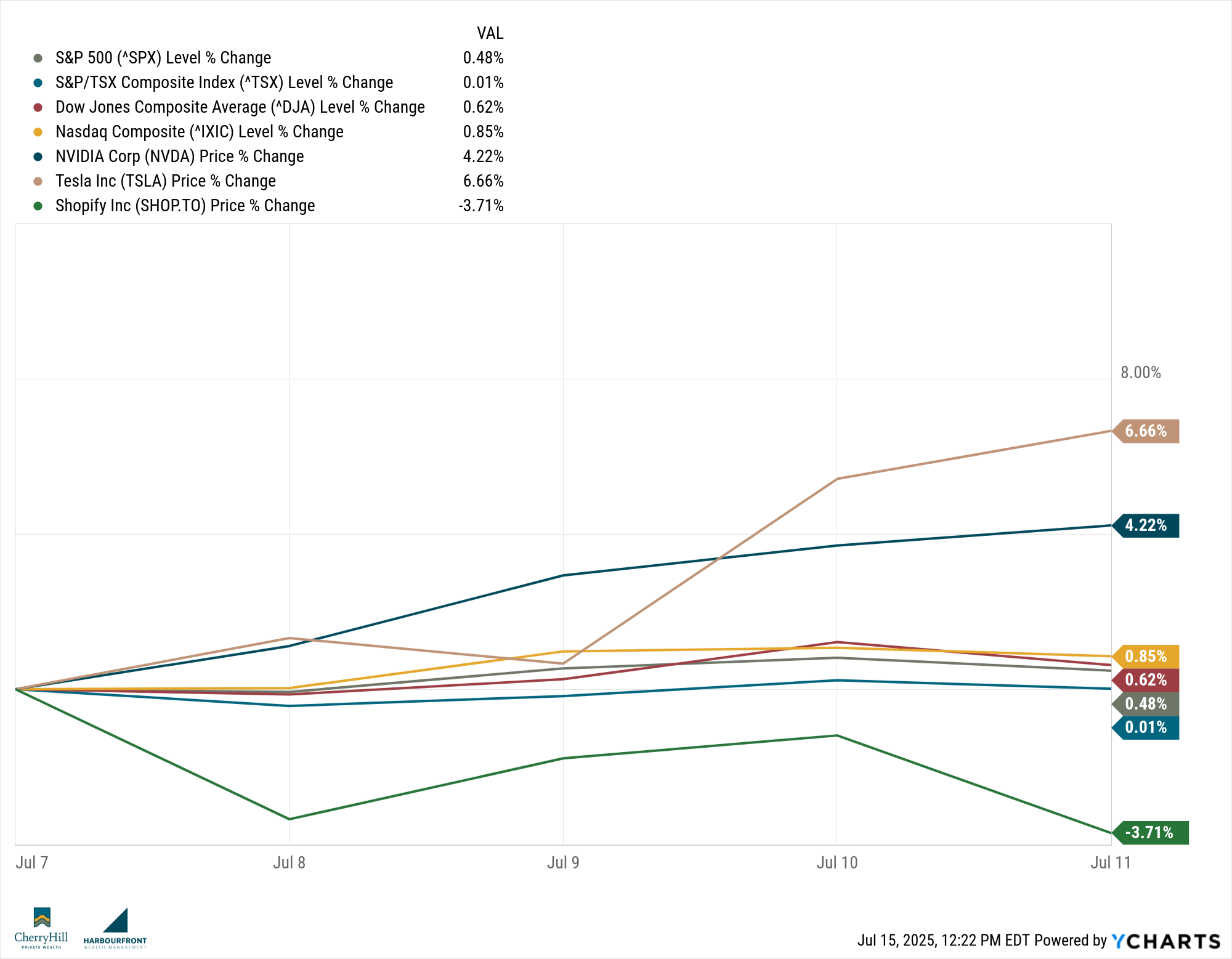
The TSX finished flat for the week (0.0%), holding steady at 27,023. June’s Canadian employment data surprised to the upside, adding 83,000 jobs and nudging the unemployment rate down to 6.9%—a sign of underlying labour market resilience. However, pressure on the Canadian bond market continued, with investment-grade bonds falling (-0.9%) on the week. The Canadian dollar weakened (-0.6%) to $0.73 USD, partly in response to new U.S. tariffs and persistent commodity volatility. Oil prices rose (+2.5%) to $68.69, though still down -4.2% YTD.
U.S. Markets:
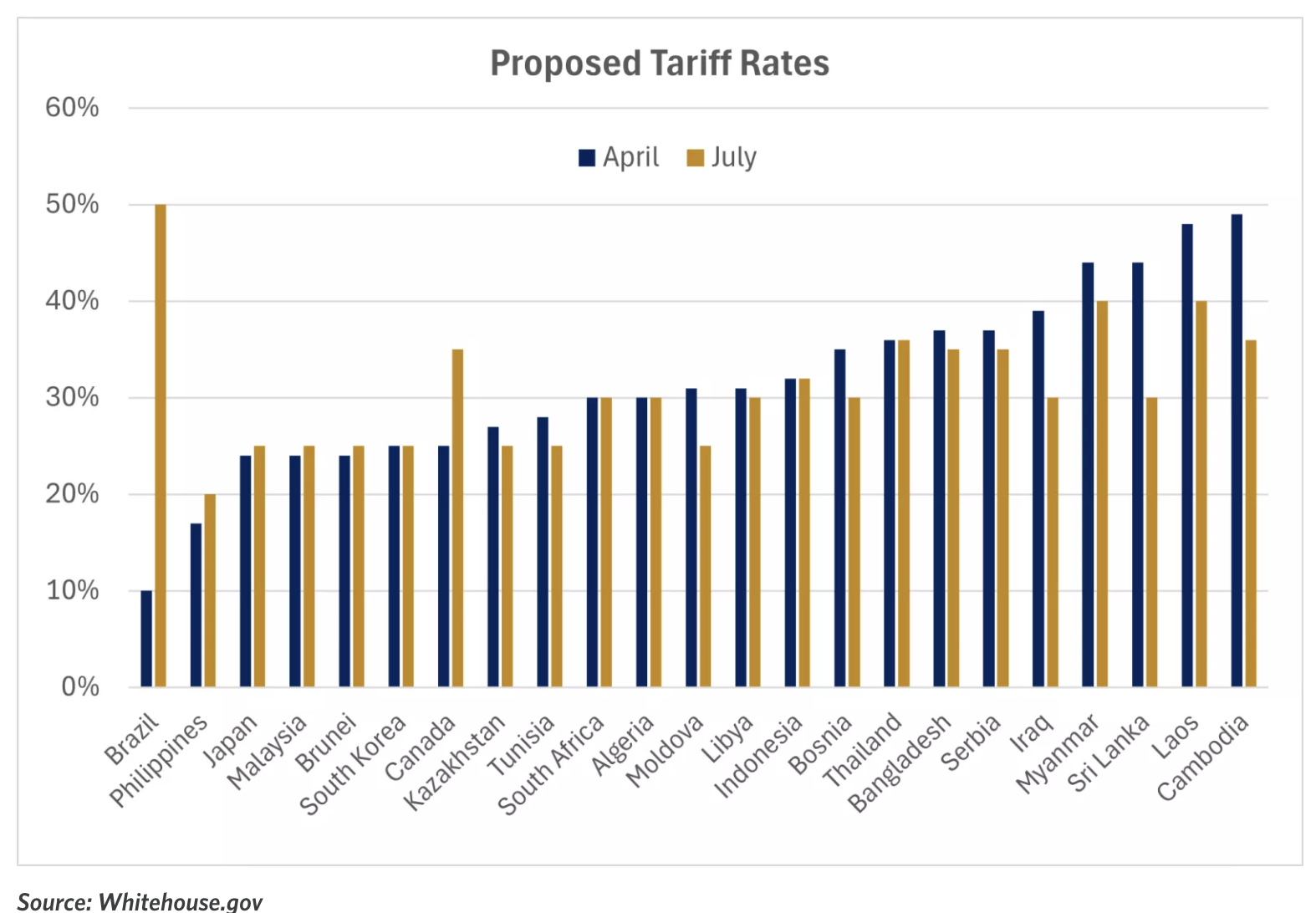
U.S. equities dipped modestly, with the S&P 500 down (-0.3%) as investors reacted to President Trump’s announcement of new tariffs on over 20 countries, including a jump in Canadian tariffs to 35%. The 90-day pause on tariff enforcement has been extended to August 1, but trade tensions remain front and center. Meanwhile, the signing of the One Big Beautiful Bill Act introduced renewed fiscal stimulus via tax breaks and spending cuts, extending provisions of the 2017 Tax Cuts and Jobs Act. Despite this, deficits are projected to rise $3.3 trillion over the next decade. U.S. bonds reflected higher policy uncertainty, with 10-year Treasury yields moving higher alongside a strengthening U.S. dollar.
Global Markets:
European and international markets remained relatively flat this week (MSCI EAFE: 0.0%) but continue to outperform in 2025 (+17.1% YTD), driven by fiscal expansion in Germany and deeper rate cuts from the European Central Bank. That said, overseas growth may face renewed pressure from U.S. trade actions. Vietnam and the U.K. recently secured more favourable tariff terms, showing room for flexibility in negotiations, but broader risks remain elevated.
Trends to Watch This Week:
Here’s what were watching this week:
- Tariff Negotiations: Canada and others face a looming August 1 deadline; final terms could significantly affect trade-sensitive sectors.
- Inflation Drift: Higher import costs could push inflation slightly higher, potentially delaying further rate cuts.
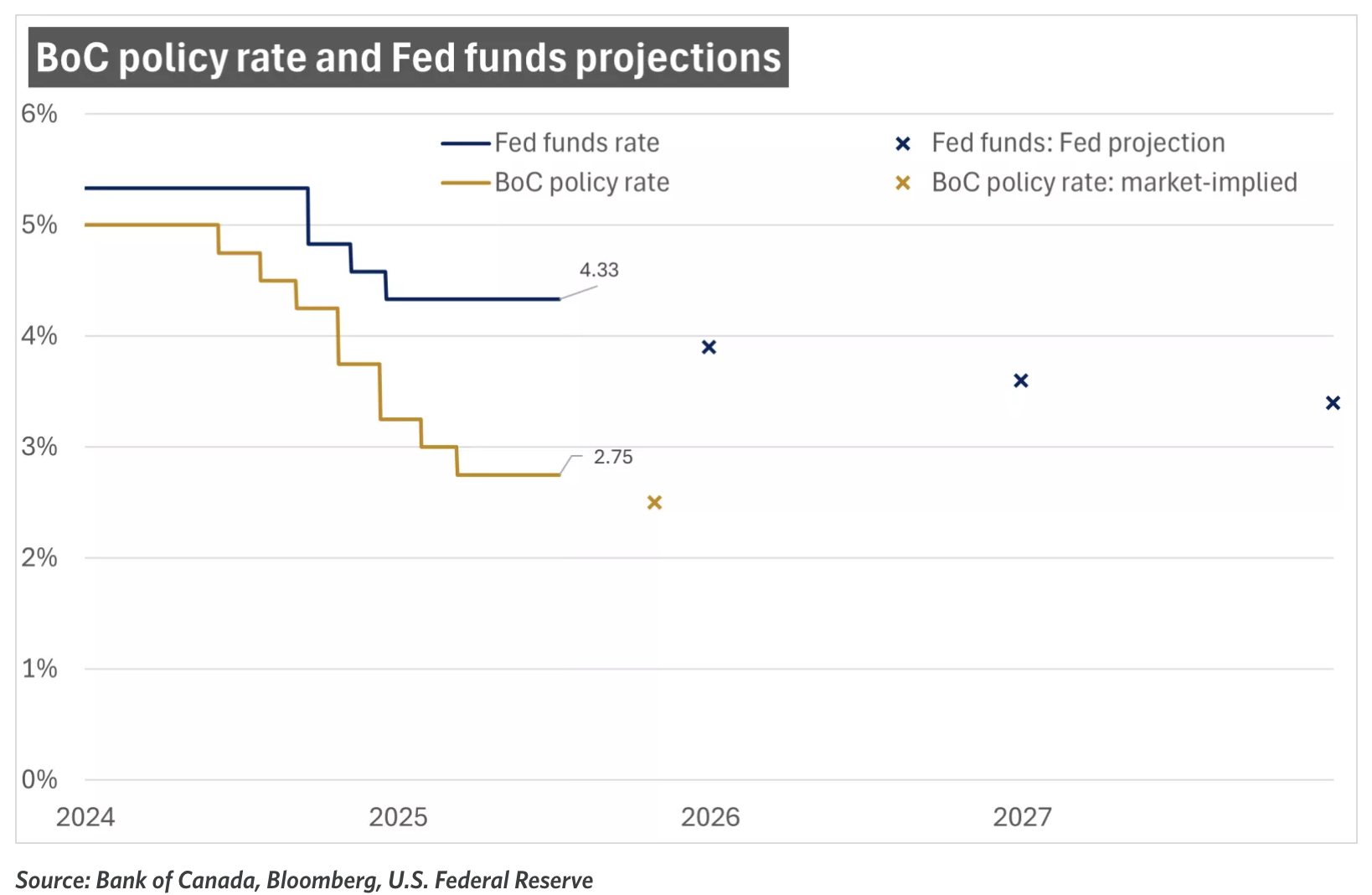
- Bank of Canada Outlook: With CPI below 2% and the policy rate at 2.75%, another rate cut remains on the table for fall, but unlikely in July.
- Market Positioning: Sector leadership is broadening—watch for rotations into financials, health care, and consumer discretionary.
Summary:
Despite headline risks, markets remain resilient. Tariffs and fiscal shifts are reshaping the policy landscape, but strong labour data and sector rotation suggest an underlying confidence in economic momentum. For investors, staying diversified, focusing on quality, and preparing for short-term volatility could be key as we move into a crucial earnings season and further trade developments.
Final Thought
Canada, as well as governments around the globe, try to strengthen their domestic economy and create new trade routes. New tariff threats seem to be hurled daily, which is making it troublesome for corporations and world leaders to maneuver.
Canada, for its part, is attempting to strengthen it’s domestic trade by removing red tape in many facets. Promoting a Canada-first view can lead to a stronger economy, but there are several headwinds that could derail this. We should have a clearer picture on what this means during the next month or two as projects either get approvals or derailed.
Until next time, stay informed and strategically invested!
Trevor