


U.S. Bombs Iran:
What It Means for Markets
In today’s email:
- It’s anniversary season at Cherry Hill!
- Take 3: an evolving situation in the Middle East and several rewrites.
- What can happen if cooler heads don’t prevail?
- A mixed market last week with uncertainty in the Israel-Iran conflict.
- Inflation, oil, and the Fed commentary are key items we’re watching this week.
Beyond the Portfolio
This past week, our team celebrated a few meaningful milestones.
It’s been one year since Ashley and Christine made the courageous decision to leave their roles at the bank and join Cherry Hill and Harbourfront. Making the leap from the “known” to the “possible” is never easy, but their desire to make a more positive and personal impact in their clients’ lives outweighed any hesitation they may have felt.

This week also marks the three-year anniversary of Cherry Hill Private Wealth. Like Ashley and Christine, Adrian and I were motivated by a shared belief that the status quo wasn’t good enough. We founded Cherry Hill in partnership with Harbourfront Wealth Management to create a more thoughtful, client-first approach—one that helps people reach their goals while minimizing the stress that often comes with market volatility.
We’re grateful to all of our clients who have taken this journey with us, and we look forward to celebrating many more anniversaries together.

The Scoop
Over the weekend, the U.S. launched airstrikes on Iranian military assets, marking a serious escalation in what has been a steadily intensifying standoff. While details are still unfolding and much remains uncertain, the immediate question on many investors’ minds is: How will this impact the markets—and what should I do about it?
I began this newsletter late last week, before the U.S. attacks and rewrote it on Sunday after the U.S. bombing. I am here Tuesday morning updating it again as more has unfolded.
Let’s break this down.
Latest Developments
- Israel attacks Iran’s Nuclear facilities, Iran retaliates.
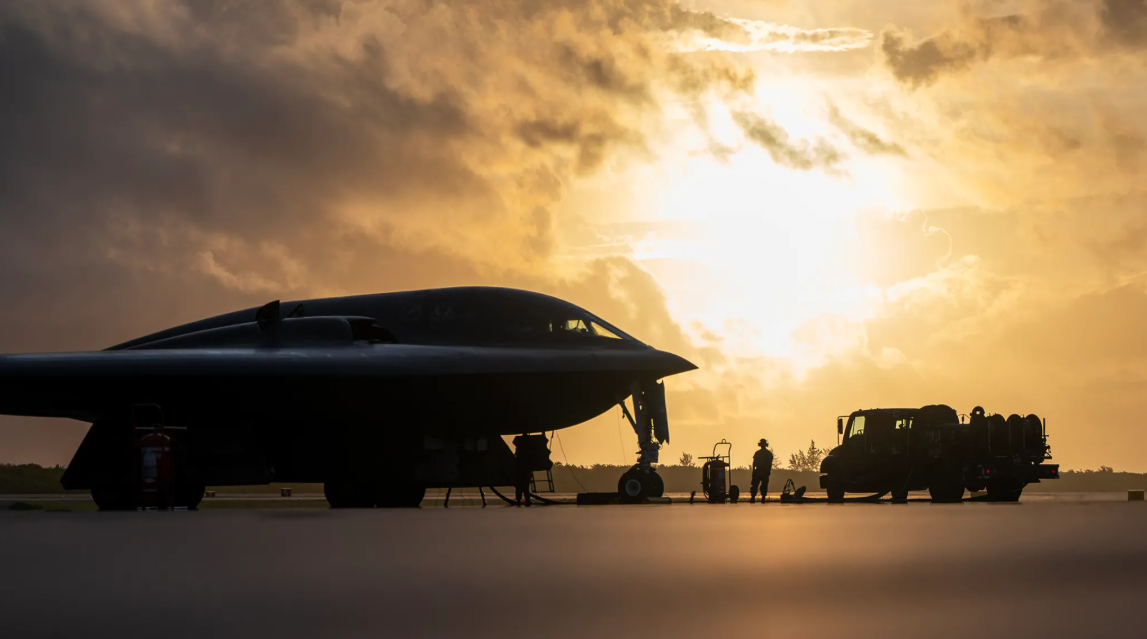
- U.S. Strikes Iran: The U.S. carried out airstrikes targeting Iranian military sites over the weekend.
- Iran Strikes Back: Iran, in a telegraphed attack that appeared to serve as a “deescalation” tactic, launched missiles at a U.S. base in Qatar.
- President Trump Declares Cease-Fire: Late Monday night President Trump declared that a cease-fire deal was brokered between Israel and Iran.
- Israel-Iran tensions Persist: Hours after the cease-fire was announced, Iran and Israel continue to bomb each other.
Markets React Quickly—but Not Always Rationally
So far, we’ve seen:
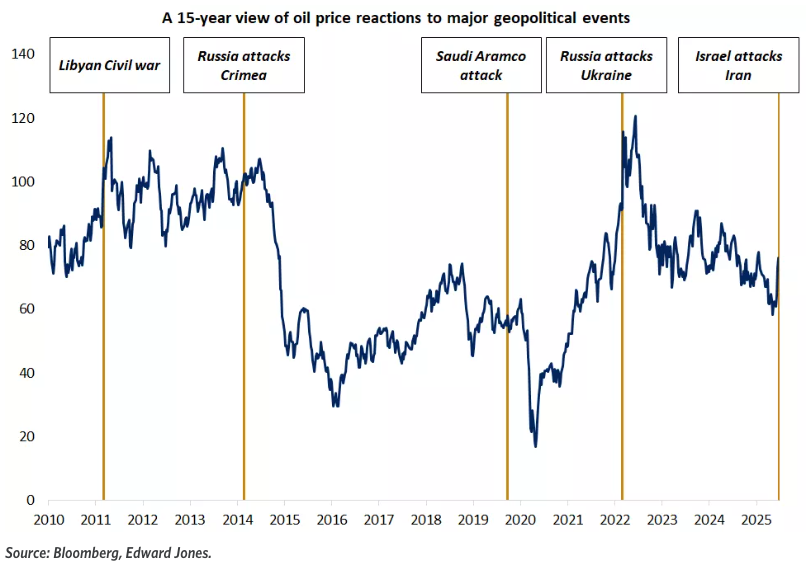
- Oil prices jump on fears of disruption in the Strait of Hormuz, but have now fallen dramatically.
- Defence stocks gain as geopolitical risk intensifies, and have continued to climb.
- Broader equity markets waver, with volatility ticking higher, but have climbed in recent hours.
This is a classic “risk-off” response—markets seek safety, investors pile into gold, U.S. Treasuries, and the U.S. dollar, and riskier assets pull back. But history gives us useful context: **geopolitical events often spark short-term volatility, not long-term damage **as we have seen here.
From the Gulf War to Syria, and even the early days of the Russia–Ukraine conflict, markets initially reacted with sharp moves but often found their footing soon after.
Economic Fallout: Limited but Watch the Energy Impact
While there’s concern about broader conflict, especially if Iran responds or blocks oil shipments, it’s worth remembering:
- The U.S. is far more energy-independent today than during past Middle East conflicts.
- Many global economies now have strategic oil reserves and diversified energy suppliers.
- Iran’s economy is already under significant sanction pressure, meaning the ripple effect on global trade may be more muted than feared.
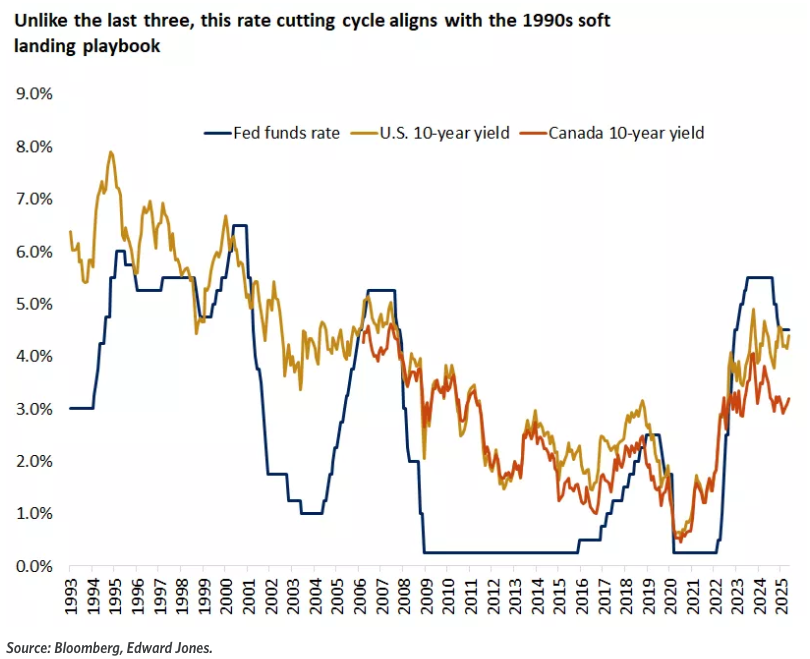
Still, a sustained conflict could raise inflation pressure again, especially in transportation and manufacturing, just as many central banks are hoping to cut rates. That would complicate policy decisions globally and could delay expected interest rate cuts.
Let’s Not Forget: Cooler Heads Often Prevail
It’s easy to imagine worst-case scenarios in moments like this. But historically, diplomatic pressure—especially from global powers reliant on stable oil—tends to kick in quickly. Full-scale war is never off the table, but it remains the least likely path, even after this weekend’s escalation.
We’ve seen time and again that initial panic fades, and markets often rebound before the dust even settles. In fact, missing that rebound can be far more damaging to long-term returns than weathering a few volatile days.
Our Positioning: Resilient by Design
At Cherry Hill, we build portfolios with moments like this in mind. We’ve emphasized downside protection, diversification, and access to alternative assets that don’t always move with public markets. That doesn’t eliminate volatility—but it helps manage it.
If you’re feeling uneasy or just want to revisit your plan, we’re here. Uncertainty is always part of investing—but it doesn’t have to be something you face alone.
Market Minute
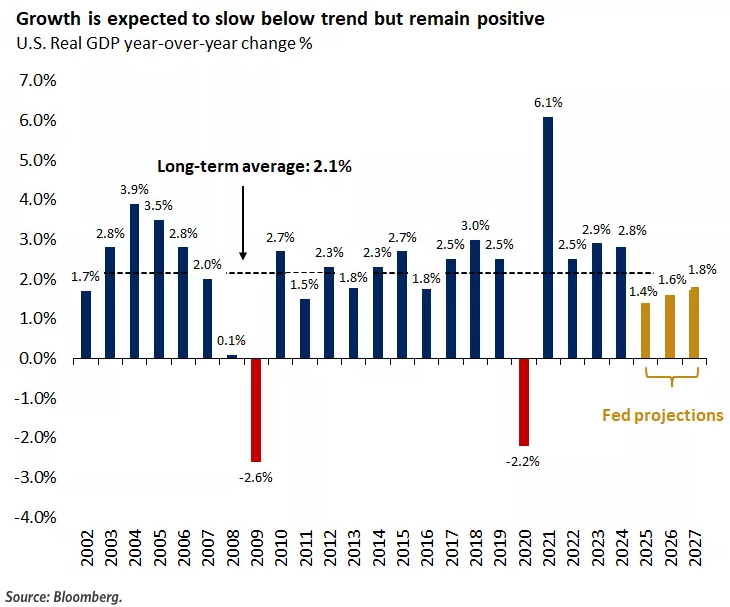
Markets ended the week mixed as investors digested a blend of geopolitical developments and ongoing macroeconomic signals. While optimism around interest rate cuts and corporate earnings provided some support, escalating tensions in the Middle East introduced a new wave of uncertainty.
Canadian Markets:
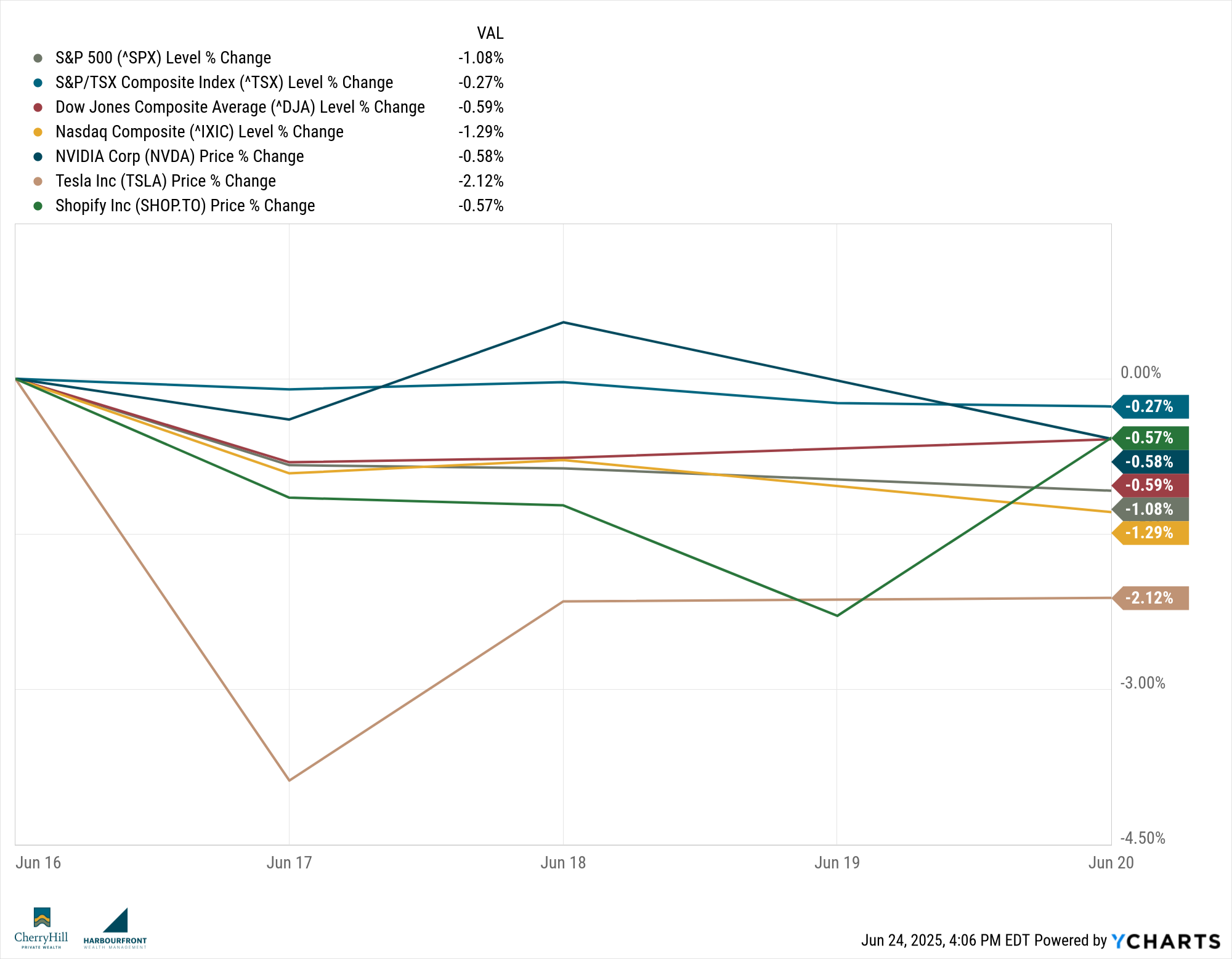
The TSX declined slightly (-0.3%) as weakness in industrials and materials offset gains in energy stocks, which benefited from a rise in oil prices following U.S. airstrikes on Iranian military targets. Financials were relatively flat, while tech names saw modest gains.
U.S. Markets:
U.S. equity markets were mixed. The S&P 500 posted a modest gain (+0.2%), driven by continued strength in tech and large-cap growth stocks. The Nasdaq rose slightly (+0.4%), while the Dow Jones slipped (-0.5%) amid a pullback in energy-heavy and industrial names. Defence stocks saw an uptick following the weekend’s geopolitical developments, while investors also rotated cautiously into safer assets.
Global Markets:
European markets finished mostly lower as caution grew over potential disruptions to oil supply chains. The DAX (-0.3%) and FTSE 100 (-0.4%) both slipped. In Asia, markets were jittery but resilient, with Japan’s Nikkei (+0.5%) leading gains as central bank policy remained supportive and the yen weakened.
Oil and Energy
Oil prices rose modestly last week as geopolitical tensions in the Middle East escalated following U.S. strikes on Iran and Iran’s limited retaliation in Qatar. Brent crude settled just above $86 USD per barrel by week’s end, while WTI hovered near $82. While fears of a wider regional conflict initially drove prices higher, the market moderated as it became clear that oil production and export infrastructure remained unaffected. Energy stocks responded positively to the rise in crude, with the sector outperforming broader markets as investors priced in a potential risk premium tied to further instability.
Trends to Watch This Week:
As we head into the second half of 2025, the following developments are on our radar:
- Middle East Tensions: The aftermath of U.S. strikes on Iran will be closely watched. Any escalation could push oil prices higher and increase market volatility.
- U.S. Inflation & Fed Commentary: Investors will look to upcoming inflation data and Fed speeches to confirm whether rate cuts remain on track for later this year.
- Corporate Earnings: The earnings season continues, with attention on whether companies can sustain margins amid higher input and wage costs.
Summary:
While geopolitical events are adding volatility, markets remain relatively resilient. Investors are weighing long-term economic fundamentals—like inflation trends and interest rate expectations—against short-term headlines. As always, maintaining a long-term, diversified approach is essential amid the noise.
Final Thought
While I try to keep this newsletter less geared to headlines, there are times that it makes sense to try and break down evolving news and how it might affect your investments and financial plan. I had a newsletter written (done for next week!), but when I started playing out some of the scenarios last week of what could happen to oil prices and the impact on the larger economy if a full-blown war was to erupt, I wanted to write this newsletter. Little did I know that the situation was going to change several times before I hit the “send” button.
It goes to show you, in today’s world, headlines can move a lightning speeds and markets will react to this headlines. However, as we are seeing with this situation, the volatility is usually short lived.
If these headlines give you the jitters, you are not alone. Our team is constantly monitoring each situation and making sure that you are strategically invested, but if it’s too much for you - we do have options that are far less volatile and don’t ride every headline wave.
Until next time, stay informed and strategically invested!
Trevor