
The Rise of AI:
Investing in the New Industrial Revolution
In today’s email:
- AI is about to touch everything; how do we invest in this new technology?
- The “Mag 7” are leading the AI charge, but where are the opportunities?
- Another good week in the markets across the board!
- We’re hearing about the Debt Ceiling again, and with the increased spending, what will the market disruption be?
- Tariff deadlines are approaching (again), what can we expect?
The Scoop
By now, you don’t need me to tell you that AI is everywhere. But what’s interesting for us as investors is how quickly it’s moving from a buzzword to something we need to actively consider in our portfolios.
AI isn’t just one sector — it’s becoming the backbone of everything from healthcare to manufacturing to financial services. And just like previous transformational shifts (think electricity or the internet), the early winners aren’t necessarily just the shiny startups but often the companies building the infrastructure, platforms, and tools that make AI possible.
Last week, I had the privilege to sit down with a small group and chat with Jonathan Curtis, the Executive VP and CIO at Franklin Equity Group. He was in town for a major AI conference and took some time to talk with us about where he sees the biggest opportunities—and risks—when it comes to investing in artificial intelligence.

Where are investors finding opportunities right now?
The Big Players Still Dominate
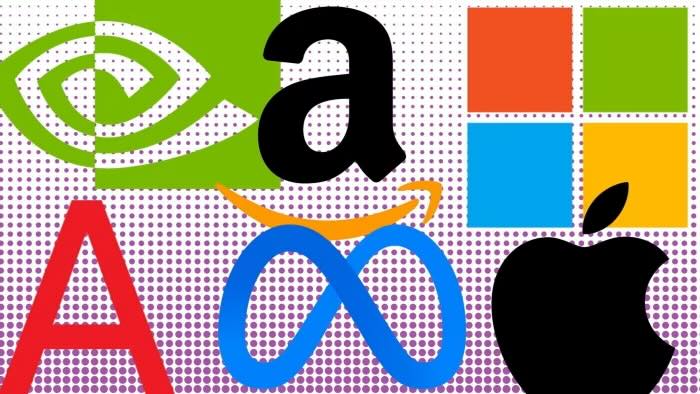
The easiest way most investors are getting exposure to AI today is through the large tech companies leading the charge:
- NVIDIA has become the poster child, thanks to its dominance in AI chips.
- Microsoft is fully embedding AI into its software ecosystem through its partnership with OpenAI.
- Alphabet (Google) continues to lead in AI research with DeepMind and Gemini.
- Meta (Facebook) is investing heavily in AI-powered advertising, content moderation, and platform development — even signing massive energy deals to power its AI ambitions.
These companies aren’t just using AI — they’re helping build the AI economy.
The Private Market and Pre-IPO Space
While most people focus on the public names, some of the most exciting developments are happening behind the scenes. Venture capital and private equity firms are pouring billions into AI startups that most investors can’t directly access yet — companies developing everything from AI-powered drug discovery to autonomous manufacturing. Names like Anthropic, OpenAI, Databricks, and Cohere are still private but heavily backed by firms like Sequoia, a16z, and SoftBank.
For investors with access to private markets (which many pensions and endowments already utilize), these earlier-stage companies offer some of the most intriguing long-term opportunities — albeit with higher risk.
How we’re thinking about it
We’ve always believed in taking a balanced approach. While we absolutely want exposure to the big platforms benefiting from AI, we also recognize that many of these companies have already seen huge stock price gains. That’s where diversification and active management become even more important — blending public leaders with select private investments when available, and ensuring that the portfolio isn’t overly dependent on a single narrative.
AI will likely be one of the biggest drivers of growth (and volatility) over the coming decade. But as always, staying disciplined and diversified will be far more important than chasing the next headline.
Market Minute
This past week, markets continued their strong run, building on solid global fundamentals and easing trade tensions.
Canadian Markets:
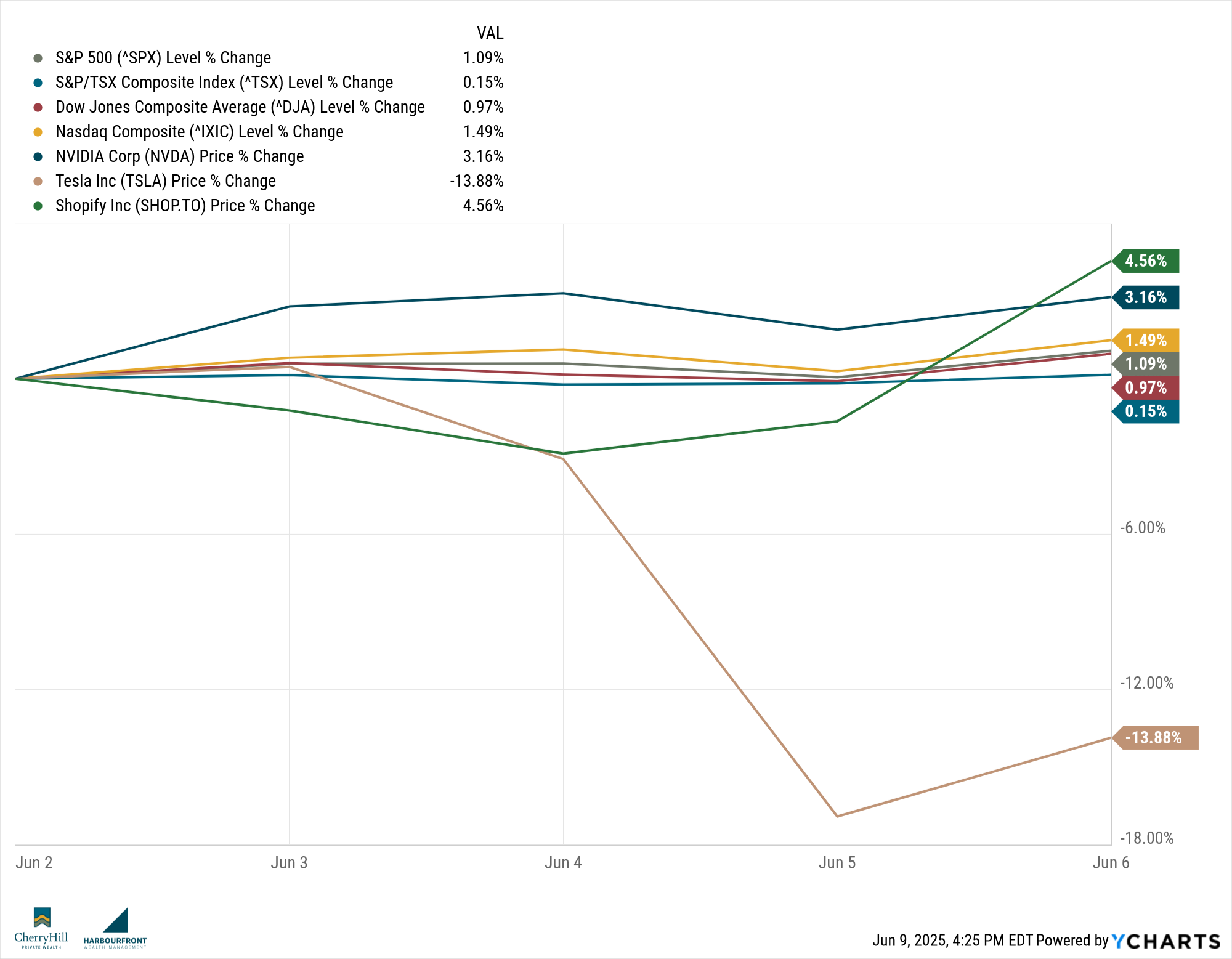
The TSX climbed nearly 1%, reaching fresh record highs. Energy and technology sectors led the way, boosted by a rebound in oil prices and continued strength in AI-related stocks. The Canadian economy also delivered a surprise jobs gain in May, adding approximately 8,800 positions. While modest, the data helped reinforce expectations that the Bank of Canada will hold rates steady at its next meeting, particularly as inflation continues to trend lower.
U.S. Markets:
South of the border, U.S. markets remained strong, with the S&P 500 advancing 1.5% for the week and now up roughly 20% from its April lows. A better-than-expected jobs report and solid Q1 earnings—particularly in tech and consumer sectors—helped drive the rally. Profits for S&P 500 companies grew by more than 12% year-over-year, with standout gains in technology (+20%) and communication services (+33%), highlighting the continued influence of AI investment across the board.
Global Markets:
Global markets also rallied, buoyed by falling trade tensions and strong corporate results. The MSCI EAFE index saw gains, while rising oil prices (+6.3% on the week) helped lift resource-heavy international indices. Bond markets saw modest movement, with the U.S. 10-year yield ticking up slightly as investors reassessed the timing of future rate cuts.
Trends to Watch This Week:
- Trade & Tariffs: Investors are monitoring key trade deadlines, as any resurgence in tariff headlines could increase volatility.
- Fed Policy Developments: Upcoming Federal Reserve interest rate decisions may influence rate-sensitive sectors, warranting close attention.
- Debt-Ceiling Debate: Political momentum around the U.S. debt ceiling adds uncertainty—watch for updates as negotiations unfold .
Summary:
Despite recent strength, markets are entering a stretch where higher valuations and macro uncertainty could test investor resolve. We remain constructive but cautious—holding a balanced approach that leans modestly overweight in equities, with a focus on quality companies and continued diversification through fixed income and alternative strategies.
Final Thought
It used to be that peace of mind came at a massive cost to your return potential. We used to only be able to move to cash or something like gold in times of turmoil. Today, with our team, you can reduce your risk in much the same way, but without giving up all or most of your returns.
As the U.S. continues to try and change the geopolitical landscape, we continue to see swings in the market both for the positive and negative. Ensuring that we have the proper allocations to equities (if that’s what your risk tolerance calls for), as well as exposure to alternatives, will help to maximize our returns and protect us from the slides.
Until next time, stay informed and strategically invested!
Trevor