
The Hidden Risks Lurking in ETFs and Mutual Funds:
What you think you’re buying… and what you’re actually getting.
In today’s email:
- This Earth Day we talked sustainable investing and how it can complement your portfolio — get the fully conversation here!
- Are you getting what you think you are from your ETFs and Mutual Funds?
- Has the U.S. market lost its allure?
Up on Cherry Hill
We hope you had an excellent Easter long weekend and were able to spend some time with loved ones. My family has a tradition for Easter that goes back to when I was young. My father is an aspiring Dr. Seuss writer and each year puts his Seussian talents to the test with a scavenger hunt. Watching my child take the same joys in trying to decipher the clues to find the ultimate prize each year brings me back many years - it also teaches me patience when I want to blurt out the answers and rush off to the next clue. What traditions do you have for Easter?
To celebrate Earth Day, Adrian and I had a conversation with NEI, who is a leader in Responsible Investing (RI). As a believer in RI, but also in building (and protecting) wealth for our clients, we asked Jenny all the questions about how to do the right things for the world **as well as **for our portfolios.
If you missed the conversation, you can check it out here.
We are planning on hosting webinars with industry leaders every couple of months and would love to hear from you who you would like to hear from or what topics interest you the most.
The Scoop
Over the past decade, ETFs and mutual funds have become the go-to building blocks for everyday investors. They’re pitched as low-cost, diversified, and easy-to-own solutions — and to be fair, there’s a lot to like about them. But too often, investors assume they’re buying simplicity and safety, when the reality under the hood can look very different.
Let’s break down two common risks that rarely get talked about: concentration risk in ETFs, and over-diversification in mutual funds.
1. Index ETFs: Diversified… or Just Top-Heavy?
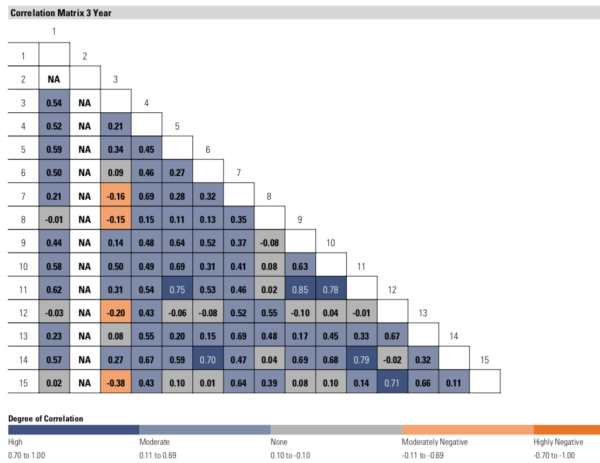
Take a look at the S&P 500. Many investors assume it’s a diversified basket of America’s largest companies. And it is — sort of. But over 30% of the index is now concentrated in just a handful of tech names. So when you buy “the market,” you’re really buying a lot of Apple, Microsoft, NVIDIA, Amazon, and Meta. If those companies struggle, your “diversified” ETF takes a much bigger hit than you might expect.
And it’s not just U.S. equities. Canadian and international ETFs often carry similar weightings. If you don’t look closely at the holdings, you may be unknowingly overexposed to a few dominant sectors or names.
2. Mutual Funds: A Mile Wide, an Inch Deep
At the other end of the spectrum, many mutual funds suffer from the opposite issue — owning too many stocks. It’s not uncommon to see funds with 200+ holdings, with each name having such a small impact that they barely move the needle. It’s diversification for diversification’s sake. And while that might reduce volatility, it can also water down potential returns and create hidden redundancies — like owning five different funds that all hold the same bank stocks.
So What’s the Solution?
There’s nothing inherently wrong with ETFs or mutual funds — but they work best when used intentionally. The challenge is that most portfolios built solely from these tools lack true risk management. They ride the ups and downs of the broader market, often with more risk than the investor realizes.
That’s why we take a different approach. We design customized portfolios that blend traditional investments with alternatives like private credit, real estate, and infrastructure. This helps reduce concentration risk, smooth out volatility, and target returns more effectively — especially important in today’s uncertain environment.
If you’re wondering what’s actually in your portfolio — and whether it’s aligned with what you think you own — let’s take a look together.
Market Minute
Markets closed out last week with mixed results, as investors digested economic data, earnings reports, and geopolitical developments. Despite some mid-week volatility, tech optimism helped lift U.S. equities, while Canadian and global markets showed varied performance.
Canadian Markets:
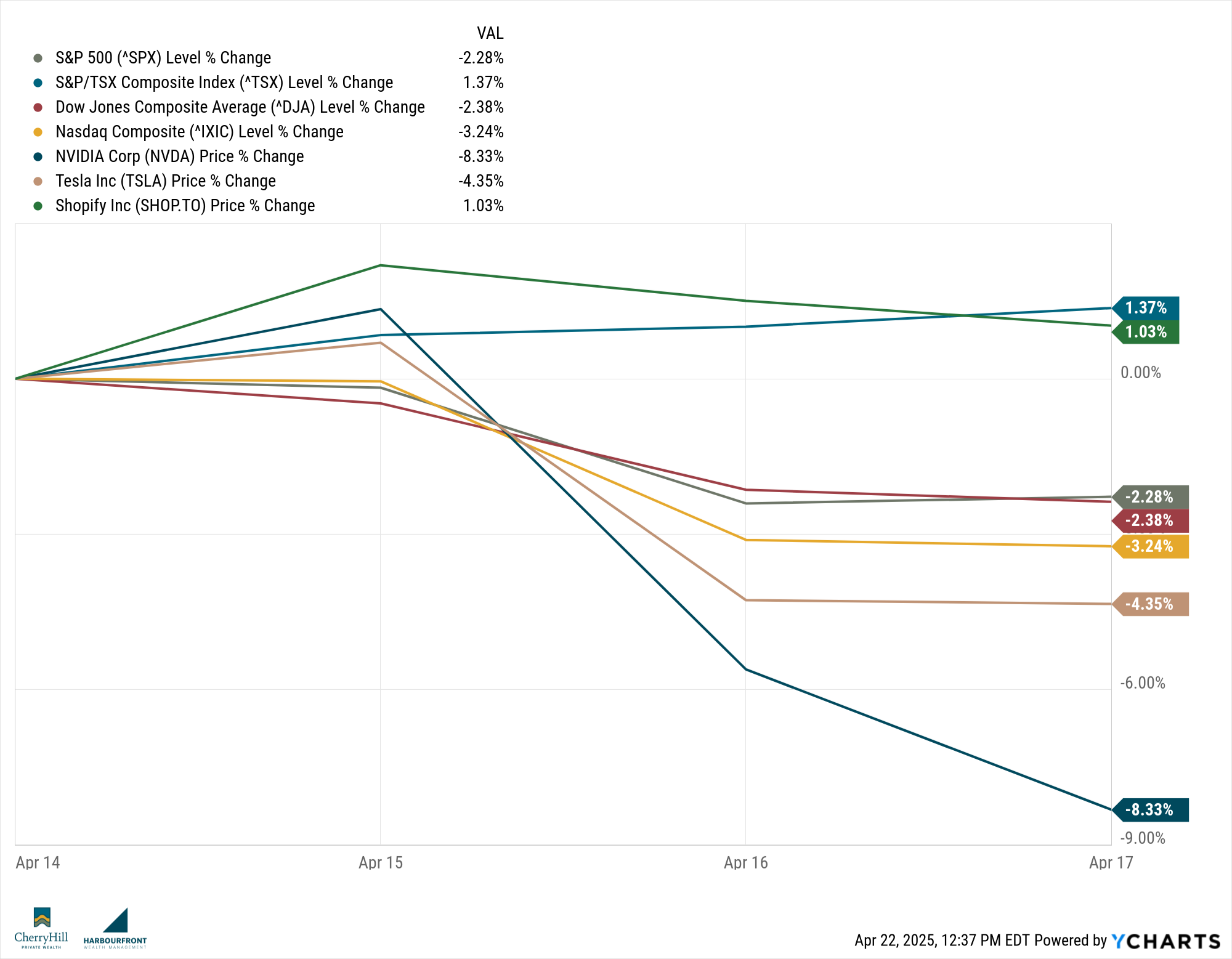
The S&P/TSX Composite Index ended the week with a 1.37% gain from the previous week. Financials and real estate sectors contributed positively, while energy stocks faced headwinds due to fluctuating oil prices.
U.S. Markets:
U.S. equities continued on the rollercoaster that it’s been on for the past several weeks. The S&P 500 finished the week down 2.28% for the week, while the Dow Jones Industrial Average fell 2.38%, and the Nasdaq Composite decreased by 3.4% . The market was weighed down by a significant drop from major tech companies as well as the United Health Group after it posted a disappointing earnings report.
Global Markets:
In Europe, the FTSE 100 surged 3.91% to close at 8,275.66, its best gain since the announcement of U.S. tariffs. Germany’s DAX climbed 4.08%, ending the week at 21,205.86. In Asia, Japan’s Nikkei 225 advanced 3.41% for the week to 34,730.28, marking its best weekly gain in three months. Meanwhile, China’s Shanghai Composite Index edged up 1.19% to 3,276.73.
Trends to Watch This Week:
- U.S. Inflation Data: The upcoming Consumer Price Index (CPI) report will provide insights into inflation trends and potential Federal Reserve actions.
- Canadian Housing Market: New data on home sales and prices may influence economic outlooks and monetary policy considerations.
- Tech Earnings Season: Major technology companies are set to report earnings, which could impact market dynamics and investor sentiment.
Summary:
Markets ended the week lower in the U.S., but Canada and the rest of the world markets edged forward. Investors are continually trying to make sense of the new world order and how U.S. tariffs and new allegiances will shape commerce.
Final Thought
As we near the end of April one thing has remained constant — uncertainty. Over the past 18 months we have experienced a market that has relied heavily on the momentum of tech stocks. We have seen cracks in the economy, but they have largely been hidden by the Mag 7 companies. As we get back to a market that is trying to find its footing it is more important to stay agile and well diversified. Looking outside the U.S. for returns and stability can help ease much of this volatility we are currently experiencing.
Until next time, stay informed and strategically invested!
Trevor