


Cash Isn’t Risk-Free Anymore
A lot has happened this past week, let’s get into it.
In today’s email:
- This Earth Day we talk sustainable investing and how it can complement your portfolio
- Happy Easter weekend!
- Is cash still king, or is it dragging down your returns?
- Markets rebounded last week — does that mean the tariff war is over?
Up on Cherry Hill
These past couple weeks have been very uncertain for investments, the markets, and what that means for you and your family’s future. We have had some great conversations with clients that have been trying to understand what is happening and we encourage you to reach out if you have any questions.
We had a great conversation with our Portfolio Manger recently and with the great feedback, we’ve decided to make this a more regular occurrence. Next week, for Earth Day, we will be talking to NEI’s Director, Responsible Investing Advisory, Jenny Banks about how to invest in a way that both is good for the world and our portfolio. I will send out a separate email over the next 48 hours with a link to join us. The webinar will happen on April 22 (Earth Day) at 11 am.
We hope you have some wonderful plans for this long weekend! Our office will be closed on both Friday and Monday and back to regular hours on Tuesday.
The Scoop
For the last two years, sitting on cash finally felt like a winning strategy. After more than a decade of near-zero interest rates, GICs and high-interest savings accounts were suddenly offering 4–5%, and for many people, that felt like a safe, smart way to park money.
But that landscape is shifting quickly.
We’re already seeing the cracks form. Central banks in both Canada and the U.S. are clearly in a rate-cutting cycle — not just one or two tweaks, but are in the middle of a multi-step path lower over the next 12–18 months. And just like that, what felt like a solid short-term decision can quickly become a long-term drag on performance.
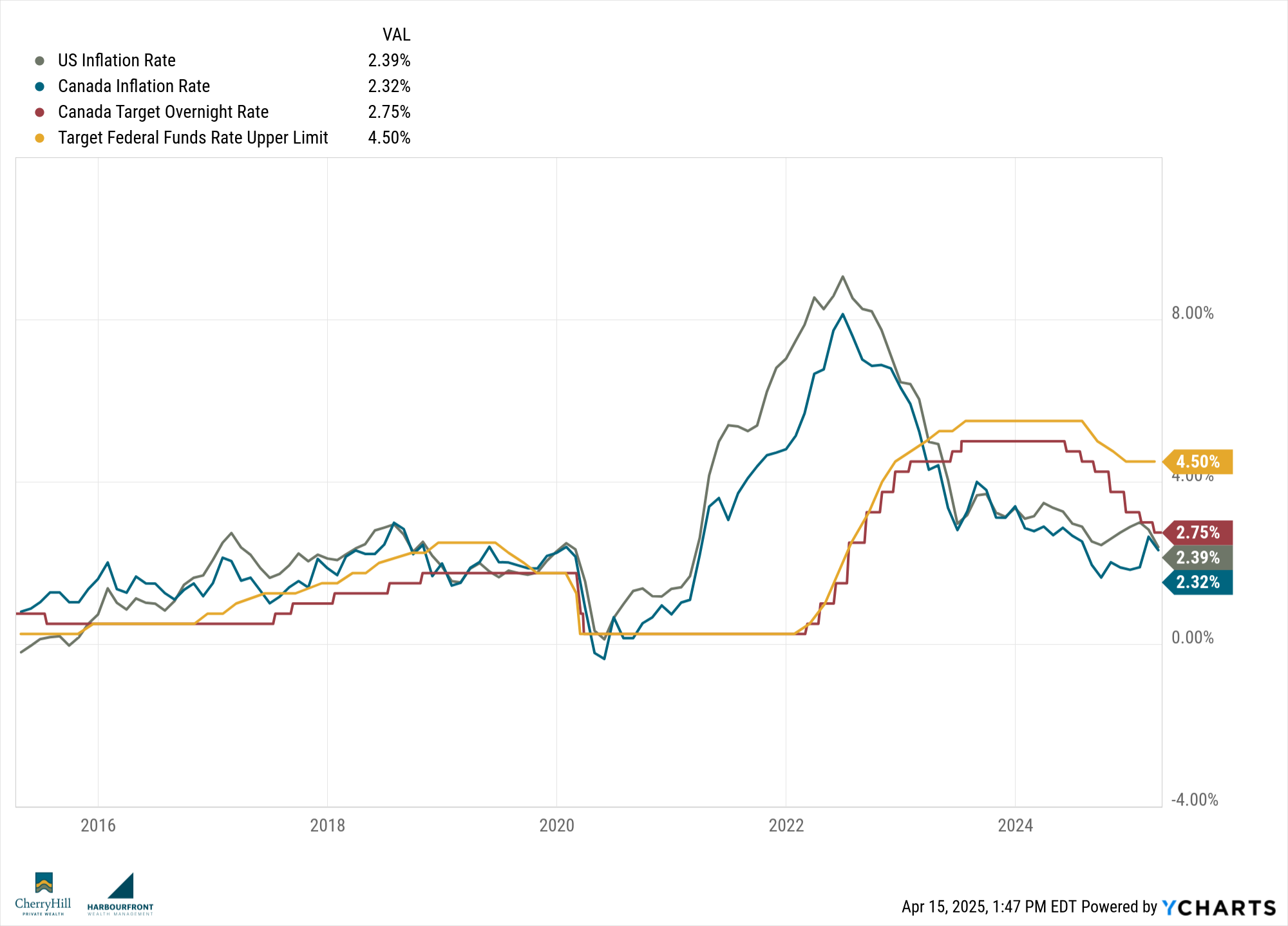
Here’s the problem with cash going forward:
- Returns drop fast: As soon as the Bank of Canada started lowering rates, savings accounts and short-term GICs followed. Many of the “guaranteed” rates that looked so attractive not that long ago have decreased significantly.
- Opportunity cost rises: While your money earns 3% in a savings account, other areas of the market may deliver 6–9% or more — especially if volatility decreases and credit spreads normalize.
- Inflation is still a factor: Even as inflation moderates, your real return after taxes and price increases could turn negative, especially on unprotected cash positions.
So what are some smarter options for lower-volatility investors?
This is where private credit can play a powerful role. Unlike public bonds that are often marked-to-market daily, private credit investments are typically structured with fixed terms, higher interest rates, and collateral backing the loan. In many cases, they’re also less sensitive to short-term swings in interest rates and market sentiment.
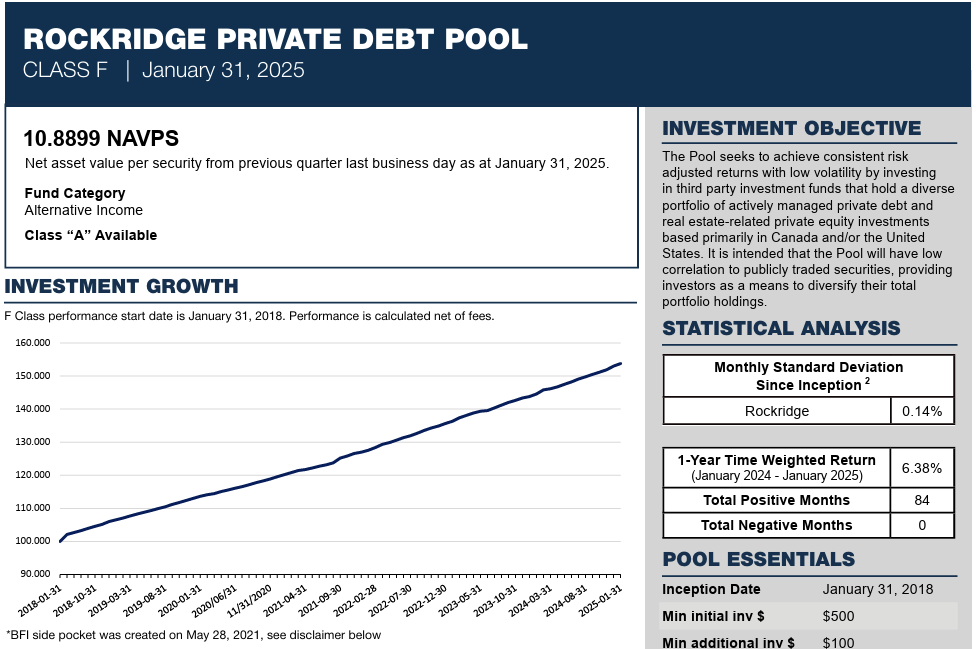
One of the options we like right now is our in-house option, the Rockridge Private Debt Pool. This pool provides exposure to a diversified set of high-quality private loans across North America, typically lending to borrowers who offer real assets or business income streams as collateral.
For the full one-page fund fact, please let us know and we will send you a copy.
Why we like it right now:
- Stable, consistent income: The Rockridge Pool has delivered strong returns through multiple rate environments, often generating 6-7% annually with far less volatility than traditional bond funds.
- Diversification beyond banks: These are loans that exist outside of the big banking system, giving investors access to opportunities that aren’t tied to public markets or daily price swings.
- Downside protection: With an emphasis on asset-backed lending and thorough underwriting, the fund is designed to protect capital first, while still delivering meaningful returns. To date, the fund has had 84 positive and 0 negative months.
For clients who want more income than GICs — without jumping headfirst into equity markets — this kind of exposure can be a great fit. It’s not just about chasing higher returns. It’s about creating a smoother path forward while rates decline and markets reprice.
We also continue to use select Mortgage Investment Corporations (MICs) where appropriate and other private debt instruments. MICs like Alta West can offer additional options for those seeking steady, mortgage-backed income. Their fund, which focuses on Canadian residential mortgages, has never had a negative return in its 19 year history and has an 8.28% rate of return over that period.
If you’re sitting on excess cash, or holding off on reinvesting until “things feel more certain,” it might be time for a conversation. There are options available that can work harder for you — without taking on unnecessary risk.
Market Minute
Markets rebounded strongly this past week after a sharp sell-off in early April. Investors breathed a sigh of relief as key tariff details were clarified, particularly around exemptions for consumer electronics and a temporary pause on broader import levies. While trade tensions remain high, markets found footing and ended the week solidly in the green.
Canadian Markets:
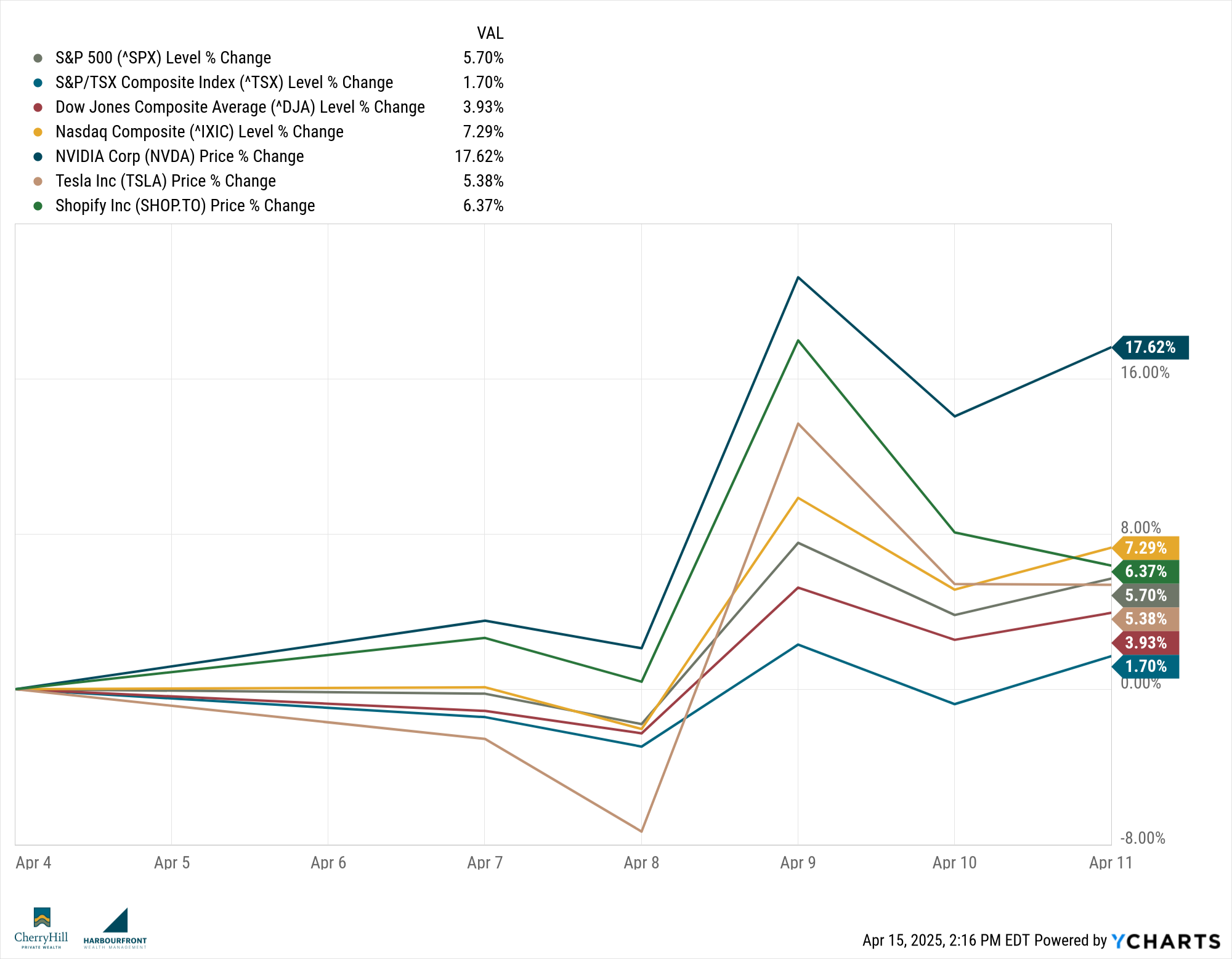
The TSX climbed +2.1%, helped by gains in technology and financials. Energy stocks also saw a lift as oil prices stabilized. Shopify led the charge with a +6.4% weekly gain, mirroring broader optimism around tech names. Banks and insurers recovered from earlier weakness, buoyed by stabilizing bond yields and broader market sentiment.
U.S. Markets:
U.S. equities bounced back sharply. The S&P 500 rose +5.7%, the Dow gained +5%, and the Nasdaq led with a +7.3% surge, its strongest weekly performance since late 2023. Tech shares rallied after the Trump administration announced that smartphones, laptops, and certain electronics would be exempt from the sweeping tariffs initially proposed earlier in the week. That reversal eased fears of supply chain disruption and consumer price shocks.
Global Markets:
Markets overseas also stabilized. The FTSE 100 gained +1.9% and Germany’s DAX added +2.4%, as Europe reacted positively to the U.S. signalling a 90-day pause on broader tariff implementations. In Asia, China’s Shanghai Composite slipped -1.2% as Beijing raised tariffs on U.S. goods to 125%, escalating the standoff. Japan’s Nikkei advanced +2.8% on hopes that stimulus will be extended to offset external trade pressures.
Tariff Uncertainty Remains the Wildcard:
The initial shock of President Trump’s tariff announcement early in the week — including a sweeping 10% baseline tariff and a targeted 145% tariff on Chinese goods — triggered broad selling. However, by mid-week, the U.S. softened its stance, exempting major consumer tech and issuing a 90-day tariff pause for most countries (excluding China). China, in turn, hiked tariffs on U.S. imports to 125%, effective April 12. While markets have recalibrated, the risk of further escalation remains.
Trends to Watch This Week:
- Q1 Earnings Season Begins: Major U.S. banks and tech companies report — results and guidance will set the tone.
- Canadian Jobs Data: Labour market strength will influence Bank of Canada rate cut timing.
- Tariff Watch: Investors will monitor for further U.S.-China developments and corporate responses to shifting trade policy.
Summary:
Despite a rocky start, markets rebounded as fears over a full-blown trade war were tempered by partial exemptions and a temporary pause in new tariffs. With volatility elevated and trade policy still evolving, investors should remain focused on diversification and fundamentals as Q1 earnings roll in.
Final Thought
As we ride this rollercoaster, remember to try and stay grounded. Often the news we get is neither as good or bad as it initially seems. Things do have a way of levelling out over time and coming back to the historic averages. If you remain well diversified and include alternatives, with downside protection, you can ride out these uncertain times with minimal discomfort.
Until next time, stay informed and strategically invested!
Trevor