
The Tariff War and Your Investments
A lot has happened this past week, let’s get into it.
In today’s email:
- Markets are down, so does this “downside protection” thing actually work?
- Even the penguins couldn’t escape the tariff war, let’s have a look at how this affected the markets last week.
- We spoke to Ian Goodman about global markets and how the ultra wealthy are positioning themselves.
The Scoop
I’ve been writing this newsletter for a couple of years now, and I keep circling back to a common theme — downside risk protection. We, as humans, have a tendency to ignore risks when things are going well. It’s why more than half of Canadians don’t have a valid will, and most new clients I speak with haven’t reviewed their insurance policies in years. But just like estate planning, thinking about risk management in your portfolio could be too late once markets pull back.
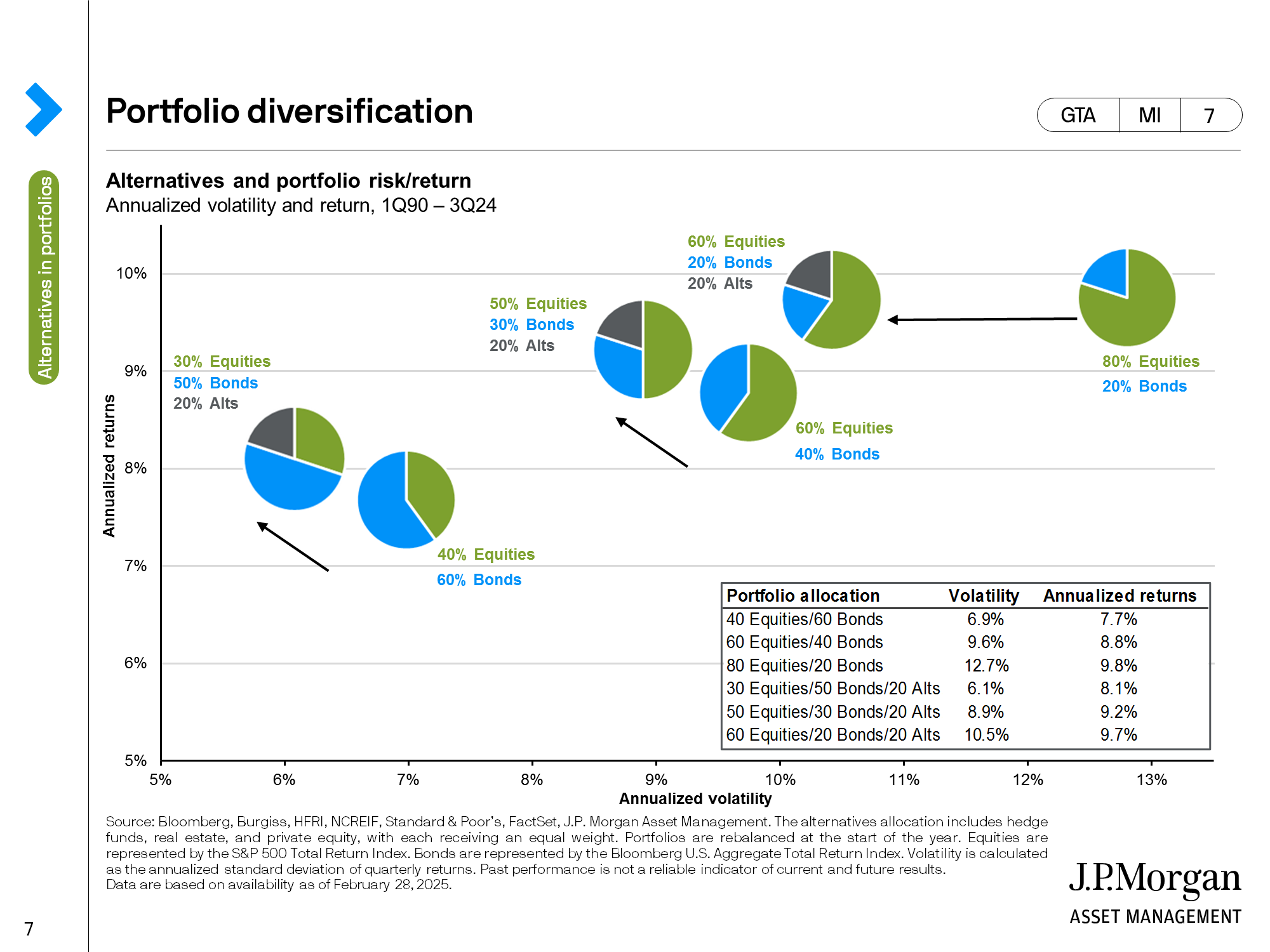
We’re only a few months into a new U.S. administration — one with ambitions to significantly reshape global commerce. Last week reminded us just how quickly the actions (or whims) of a foreign government can impact the value of our investments. And as the cliché goes, these things may be temporary — BUT — wouldn’t it still be better to avoid those massive slides in the first place? Remember, if your investments drop 10%, you now need more than 11% just to get back to where you started. Protecting the downside is critical to growing wealth over time.
A look back to 2022, which was the last time we saw volatility like we’re seeing right now.
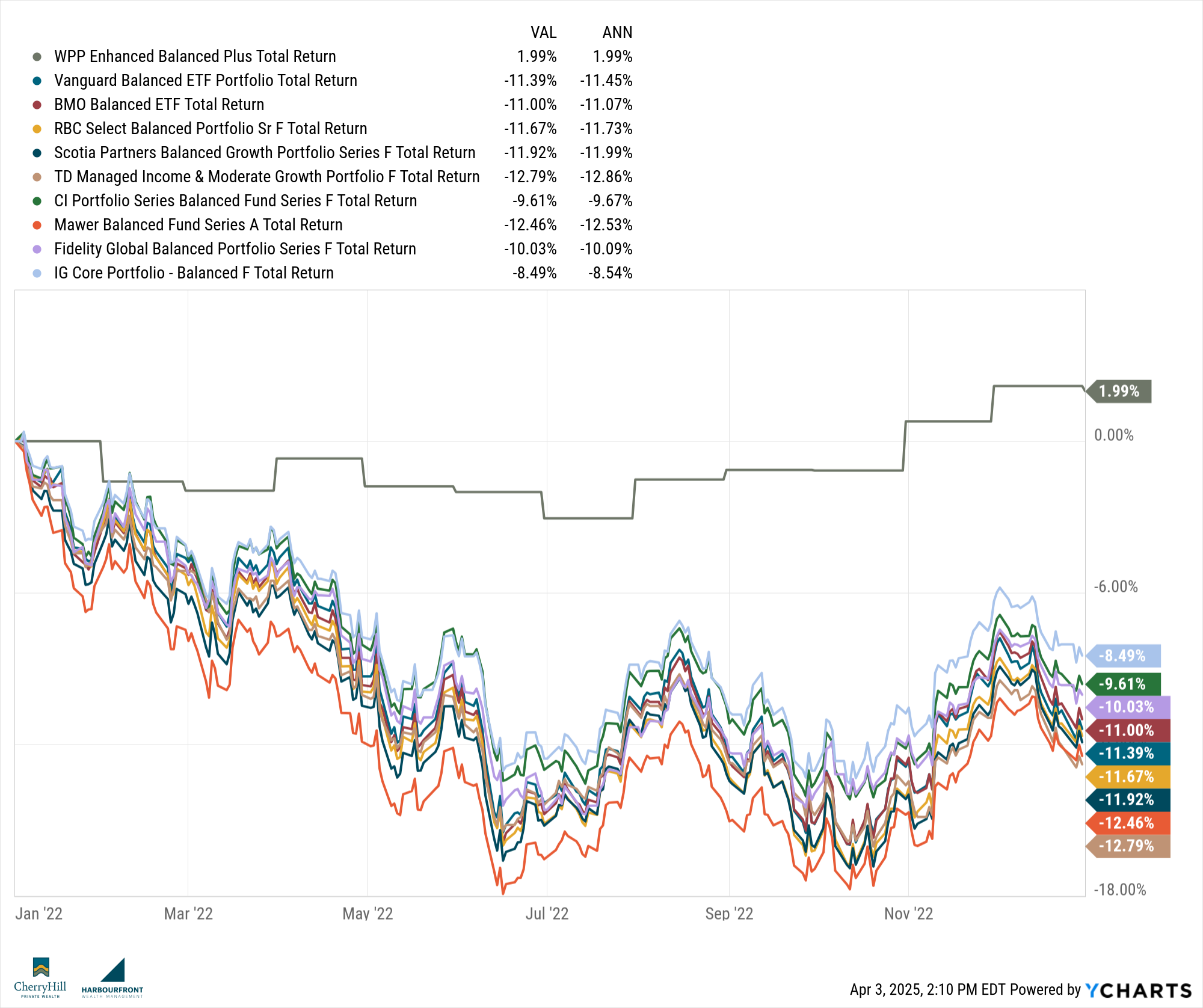
For many of you, this idea of downside protection has only been theory up to now. Adrian and I partnered with Harbourfront in 2022, once the worst of that year was behind us, and Ashley joined during a very strong year for the markets. For those of you who have put your trust in us — thank you. This, however, is no longer just theory. As I write this (on Friday, April 4), we’re in the midst of another very rough day in the markets. With the S&P 500 sliding 6% after Thursday’s market turmoil, I saw firsthand how our investment approach holds up when it really matters.
JP Morgan had a look at what adding 20% of Alternatives into a portfolio does for returns and risk.
On Friday, I compared another firm’s “high net worth” balanced portfolio to ours. Less than 48 hours after the tariff announcement, their fund was down nearly 7% for the month, while our WPP fund was down around 1%. (Keep in mind, our private investments haven’t yet been updated due to reporting lags, so this will likely look even better in the days to come.)
A quick look at some of the major mutual funds and ETFs and how they performed last week.
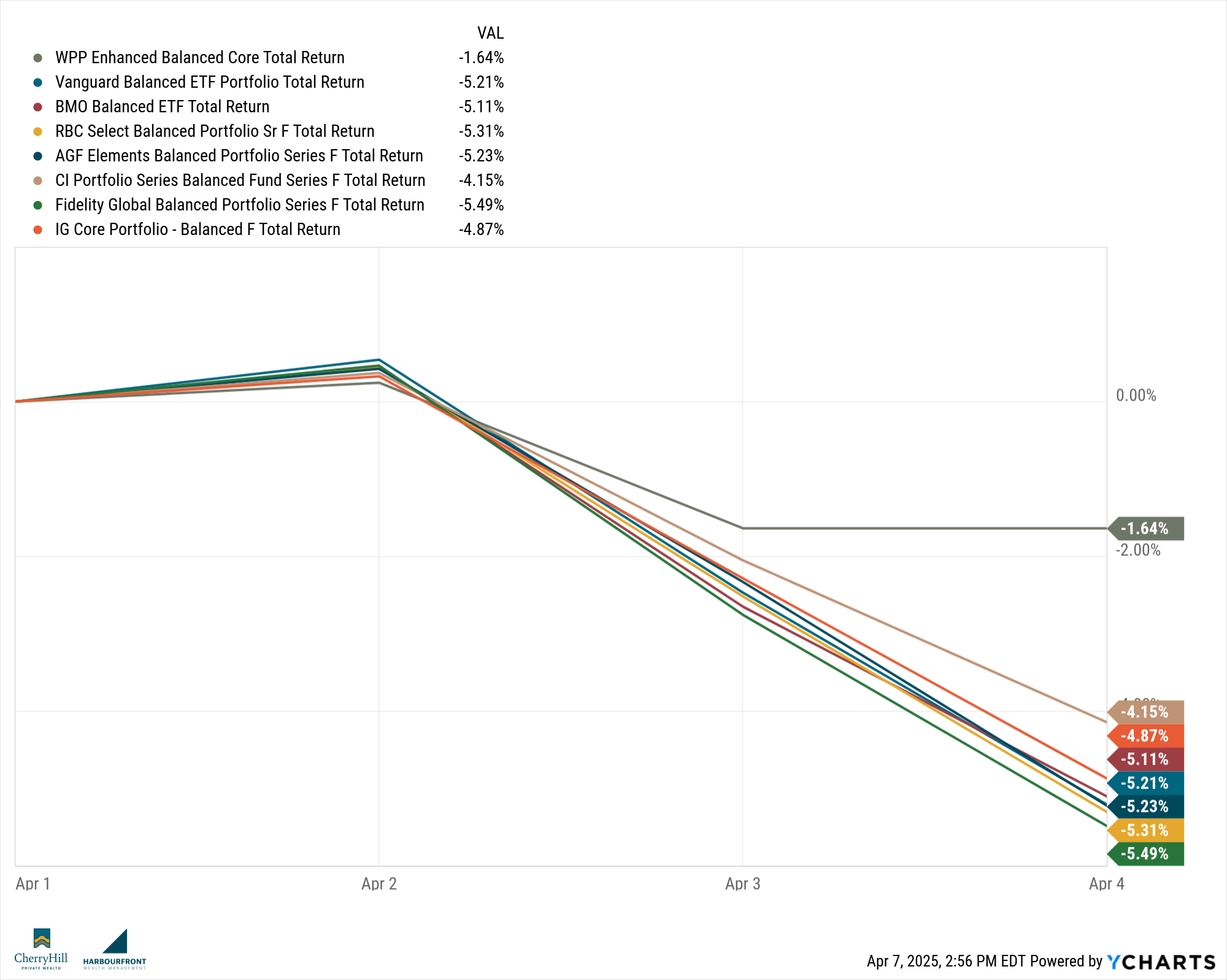
This isn’t a call to run for the hills — but it might be time to take a good, honest look at how you invest. If you’re already investing like the pension funds and your portfolio has downside protection built in, that’s great! But that’s not the norm. So if you have friends or family who are still investing “the old way,” please share this newsletter and make an introduction. Our team at Cherry Hill has capacity to take on a few new clients this quarter, and we’d love it if one of them was someone you care about.
Market Minute
On April 2, 2025, President Donald Trump announced sweeping tariffs, including a 10% baseline on all imports and higher rates for specific countries—34% on China and 20% on the European Union (10% on the penguins). This unexpected move, dubbed “Liberation Day,” aimed to address trade imbalances but immediately sparked fears of a global trade war and its potential economic repercussions.
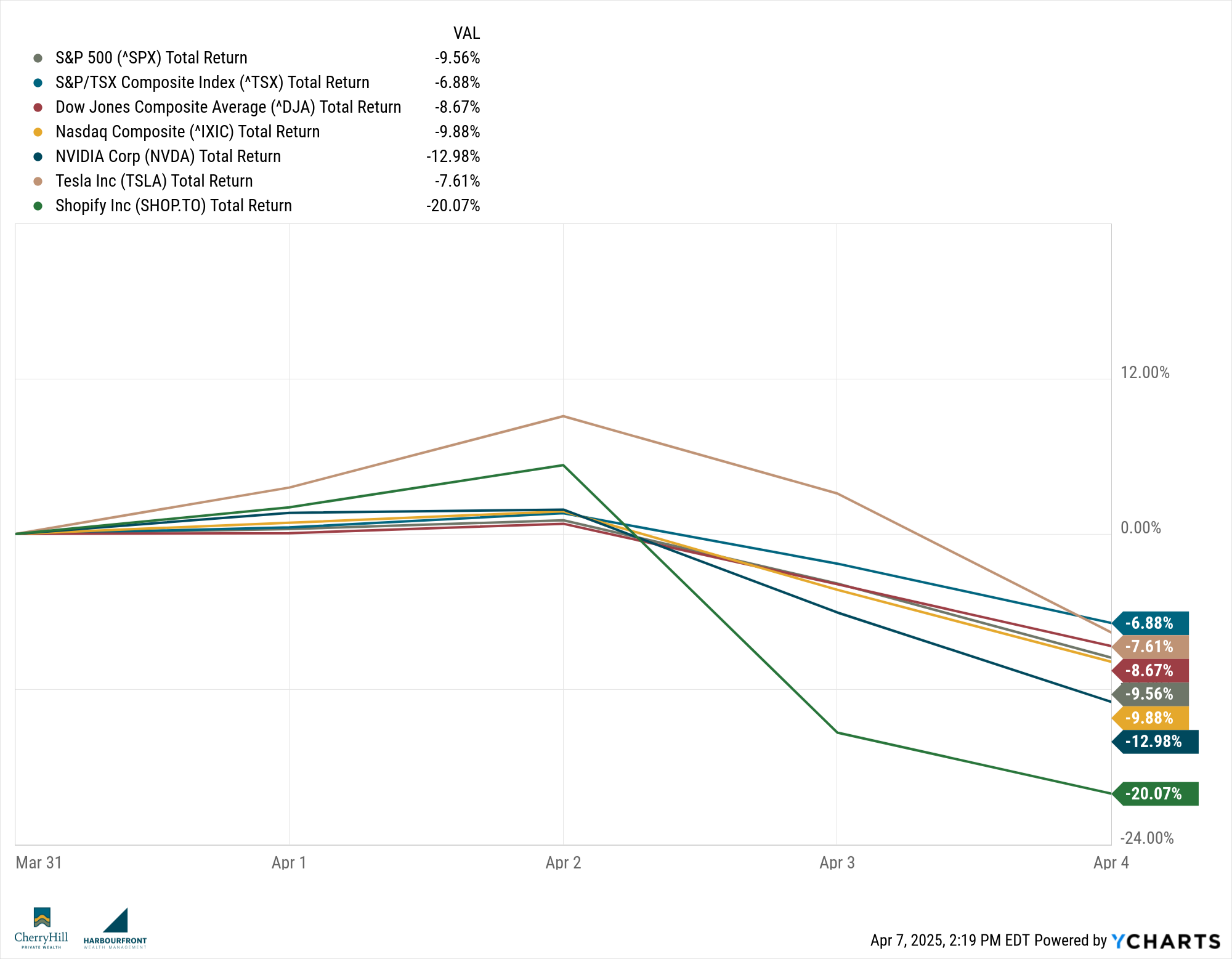
U.S. Markets:
The announcement led to significant market volatility. On Thursday, April 3, the Dow Jones Industrial Average plunged 1,679 points (-3.98%), marking its fifth-largest point drop in history. The S&P 500 declined by 4.88%, and the Nasdaq Composite fell by 5.97%, its largest point loss ever. The downturn continued into Friday, April 4, with the Dow shedding an additional 2,231 points (-5.8%), bringing its two-day loss to over 3,900 points. The S&P 500 and Nasdaq also experienced further declines, culminating in a two-day market value loss exceeding $6 trillion.
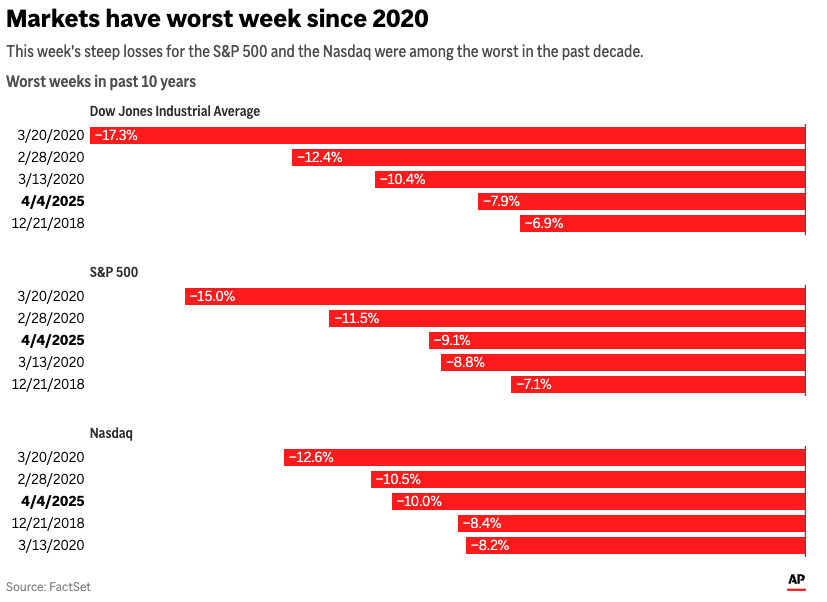
Global Markets:
International markets mirrored the U.S. turmoil. In Europe, the FTSE 100 fell by 1.6%, France’s CAC 40 dropped 3.3%, and Germany’s DAX declined 3.1% on April 3. Asian markets were also impacted; Japan’s Nikkei 225 decreased by 2.8%, and the broader TOPIX index fell by 3.1%.
Investor Sentiment:
The abrupt tariff implementation heightened fears of escalating trade tensions and a potential global recession. Sectors heavily reliant on international trade, such as technology and automotive, faced significant sell-offs. Major companies like Apple saw their stock prices decline sharply, with Apple losing 15.9% of its value over two days, its worst performance since September 2008.
The VIX, or what many call the “Fear Index” has reached heights not seen since the early days of COVID.
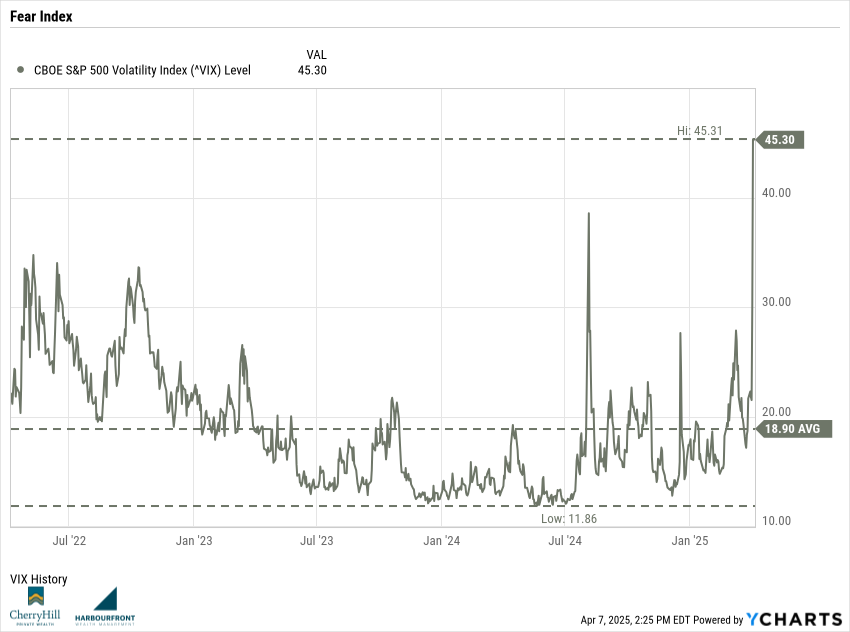
Trends to Watch This Week
- International Responses: Countries affected by the tariffs are formulating responses. The European Union has proposed a “zero-for-zero” tariff resolution, aiming to eliminate industrial tariffs between the EU and the U.S., while also preparing countermeasures if negotiations fail.
- Economic Indicators: Upcoming economic data releases will be scrutinized for signs of the tariffs’ impact on growth and inflation.
- Corporate Reactions: Companies with significant international exposure may revise earnings forecasts and supply chain strategies in response to the new trade landscape.
The markets reacted sharply to the unexpected tariff announcements, reflecting deep concerns about the potential for an escalating trade war and its impact on the global economy. Investors are advised to monitor international developments closely, as responses from affected countries and subsequent policy decisions will be critical in shaping the economic outlook in the coming weeks.
CHPW Update
Last week we had the opportunity to sit down with Portfolio Manager, Ian Goodman. He manages Harbourfront’s Watermark Private Portfolio, so we took this time to ask Ian about the state of the economy under the new regime South of the border. We also pushed him on how the private markets perform in situations like we’re currently in.
See the whole conversation here.
Final Thought
We have seen the economic world turned on its head with a new U.S. leadership that has an agenda, which is creating uncertainty across the globe. During times like this, knowing that your team has every tool at their disposal and is not handcuffed by the rigidity of the major banks and mutual fund companies, should give some peace of mind. Our team has managed times like this, and has done exceptionally well.
Until next time, stay informed and strategically invested!
Trevor