

Heading for a Recession?
March break is over for Ontario kids (and parents), so let’s take a look at a major headline recently — recession. What does this really mean and should we care?
In today’s email:
- A global market update that you don’t want to miss.
- You might not have all your tax slips, here’s when they’re heading your way.
- Soft landing? Recession? What does it all actually mean?
- Mixed markets again — what trends are we watching?
CHPW Update
There is still much volatility in the markets with tariffs, geopolitical tensions, and much uncertainty in what the U.S. is trying to accomplish with its new political agenda — markets don’t like uncertainty. Our team has decided to host regular conversations with industry leaders about what is happening in the markets and what you should be aware of. Our first conversation will be with our top portfolio manager, Ian Goodman, and we will discuss everything that our team is looking at when it comes to ‘the markets’. We invite you to join this conversation to hear about the big picture as well as how we’re positioning our portfolios. You will have the opportunity to ask questions, or send us a question prior to the webinar.
Here are the details:
Tuesday, March 25 at 5:30PM EST
We also wanted to remind you that you may still be waiting on tax slips, so to avoid having to resubmit your slips you should hold off filing until April. Fund companies have until March 31 to send out the slips, which are sent by mail. If you want to file during the first week of April and haven’t received all your slips, please reach out to us and we will send out a soft copy.
The Scoop
Are We Headed for a Soft Landing, or Is a Recession on the Horizon?
For the past couple of years, the terms “soft landing” and “recession” have been at the heart of economic discussions. With inflation running hot in 2022, the Federal Reserve and the Bank of Canada aggressively raised interest rates, aiming to cool the economy without causing a deep downturn. Now, as rates begin to ease and growth remains resilient, we’re left wondering: Did we actually achieve a soft landing, or is a recession still looming?
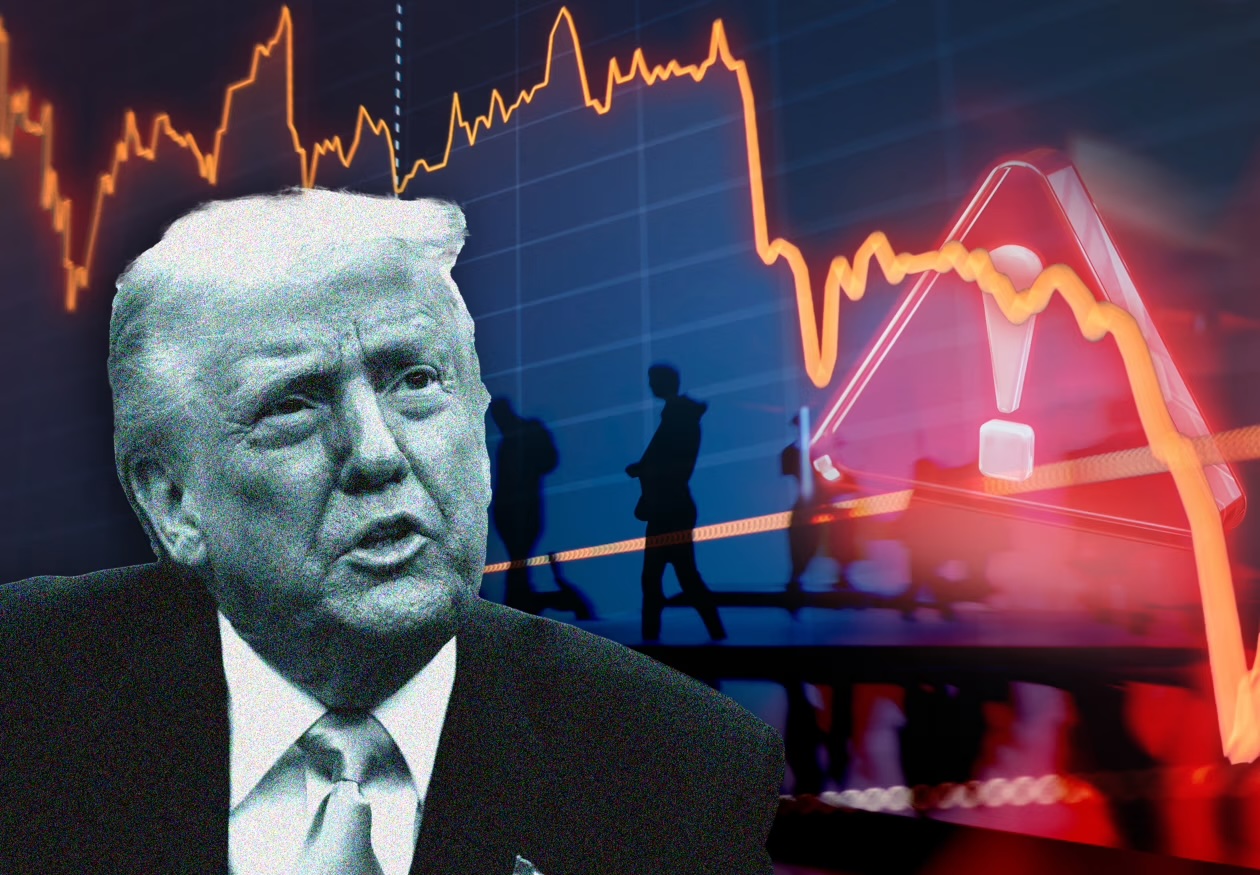
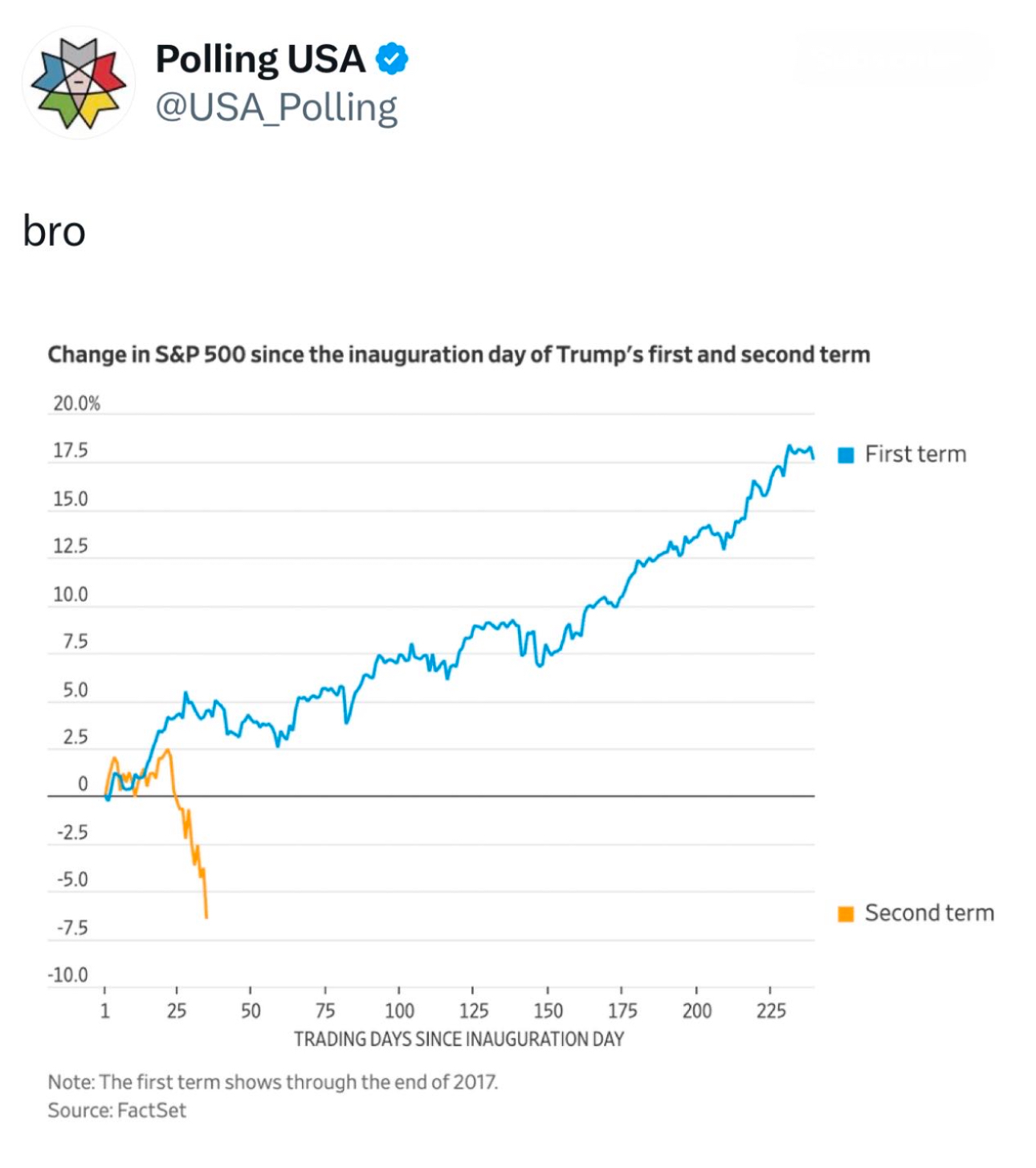
Recently, Donald Trump made headlines by suggesting that a recession is on the way. Whether you agree with him or not, the question remains: What would a recession mean for the Canadian and U.S. economies, and how would markets react?
What is a Soft Landing?
A soft landing occurs when central banks successfully slow down economic growth to curb inflation without triggering a full-blown recession. This means interest rate hikes cool excess demand, job markets adjust slightly, and inflation returns to target levels—all while avoiding mass layoffs, plunging consumer confidence, and a sharp economic contraction.
We’re in a period where inflation is moderating, unemployment remains low, and GDP growth is positive, suggesting that we might be experiencing a soft landing in real time. However, it’s only confirmed in hindsight, when economic data stabilizes and no severe downturn follows.
When Would We Know for Sure?
Economists typically use key indicators to assess whether a soft landing was achieved or whether we’re heading toward a recession:
- GDP Growth: If economic growth remains positive but slows to a sustainable pace (1-2% annually), that suggests a soft landing.
- Unemployment Rate: A mild increase in unemployment (but staying under 5-6%) aligns with a soft landing. A sharper rise signals recession.
- Consumer Spending & Business Investment: Continued consumer spending and corporate investment show confidence in the economy.
- Yield Curve & Credit Markets: The bond market has been flashing recession warnings (inverted yield curves), but these signals don’t always guarantee a downturn.
What If Trump is Right? The Impact of a Recession
If the economy does slip into a recession, what would that mean for investors? Historically, U.S. and Canadian markets react differently depending on the severity of the downturn.
- Stock Market Volatility: Equities tend to sell off sharply when recession fears rise, especially in economically sensitive sectors like retail, industrials, and financials.
- Rate Cuts & Bonds: Central banks typically respond by cutting interest rates aggressively, which benefits bonds and fixed-income investments.
- Private Markets: Private equity, private credit, and real estate markets often see a slowdown, but well-managed funds can capitalize on distressed opportunities.
- Long-Term Recovery: Market downturns create buying opportunities for investors with a long-term perspective, as history has shown that recessions are typically followed by strong recoveries.
How Do Pension Funds and Endowments View This Environment?
Large pension funds and endowments, like the Canada Pension Plan (CPP) or major university endowments, take a different approach to economic cycles. Rather than being swayed by short-term market movements, they focus on long-term sustainability and risk-adjusted returns. Their investment models often prioritize downside protection and diversification through alternative assets.
- Private Equity: During economic downturns, private equity firms look for distressed assets, undervalued companies, and restructuring opportunities. While valuations may fall in the short term, well-capitalized funds can acquire strong businesses at attractive prices.
- Private Credit: When traditional banks tighten lending in recessionary environments, private credit fills the gap. Pension funds and endowments allocate to private credit as it often provides higher yields with structured downside protection.
- Real Assets & Infrastructure: Many large institutional investors allocate to infrastructure, real estate, and commodities as they tend to offer stability, inflation protection, and long-term growth.
- Hedging Strategies: Endowments and pension funds often employ hedged strategies, such as options-based investing or market-neutral approaches, to reduce volatility in uncertain times.
What Should Investors Do?
Regardless of whether we’re experiencing a soft landing or heading into a recession, the best investment strategies remain the same:
- Diversification Matters: A mix of public and private investments, along with alternative assets, helps reduce portfolio volatility.
- Focus on Quality: High-quality companies with strong cash flows tend to weather economic downturns better.
- Stay Disciplined: Avoid reacting emotionally to short-term market movements. Long-term investors typically benefit from staying invested through cycles.
Final Thoughts
A soft landing remains a possibility, but it’s not confirmed until we look back with the benefit of hindsight. If a recession does materialize, it’s important to remember that markets are forward-looking—meaning much of the downside could already be priced in. Whether Trump’s warning proves accurate or not, what truly matters is having a well-balanced portfolio that can withstand both economic slowdowns and recoveries.
Institutional investors, such as pension funds and endowments, take a long-term approach, leveraging alternative investments to manage risk and capitalize on opportunities during economic uncertainty. This perspective can be valuable for individual investors looking to build resilient portfolios.
If you have questions about how to position your investments in this uncertain environment, let’s have a conversation.
Market Minute
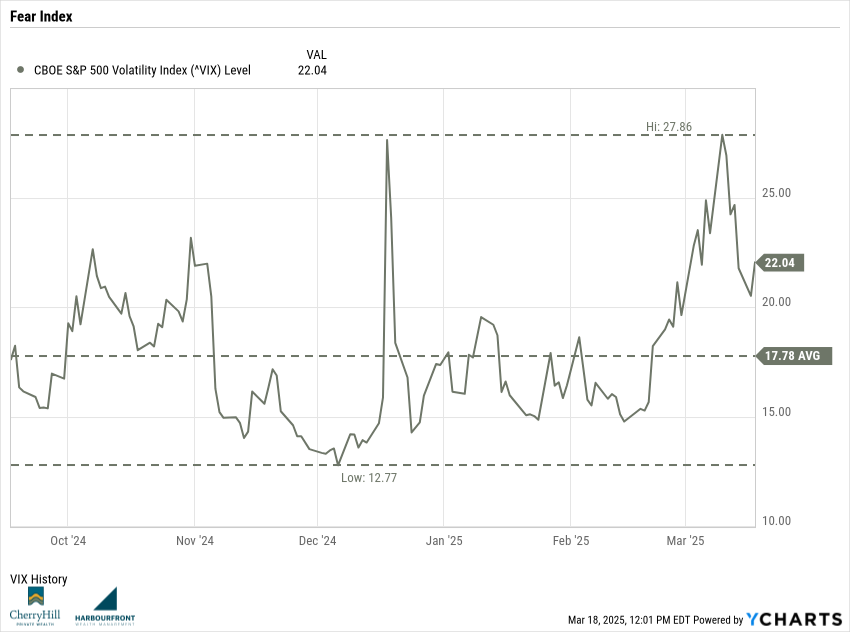
More volatility recently. Let’s dive into what happened in markets last week and what were looking at this week.
Canada:
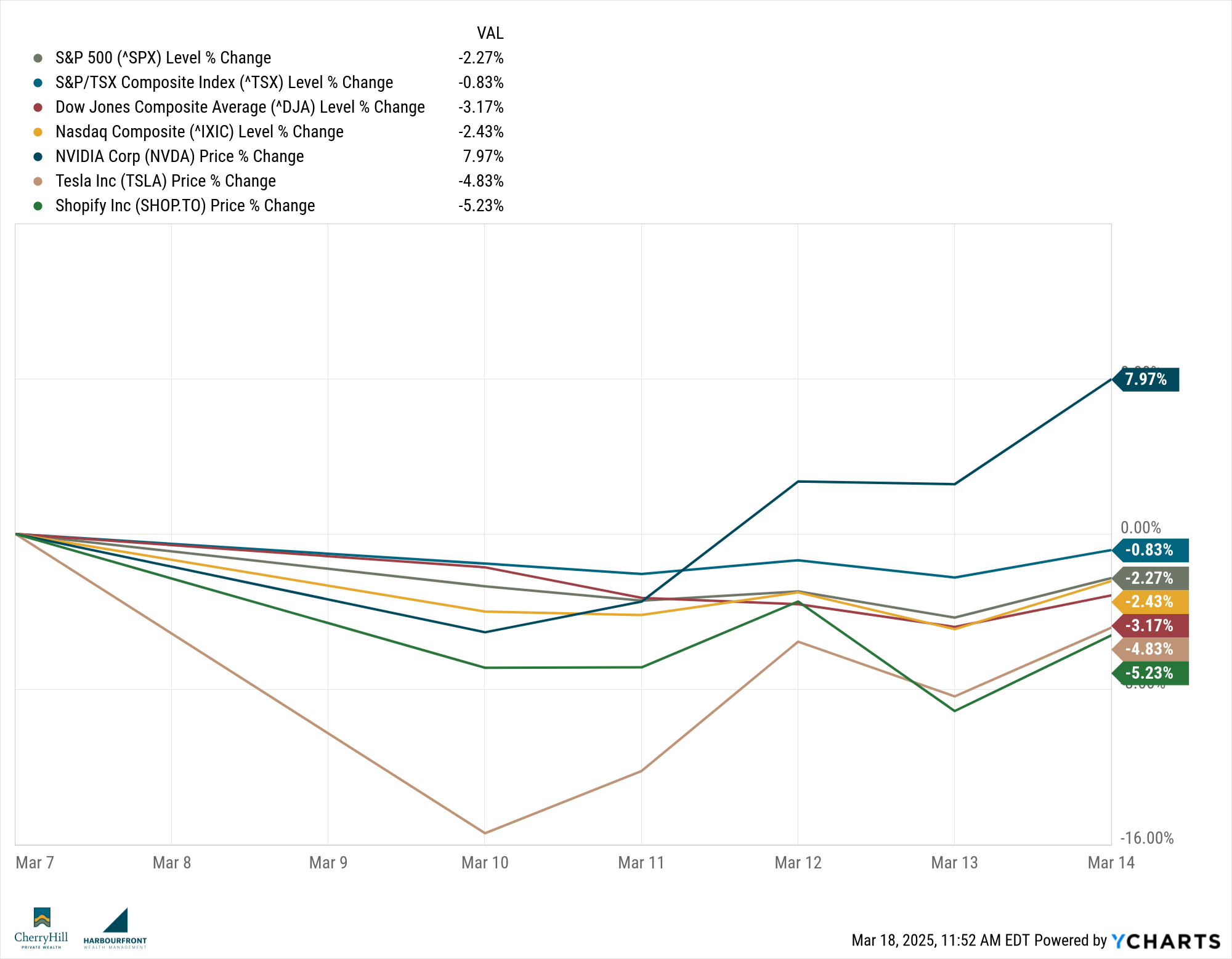
The TSX Composite finished the week down 0.8%, dragged lower by declining energy and financial stocks. Oil prices dipped as global demand concerns resurfaced, putting pressure on Canadian producers. Meanwhile, the Bank of Canada held rates steady as expected, but comments from Governor Macklem suggested that rate cuts could come sooner than anticipated if inflation continues to ease. Canadian housing data showed some softness, with new home prices falling slightly, reflecting the ongoing impact of higher borrowing costs.
United States:
U.S. markets saw a mixed week, with the S&P 500 rising 0.5%, the Dow Jones slipping 0.3%, and the Nasdaq gaining 1.2%. Tech stocks remained the bright spot as AI-driven enthusiasm pushed Nvidia and Microsoft to new highs. However, weaker-than-expected retail sales data raised questions about consumer strength, while bond markets priced in a higher probability of rate cuts from the Federal Reserve later this year.
Global:
Global markets followed a similar pattern, with European stocks struggling amid concerns over stagnating growth and a cautious ECB. In Asia, China’s markets showed signs of recovery, boosted by government stimulus efforts, but investor sentiment remains fragile. Japan’s Nikkei index continues its impressive rally, hitting fresh multi-decade highs as foreign investment flows into the country.
Trends to Watch This Week
- Federal Reserve Policy – Markets will be watching closely for any updated signals on rate cuts.
- Earnings Season Continues – Major tech firms are set to report, which could set the tone for broader markets.
- Commodity Prices – Oil and gold prices have been volatile, and their direction will impact energy and mining stocks.
Markets continue to be mixed with drastic movements depending on headlines and policy shifts from the U.S. that seem to be happening at a break neck pace. If you have questions about what this means for you and your portfolio, let’s connect.
Final Thought
With markets, the economy, and global relationships all uncertain, we are here for you. Our team is working in the background to insure that your portfolio is dynamic and continues to protect on the downside. As I’ve written about the last couple weeks, there are things that we can control and there are some that are out of our hands. I believe that by entrusting the Cherry Hill and Harbourfront teams with your family’s investments that you have put yourself in the best position for success.
Send us your questions for Ian as he discusses everything from the trade war, economic instability, global tensions, and how they all affect your portfolio.
Until next time, stay informed and strategically invested!
Trevor