


The Things We Can Control
We’re going to have tariffs… we’re not going to have tariffs… we might still have tariffs in 30 days…
We are not quite two weeks into the new presidency and if this is any indication of what’s to come, we’re in for a wild ride. Whether tariffs come in a month’s time or not, I’m sure you will agree that having investments that are insulated from all the volatility is good for the soul. This week I want to shift gears and focus on something different.
In today’s email:
- The top habits to create if you’re accumulating wealth.
- It’s time to preserve your assets, how do you do this?
- Markets don’t like uncertainty, so it’s could be a wild ride for public markets.
- Some major trends we’re watching this week.
The Scoop
For those of you investing with us, rest assured—we’ve got you covered. Our investment approach is built to handle uncertainty. While market turmoil may still arise, our strategy positions us to fare better than the competition. That said, today I’d like to focus on the things we can control.
The Importance of Discipline
Building wealth is a lot like trying to get that perfect “beach bod” - you can’t wait until the first day of summer to start training. It’s about creating good habits (working out every morning, eating well) and staying disciplined (saying no to that extra slice of pizza). When markets become uncertain, the temptation to pull back can be strong, just like skipping workouts when you’re tired or busy. But success comes from consistency, even when conditions feel challenging.

If You’re Accumulating
If you’re in the wealth-building stage of life, here are a few key things to focus on:
RRSPs: The Best Wealth-Building Tool in Canada
RRSPs remain one of the most effective ways to accumulate wealth. Many people who criticize them simply don’t fully understand how they work. Yes, you’ll pay taxes in retirement, but you’re saving taxes now. With a well-planned retirement income strategy, balancing taxable and non-taxable sources, you may end up with a lower tax rate, not necessarily lower income.
One of the biggest mistakes people make with RRSPs is how they handle their tax refunds. If took out a $3,000 loan, would you take a Caribbean vacation, or would you invest it or pay down debt? If you shift your mindset and treat your refund as an opportunity to accelerate your financial progress, RRSPs become even more powerful. And don’t forget—your investments grow tax-deferred, allowing for much faster compounding.
This year’s RRSP contribution deadline for the 2024 tax return is March 3, 2025.
TFSAs: A Tax-Free Growth Engine
TFSAs are an incredible tool for building a tax-free retirement income stream. Unlike RRSPs, you contribute after-tax dollars, but your investments grow tax-free, and you’ll never pay tax on withdrawals.
Many of my clients have done exceptionally well in their non-registered investments, but now they face the challenge of managing capital gains. With a TFSA, this issue disappears, giving you much more flexibility in structuring your retirement income.
For 2025, TFSA contribution room has increased by $7,000. If you’ve been eligible to contribute since its inception (i.e., you’re 33 or older), your total contribution room is now $102,000.
Regular Financial Check-Ups
At least once a year, take stock of where you stand. Are you tracking key metrics like net worth? Are you on pace to meet your financial goals? Some areas to review:
- Your financial plan: Update your numbers and ensure you’re still aligned with your long-term strategy.
- Portfolio adjustments: If your investments have done well, you may be overweight in equities and exposed to unnecessary risk.
- RESPs: If your child is approaching post-secondary education, rebalancing toward a more conservative allocation is essential.
- Insurance coverage: Have your needs changed? If your mortgage is paid down, you might be overinsured. If you’ve had a child or bought a home, you might need more coverage.

If You’re Preserving Wealth
If you’re past the accumulation stage and focused on protecting your wealth, here’s what to prioritize:
Reviewing Your Financial Plan
Your financial plan is your roadmap—it should be reviewed regularly to ensure you’re on track. The key concerns in retirement often boil down to two questions:
- Am I going to be okay?
- Will my loved ones be okay if something happens to me?
We’ve had strong investment markets recently, but inflation has also increased expenses. Have these higher costs impacted your long-term projections? Have you had unexpected expenses that might require an adjustment?
Rebalancing your portfolio is also essential. After a strong market run, you may be overexposed to equities, making you more vulnerable to market corrections.
Will & Estate Planning
Estate planning doesn’t have to be reviewed every year, but periodic check-ins are important. Life changes—for you and for your loved ones. A few key questions:
- Are your POAs and executors still the right choices?
- Have they moved? If they live far away, executing their responsibilities could be challenging.
- If you have multiple executors, can they work together effectively?

Staying on Track
Regardless of your financial stage, taking time to review your progress is crucial. A little bit of planning now can prevent major issues down the road. We have a structured process to ensure nothing important gets overlooked—and we’re happy to do the heavy lifting for you.
Let’s make 2025 a year of strategic, informed decisions. If you’d like to review your financial plan, discuss investment strategies, or simply check in, we’re here to help.
Market Minute
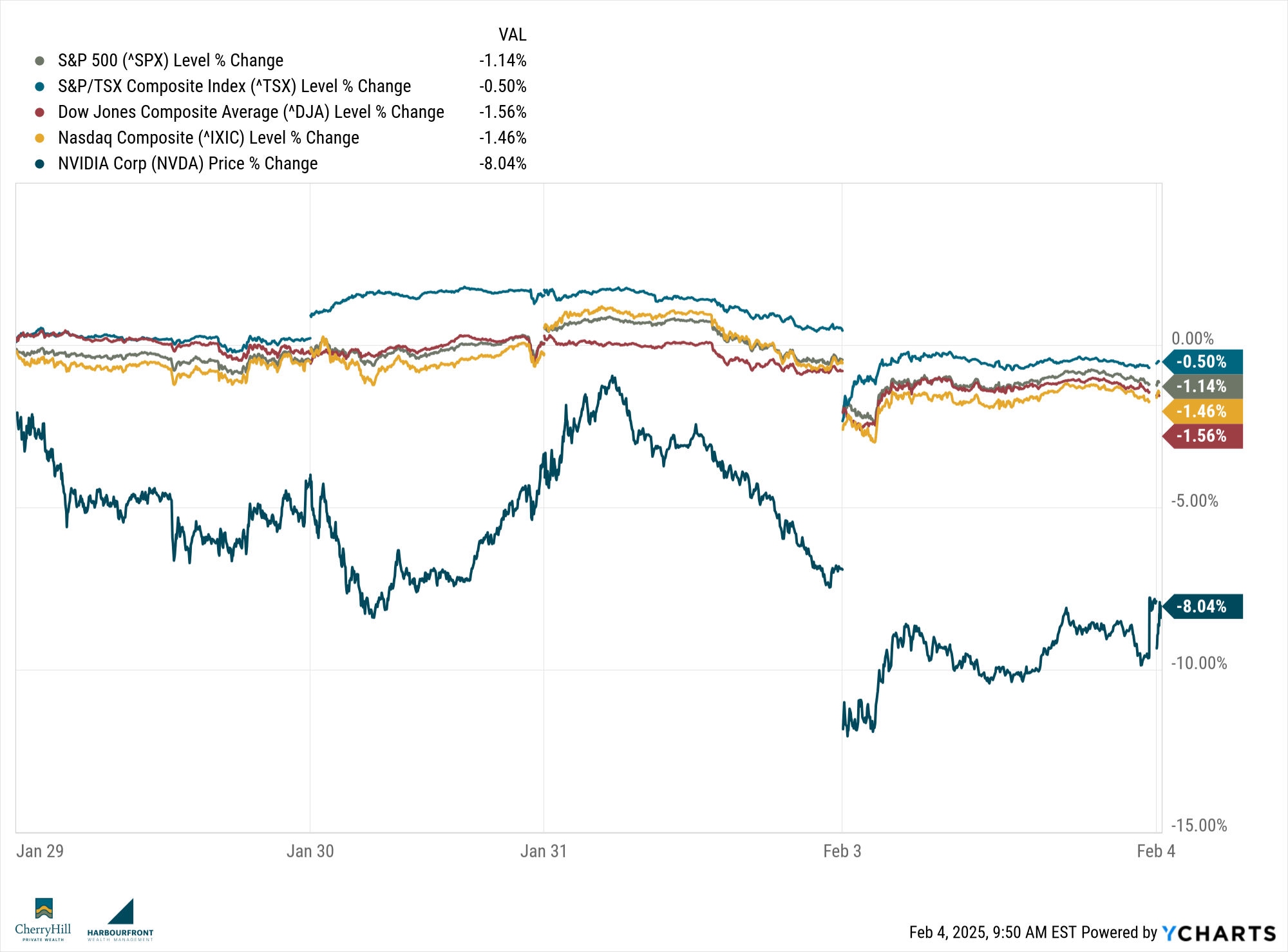
I typically have a look at the past week, but with most of the market movement happening earlier this week, it makes sense to have a look at what happened Monday as well. This past few days has seen much volatility in major markets, primarily due to geopolitical developments and U.S. policy decisions.
Tariffs:
On February 3, 2025, President Donald Trump announced the imposition of tariffs: 25% on imports from Canada and Mexico, and 10% on Chinese imports. This announcement led to immediate market reactions. The S&P 500 and Nasdaq Composite indices both declined by approximately 0.8% and 1.2%, respectively, while the Dow Jones Industrial Average fell by 0.3%. In Canada, the S&P/TSX Composite Index also faced downward pressure, reflecting investor concerns over potential economic impacts.
However, subsequent negotiations led to a temporary delay in the implementation of these tariffs. The U.S. reached agreements with Mexico and Canada to postpone the tariffs by 30 days, providing markets with a brief respite. Despite this, uncertainties remained, contributing to continued market volatility.
Private Equity and Private Credit:
The private equity sector remained active during this period. Notably, KKR & Co reported a fourth-quarter profit that exceeded expectations, driven by a resurgence in dealmaking activities. The firm’s fee-related earnings increased by 25% to $843 million, and adjusted net income rose by 33% to $1.19 billion. KKR’s assets under management grew by 15% to $638 billion, with significant capital deployed in various investments.
Trends We’re Watching
1. U.S. Employment Data:
- Job Openings and Labor Turnover Survey (JOLTS): On Tuesday, the Labor Department will release the JOLTS report, which previously indicated 8.1 million job openings in November. Investors will scrutinize the latest figures to assess labor market dynamics.
- January Employment Report: Scheduled for release on Friday, this report is anticipated to show an addition of approximately 165,000 nonfarm jobs, maintaining the unemployment rate at 4.1%. These figures are crucial for evaluating economic health and potential monetary policy adjustments.
2. Corporate Earnings Reports:
A significant number of S&P 500 companies are reporting fourth-quarter earnings this week. Notable releases include: Alphabet, PayPal, Pfizer, Ford Motor, Uber Technologies, Walt Disney, Amazon, Eli Lily, Expedia, amongst others.
These reports will provide insights into corporate performance and sector-specific trends.
3. Trade Tensions and Tariffs:
The recent implementation of a 10% U.S. tariff on Chinese imports has escalated trade tensions, with China responding through retaliatory measures, including tariffs and regulatory actions against major U.S. companies. These developments are contributing to market volatility and could have broader economic implications.
4. Central Bank Activities:
- Bank of England (BoE): The BoE is scheduled to announce its latest interest rate decision this week. Given recent economic data, there is speculation about a potential rate cut of 25 basis points to stimulate growth amid ongoing trade uncertainties.
5. Economic Indicators:
- Institute for Supply Management (ISM) Reports: The ISM will release its U.S. services sector report on Wednesday. Economists expect a slight decline in the index to 53.8 for January, indicating continued expansion but at a slower pace. This data is vital for understanding the health of the services sector, which constitutes a significant portion of the U.S. economy.
Until next time, stay informed and strategically invested!
Trevor