


Are Tariffs a Risk to Your Portfolio?
Are the “normal” days behind us? Tariffs, AI, and more economic uncertainty is what is in the headlines this week.
In today’s email:
- The U.S. President might not understand how tariffs work, but what will it mean for Canada if they’re imposed?
- DeepSeek is disrupting the AI industry, causing an immediate decline in U.S. AI stocks.
- We have some important dates and limits that you need to know for 2025.
The Scoop
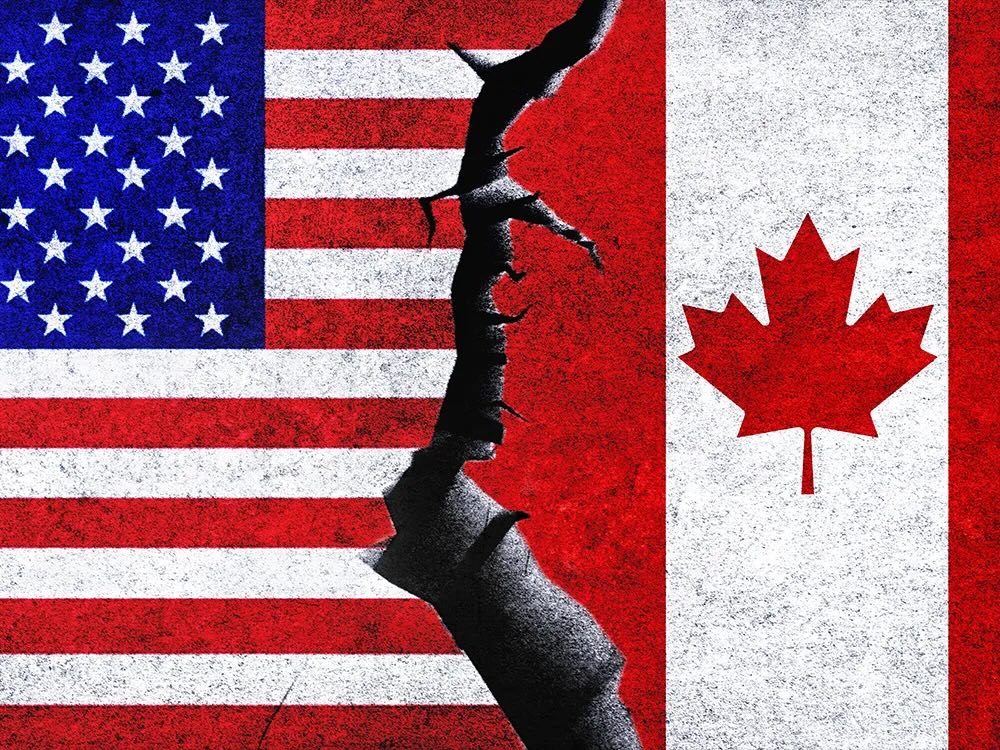
The financial world is abuzz with news about Donald Trump’s proposed tariffs on Canada. While we’ve seen trade tensions flare up before, the current proposals have the potential to create real challenges for the Canadian economy. These tariffs, targeted at key sectors like manufacturing, agriculture, and energy, could ripple through our economy, impacting employment, trade balances, and ultimately, your investment portfolio.
Let’s break this down.
Economic Impacts: A Tightrope for Canada
Canada’s economy relies heavily on exports, with the U.S. being our largest trading partner. Tariffs on key industries could make Canadian goods less competitive, leading to lower demand, factory closures, and job losses in affected sectors. This could push unemployment higher, particularly in regions where these industries dominate.
We’ve seen similar scenarios before, such as during the aluminum and steel tariff disputes in 2018. Businesses faced higher costs, supply chains were disrupted, and some had to downsize. The same playbook might unfold here, with the added complication of a slowing global economy.
Additionally, provinces like Ontario and Alberta could feel the pinch more acutely, given their reliance on manufacturing and energy exports. Reduced economic activity could also put downward pressure on the Canadian dollar, further complicating matters for businesses reliant on imports.
Investment Markets: What to Expect
Market reaction to trade disputes tends to be swift and, frankly, unsettling. Equity markets could see declines, particularly in sectors directly targeted by tariffs, such as industrials, energy, and materials. Export-heavy companies would likely face margin compression, leading to lower earnings and valuations.
On the flip side, the broader market might see increased volatility as investors grapple with economic uncertainty. The bond market could act as a temporary safe haven, especially for high-quality Canadian government bonds, which may see increased demand.
Alternative asset classes, such as private equity and real estate, might offer more stability during this period, as their valuations aren’t as sensitive to short-term market shocks.
Strategies to Hedge These Risks
For Canadian investors, diversification will be critical. Here are some strategies to help weather the storm:
- International Diversification**: **Exposure to international markets, particularly in regions less affected by U.S.-Canada trade tensions, can provide a hedge. Look to developed markets like Europe or emerging markets with strong growth potential. Canada will likely be the hardest hit, so reducing exposure here could be key.
- Alternative Investments**: **Private equity, private credit, and infrastructure investments can provide stable returns and insulation from market volatility. For instance, private credit funds often have floating rates, which can benefit from rising interest rate environments, offsetting potential losses in other areas.
- Currency Hedging**: **With the Canadian dollar likely to weaken if tariffs materialize, consider investments that benefit from a stronger U.S. dollar. U.S. equities or ETFs hedged back to CAD could protect your portfolio from currency swings.
- Sector Rotation**: **Avoid sectors directly in the crosshairs of tariffs, like industrials and materials, and consider those that may benefit from a weaker Canadian dollar, such as exporters in technology or consumer staples.
- Focus on Quality**: **Companies with strong balance sheets, wide economic moats, and diversified revenue streams are more likely to weather economic disruptions.
Stay the Course with Guidance
While the headlines may feel alarming, it’s essential to take a measured approach. Markets tend to overreact to uncertainty, but opportunities often emerge for disciplined investors.
In times like this, it is important to be flexible. You do not want to be hindered by antiquated investment structures that are required to have an insanely large portion of your investments in certain sectors or geographic areas. Most mutual funds that are offered by the banks and mutual fund companies have upwards of 30% of the portfolio in Canada. If this doesn’t seem like the best fit for your families financial future, we are happy to discuss alternatives.
Market Minute
Last week I commented on how it’s “been a rollercoaster to start 2025 and it might not smooth out any time soon for public markets.” Well, I wasn’t predicting what happened to start this week. Typcially I focus on last week, but today I wanted to comment on what has happened with the major US tech stocks.
Let’s take a look at what’s happening here.
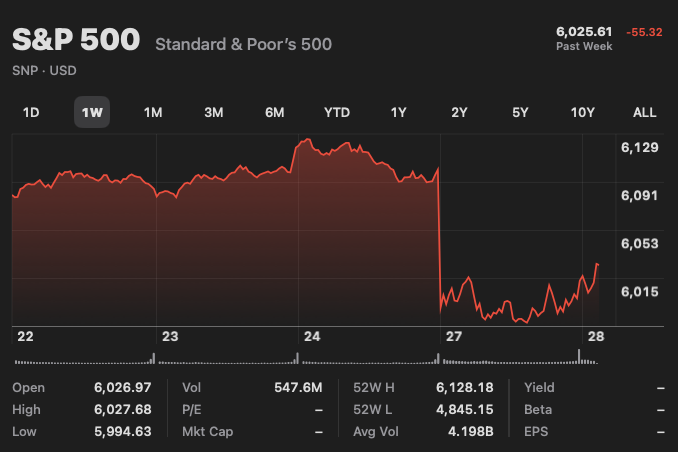
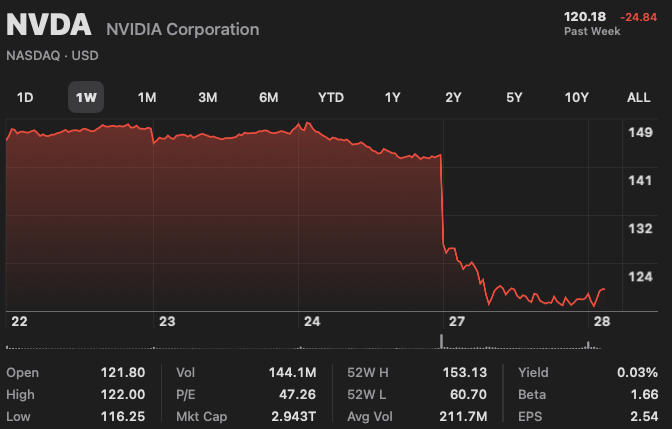
Over the past few days, U.S. tech stocks have experienced a significant decline, primarily due to the emergence of DeepSeek, a Chinese artificial intelligence (AI) startup. DeepSeek’s recent unveiling of an advanced AI model has raised concerns about increased competition in the AI sector, leading to a sell-off in major tech stocks.
DeepSeek has developed a sophisticated AI assistant that rivals existing models but at a fraction of the cost. Notably, it apparently achieved this using significantly fewer resources, training its model with about 2,000 specialized computer chips over approximately 55 days at a cost of $5.58 million. In contrast, leading U.S. companies have invested substantially more in similar technologies. This development has challenged the prevailing belief that cutting-edge AI development necessitates massive capital investment in expensive hardware and infrastructure.

The market’s reaction to DeepSeek’s announcement was swift and substantial. Nvidia, a key supplier of AI hardware, saw its shares plummet by nearly 17%, resulting in a record one-day loss of approximately $593 billion in market value. Other tech giants, including Microsoft, Alphabet (Google’s parent company), and Tesla, also experienced significant stock declines.
Looking ahead, the introduction of DeepSeek’s cost-effective AI model is likely to intensify competition in the AI industry. U.S. tech companies may need to reassess their strategies, focusing on innovation and efficiency to maintain their market positions. While the immediate market response has been negative, this development could ultimately drive technological advancements and more efficient AI solutions. Investors should monitor how established tech firms adapt to this new competitive landscape and consider the potential for both challenges and opportunities in the evolving AI sector.
There are several reasons to be skeptical about DeepSeek’s claims including lack of independent verification, potential overstating capabilities, misrepresentation of costs, state-backed support and propaganda amongst other potential issues.
While DeepSeek’s announcement has undeniably disrupted the AI and tech landscape, there are many reasons to approach its claims with caution.
The CHPW Team
It’s that time of the year again, RSP and TFSA contribution time! Here are the important numbers and dates that you will need to know.
Registered Retirement Savings Plan (RRSP)
- Contribution Deadline:
- The deadline to contribute to your RRSP for the 2024 tax year is 60 days after the end of the year, which falls on March 3, 2025.
- Contributions made before this deadline can be deducted on your 2024 tax return.
- Contribution Limits:
- The maximum RRSP contribution limit for 2024 is 18% of your earned income from the previous year, up to a maximum of $32,490.
Tax-Free Savings Account (TFSA)
- Contribution Limit for 2025:
- The annual TFSA contribution limit for 2025 is $7,000.
- If you have been eligible to contribute to a TFSA since its inception in 2009 and have never contributed, your total cumulative contribution room by 2025 would be $102,000.
- Key Points:
- Contribution Room Accumulation: Your TFSA contribution room accumulates each year, even if you do not contribute. Unused contribution room is carried forward indefinitely.
- Withdrawals: Amounts withdrawn from your TFSA are added back to your contribution room in the following year. For example, if you withdraw $5,000 in 2025, you can re-contribute that $5,000 starting on January 1, 2026, in addition to your regular contribution limit for 2026.
- Over-Contribution Penalty: Contributing more than your available TFSA contribution room will result in a penalty tax of 1% per month on the excess amount until it is withdrawn.
Always be sure to verify your available contribution room for your TFSA and RRSP. By verifying this information on the CRA’s My Account you can get up-to-date information on what you can contribute this year.
As a word of caution, the TFSA limits are not updated until after each institution has reported to the CRA. This might not actually be updated until late March.
Until next time, stay informed and strategically invested!
Trevor