


Why Buffett’s Sitting on $325 Billion
(And What It Means for You)
Advent calendars now have a couple missing chocolates and we’re going to start avoiding those hard-to-buy-for relatives for the next couple weeks - welcome to December! This month, for many, is filled with Christmas cheer, but can also be one of the best months for investing. Have you heard of the “Santa Claus Rally”?
In today’s email:
- Most investors don’t have $325 billion in cash lying around, but Warren Buffett might have a great idea to do just that.
- Markets are hitting new highs, but there’s a lot we’re watching over the next couple weeks.
- December can be one of the best months for the stock market, but what does each month typically entail?
- Our team just got back from our business planning trip and we’re excited!
The Scoop
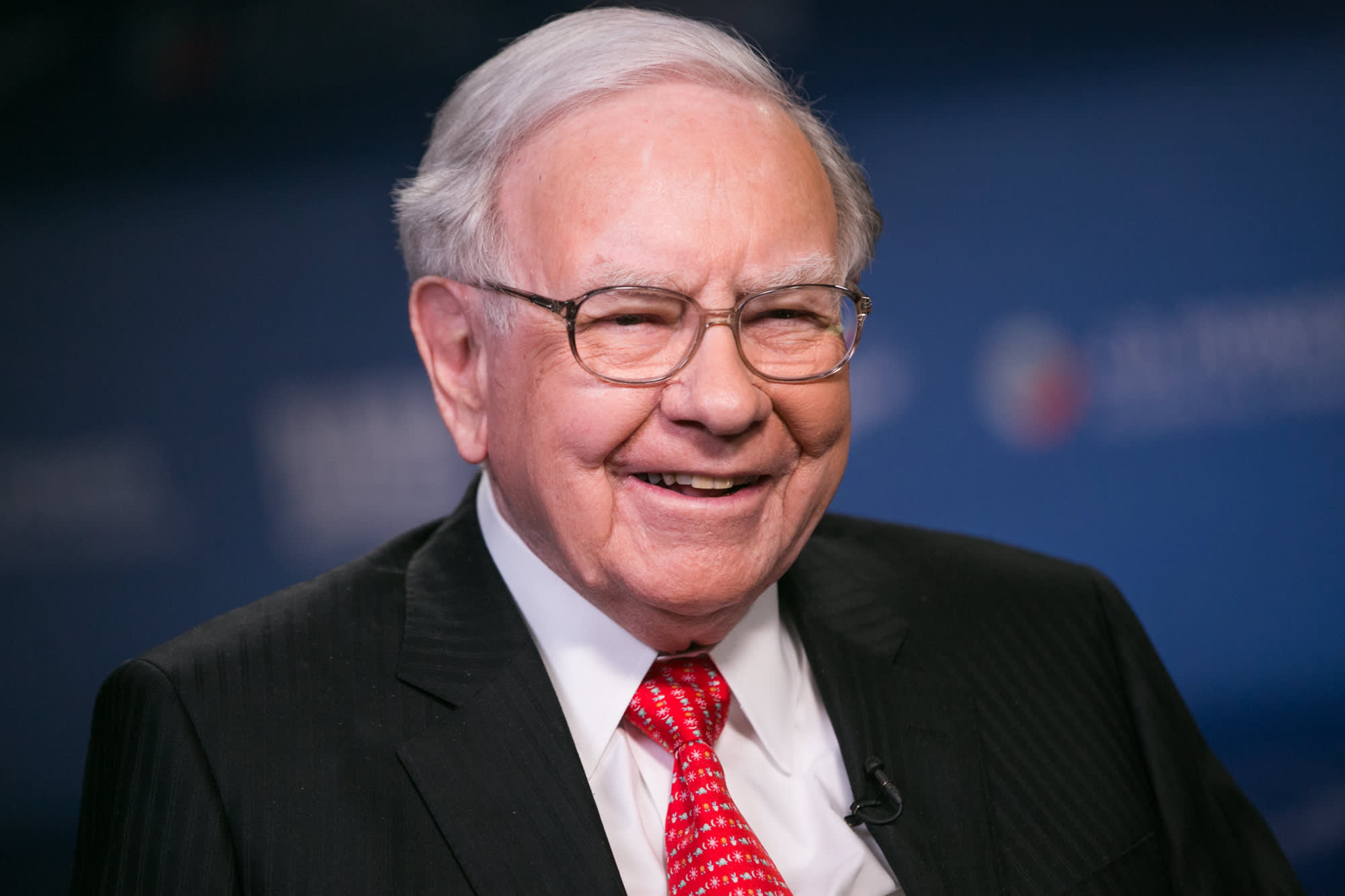
Warren Buffett’s $325 billion cash reserve at Berkshire Hathaway is making waves, and for good reason. The “Oracle of Omaha” doesn’t usually let money sit idle, so when he does, it’s worth taking notice. While Buffett isn’t waving a big red flag that says “market crash incoming,” his actions seem to be whispering, “Things are a little pricey around here.”
What’s Buffett Up To?
Buffett’s approach to investing is rooted in simple principles: buy great businesses at great prices and don’t overpay. Right now, he seems to think the “great price” part is missing. His decision to park such a hefty sum in cash suggests he’s waiting for better opportunities—likely when valuations cool down, and the market offers some bargains.
Think of it this way: Buffett isn’t timing the market so much as he’s patiently eyeing the dessert table at an all-you-can-eat buffet. Right now, it’s full of dry cookies and overpriced Jello, so he’s holding out for when the chocolate cake gets refilled.

The Market’s Price Tag
One of Buffett’s favorite tools for evaluating the stock market is the market-to-GDP ratio, which compares the stock market’s value to the size of the U.S. economy. Today, that ratio is at record highs—higher than the late ’90s dot-com bubble or the run-up to the 2008 financial crisis. Historically, high valuations have signalled lower returns, and Buffett seems to be taking that into account.
Adding to this, the S&P 500 is trading at a forward price-to-earnings ratio of 25. The historical average? A much more modest 18. Essentially, stocks aren’t cheap, and future returns for the market are projected to hover around 4% annually over the next decade. To put that into perspective, you can currently get around 4.4% on risk-free Treasury bills—why take on extra risk for a lower reward?
Then there’s the broader sentiment from the investment world. Big names like BlackRock and Goldman Sachs are echoing Buffett’s caution, with forecasts of below-average stock returns for the next decade. When the world’s best investors start agreeing on something, it’s worth listening.
The Role of Patience Investing
Buffett’s growing pile of cash sends a clear message: sometimes it’s okay to sit on the sidelines and wait. There’s no rush to throw your money into the market if the odds aren’t in your favor. Like Buffett, keeping some “dry powder” ready for better opportunities might be the smartest move right now.
This doesn’t mean abandoning the market entirely or trying to outguess its every move. Remember, Buffett himself admits he’s not great at timing the market. What he does exceptionally well is evaluate value—and right now, he doesn’t see much of it.
For most of us, this means taking a good, hard look at our portfolios. Are you overexposed to expensive growth stocks? Are you comfortable holding cash or diversifying into other asset classes while you wait? These aren’t always easy questions to answer, but they’re the kind of long-term thinking Buffett exemplifies.
A Buffet of Opportunity
Buffett’s strategy isn’t about sitting on cash forever. It’s about readiness. Market corrections, bear markets, and economic downturns are all part of the natural cycle. When they come, prices drop, and opportunities multiply. For Buffett, that’s when it’s time to move.
For investors like us, it’s a good reminder to stay disciplined. Keep your eye on your long-term goals, don’t overpay for assets, and be prepared to act when the market eventually serves up its chocolate cake.
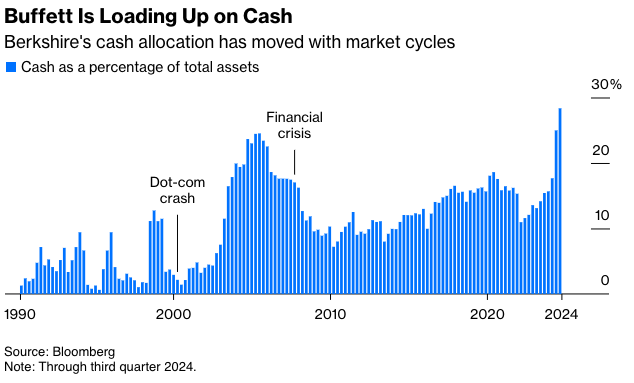
Within our portfolios, we have the opportunity to be more flexible with our allocations than most traditional investment firms like the banks and mutual fund companies. You might have noticed at certain times when we were holding more cash than normal or have completely moved out of a sector. As we’re seeing risks and opportunities we are able to act more like Warren Buffett to make sure we put you and your family in the best position for success.
As always, if you’re unsure about how to position yourself in these conditions, we’re here to help. Whether it’s building a strategy that keeps you comfortable during periods of uncertainty or identifying opportunities when the time is right, let’s talk about how to make Buffett’s approach work for you.
Market Minute
The final week of November saw some noteworthy developments. In the U.S., the Dow Jones Industrial Average hit a record high, closing at 44,296.51 points to start out the week, while the S&P 500 achieved its best month of the year with a 5.73% gain in November, culminating in a record close on November 29. The Nasdaq Composite also followed suit with gains of over 1% as well.
Investor optimism was fueled by President-elect Donald Trump’s pro-business policies, including the nomination of Wall Street veteran Scott Bessent as Treasury Secretary. However, caution lingered over potential tariffs that could drive inflation and complicate the Federal Reserve’s monetary policy decisions.
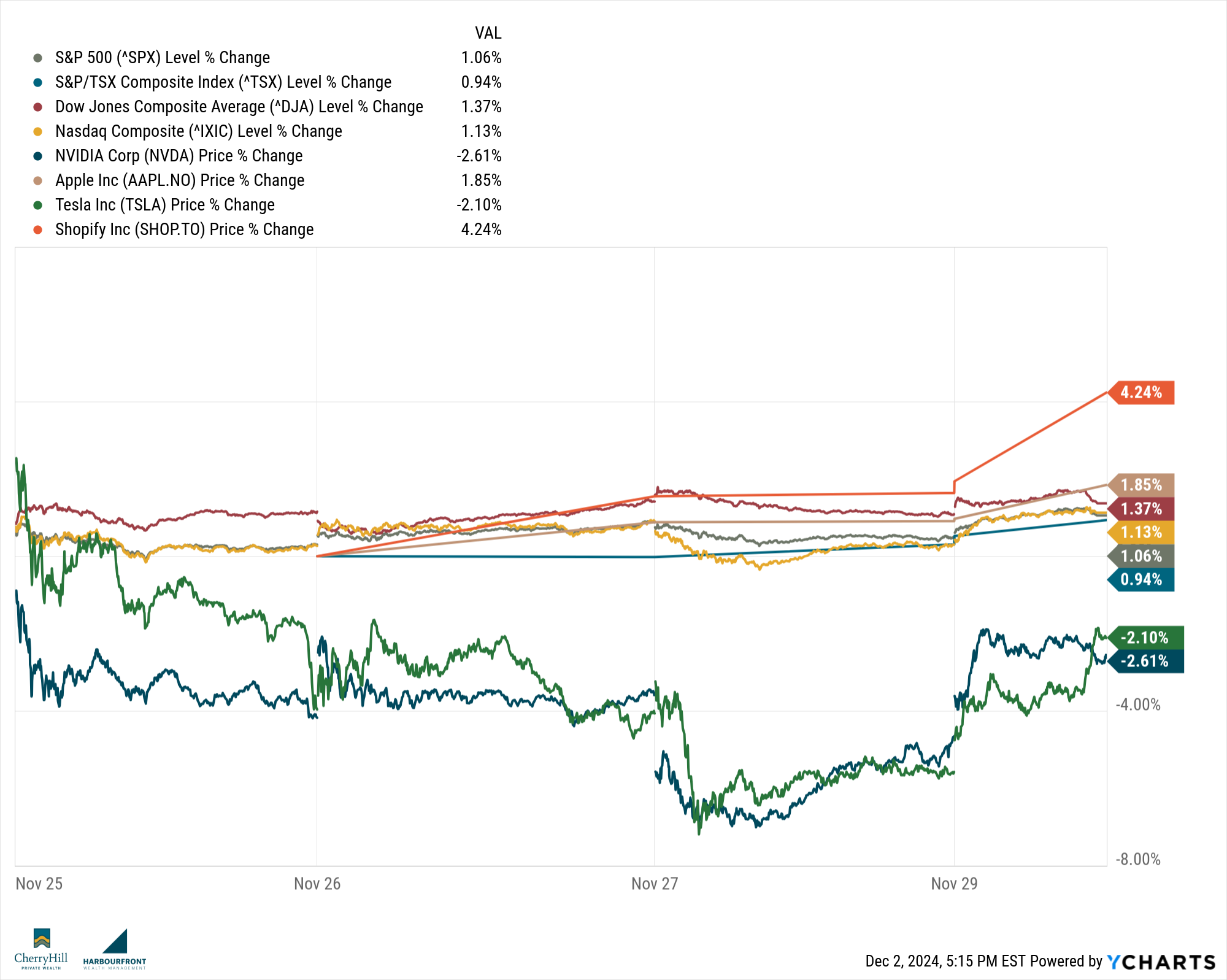
In Canada, we saw moderate increases, which lead to an overall increase of the month of November. These were supported by gains in energy and financials, despite headwinds from concerns about U.S. tariffs on Canadian imports.
Retail stocks were another highlight, with names like Lululemon and Five Below posting strong gains after robust Black Friday sales.
Looking back on November, investor sentiment was lifted by expectations of pro-business policies under the incoming U.S. administration. However, potential inflationary pressures from tariffs and their impact on Federal Reserve policy have kept some investors cautious. Overall, November’s market performance signaled a blend of optimism and selective risk-taking as investors positioned themselves for the close of the year.
Our Watermark Private Portfolio team released their monthly commentary as well, which you can ready here.
Trends to Watch
- **Central Bank Policies: **
- Federal Reserve: Federal Reserve Governor Christopher Waller has expressed support for an interest rate cut in the upcoming mid-December meeting, contingent upon favourable economic data. This potential policy shift is under close scrutiny by investors.
- *Bank of Canada: *The Bank of Canada is scheduled to announce its interest rate decision on December 11. Market participants are eager to discern whether the bank will align with potential U.S. rate cuts or maintain its current stance.
- Labor Market Indicators:
- The U.S. November employment report, set for release on December 6, will provide critical insights into labor market health, influencing Federal Reserve policy decisions.
- Canada’s employment data for November, also due on December 6, will shed light on domestic labor market conditions, offering guidance on economic momentum.
- Trade Dynamics:
- President-elect Donald Trump’s recent statements threatening tariffs on BRICS nations have introduced uncertainties in global trade relations, potentially impacting currency valuations and international trade flows.
- Sector-Specific Developments:
- *Technology: *The tech sector continues to drive market gains, with companies like Microsoft and Meta Platforms contributing significantly to the S&P 500’s performance.
- Automotive: Tesla’s stock has risen following the rollout of its Full Self-Driving software update, signalling advancements in autonomous vehicle technology.
Our team just released their Month in Review, where they discussed everything that happened in October, plus shed some light on what they’re looking at in the upcoming months.
The Lighter Side
Timing the market doesn’t typically work. Even with what Warren Buffett is doing, he is essentially “dollar cost averaging” out of the market and will likely do the same back into it. Time in the market is a better strategy than timing the market.
That being said, with Buffett holding so much cash and the markets hitting new highs, I wanted to take a look at what months are historically the best (and worst) for investing.
- November through April (“Winter Rally”)
The period from November to April is often referred to as the “winter rally” and tends to outperform the May-October period. This is a cornerstone of the investing adage: “Sell in May and go away.” Here are key months within this period:
- November: Historically a strong month as markets rebound after potential September-October volatility. It also kicks off the seasonally bullish holiday period.

- December: Often one of the best months for the market due to the “Santa Claus Rally”—a tendency for markets to rise in the last week of December and the first two trading days of January.
- January: Known for the “January Effect,” a phenomenon where stocks, particularly smaller caps, tend to perform well as investors reinvest after year-end tax-loss harvesting.
- April: Frequently one of the top-performing months, benefiting from strong corporate earnings reports and positive sentiment around the start of the second quarter.
May through October (“Sell in May” Period)
While the summer and early fall months are typically weaker, certain months stand out:
- July: Often an outlier in the “Sell in May” period, July can show strong returns, supported by mid-year earnings reports and summer rally trends.
Key Drivers of Seasonal Performance
There are some key drivers for these trends, such as tax-loss harvesting in December, followed by reinvestments in January. We also see holiday spending giving retailers a boost throughout November and December and Earnings Seasons leading to higher investment performances. There are typically only a couple days during the year that the markets move a lot and missing these can lead to massive underperformance.
The CHPW Team
This past week, the Cherry Hill team met in Blue Mountain for our annual business planning meeting. While much of the focus is on our continued growth, we spend a lot of time discussing our structure and how we can utilize our resources to continue to improve and make your life’s better. It was amazing having such positive energy and such great ideas all in one room together. We believe that we have several ideas that we will be rolling out in the coming months that you will be excited about.
Here are some pictures from our time together last week.



We are always open to hear from you on what you love and what you would like us to do better. Respond to this email to let us know what you would like to see from us in 2025!
Until next time, stay informed and strategically invested!
Trevor