
Opportunities in a Falling Interest Rate World
Halloween’s over, its dark by 5, and the fate of the Free World is on the line today. Let’s find out what it all means!
In today’s email:
- Interest rates are heading lower, with predictions on both sides of the border being more rate cuts to come.
- Volatility in the markets continues to inch higher with major markets seeing pull backs last week.
- The election isn’t the only thing we’re watching when it comes to your investments, we share what else is on our radar.
- This election is stressful for many in the U.S. and around the world, but let’s have a look at some of the strange things that have happened in elections before.
- It’s not a bias, our kids were pretty darn cute all dress up in their Halloween costumes this year!
- Elections can have an affect on your investments. *The How Canada Works Podcast *dove into what a Trump or Harris win could mean for you family’s wealth.
The Scoop
A recent article in the Globe and Mail reported that the Bank of Canada could cut rates by 50 basis points in both December and January. With interest rates falling, there’s a lot of buzz about where to put your money. It’s an exciting time, but knowing how to capitalize on this environment is key. Let’s talk about the best ways to grow your wealth, common mistakes to avoid, and how private equity, private credit, and real estate tend to react.
**Top Ways to Take Advantage of Falling Rates **
Being positioned at any point during an economic cycle is important, but being able to take advantage of falling interest rates, especially when they are expected to come down quite quickly, can make a major difference in reaching your financial goals. We’re going to take a look a a couple of the top ways to maximize your gains during a falling interest rate environment.
- **Boosting Equity Investments: **Most companies rely heavily on debt to finance expansion and R&D. Believe it or not, most CEOs aren’t personally writing cheques for the new warehouse or technology to get their product to the 2.0 version. As borrowing got more expensive over the past couple of years, new projects got shelved and expansion projects sidelined. With cheaper borrowing costs, these projects can ramp back up. Sectors like technology, consumer discretionary, and real estate tend to benefit as borrowing becomes cheaper, leading to expansion and increased profitability. If you’re comfortable with a bit of volatility, this could be a time to lean more heavily into equities, especially those in growth sectors.

- Levearge Real Estate: We’ve seen a bit of a rough patch for real estate recently, with initial cracks in the office space, but more recently condos and personal homes taking a bit of a hit as well. Real estate shines in a lower-rate world, where refinancing frees up cash, and cheaper mortgages make new investments more feasible. Think about leveraging current properties or expanding your portfolio—but remember, avoid overextending. Chasing overheated markets can lead to costly missteps.If you aren’t ready (or don’t have the desire) for buying your own investment property, it might be a great time to look at a Real Estate Investment Trust (REIT). There are many options when it comes to this, with different companies specializing in different aspects of the market. You can also go with a public or private REIT.

- **Private Credit Opportunities: **Private credit can thrive as rates fall, especially in environments where traditional lenders are cautious. We’ve seen bank reforms in the US that limit certain types of lending, and in Canada, our banks always play it very cautiously. As we mentioned with equity, they’re hungry to start up projects and take advantage of lower rates - many times they can’t get the funding they need from traditional lenders. With traditional yields shrinking, private credit can offer solid returns. Lenders are in demand, and you can step in to fill the gap, especially in niche markets that banks shy away from. Just make sure you’re partnering with strong, reputable borrowers. We’ve seen people chase yield too aggressively—don’t fall into that trap.
How Private Markets React
Private Equity: Typically, private equity benefits from lower borrowing costs, as these firms often rely on debt to finance acquisitions and fund business growth. In a falling rate environment, private equity can see an uptick in activity, as cheaper debt makes larger deals more attractive. This can lead to strong returns, especially in growth-oriented sectors. However, be cautious of firms over-leveraging in anticipation of perpetually low rates—when rates eventually rise, it can cause significant strain on highly leveraged portfolios.
Private Credit: As mentioned, private credit can become an appealing option when public bond yields drop. The flexibility and higher yields offered by private credit can outperform in a low-rate environment, but it’s important to ensure that the borrowers in these deals are well-vetted. In a rush to lend, some funds may loosen their standards, which could spell trouble if economic conditions worsen.
Private Real Estate: Lower interest rates tend to drive up real estate demand, as it becomes cheaper to finance purchases. This can lead to significant price appreciation in both residential and commercial properties. However, it’s worth watching out for overheated markets, where rapid price increases can create bubbles. Ensure that any real estate investments are in areas with solid long-term fundamentals, rather than short-term speculative trends.
Private markets can have an oversized benefit to your portfolio, but risks do exist. Having a vetting process for picking who you invest with is critical. For example, in picking the managers in one of our new funds, the team set criteria where there were initially around 3,800 strategies they looked at. They short listed 22, put 15 through a rigorous due diligence before partnering with 5. This took place over many months to ensure risks were minimized.
Red Flags in a Falling Rate Environment
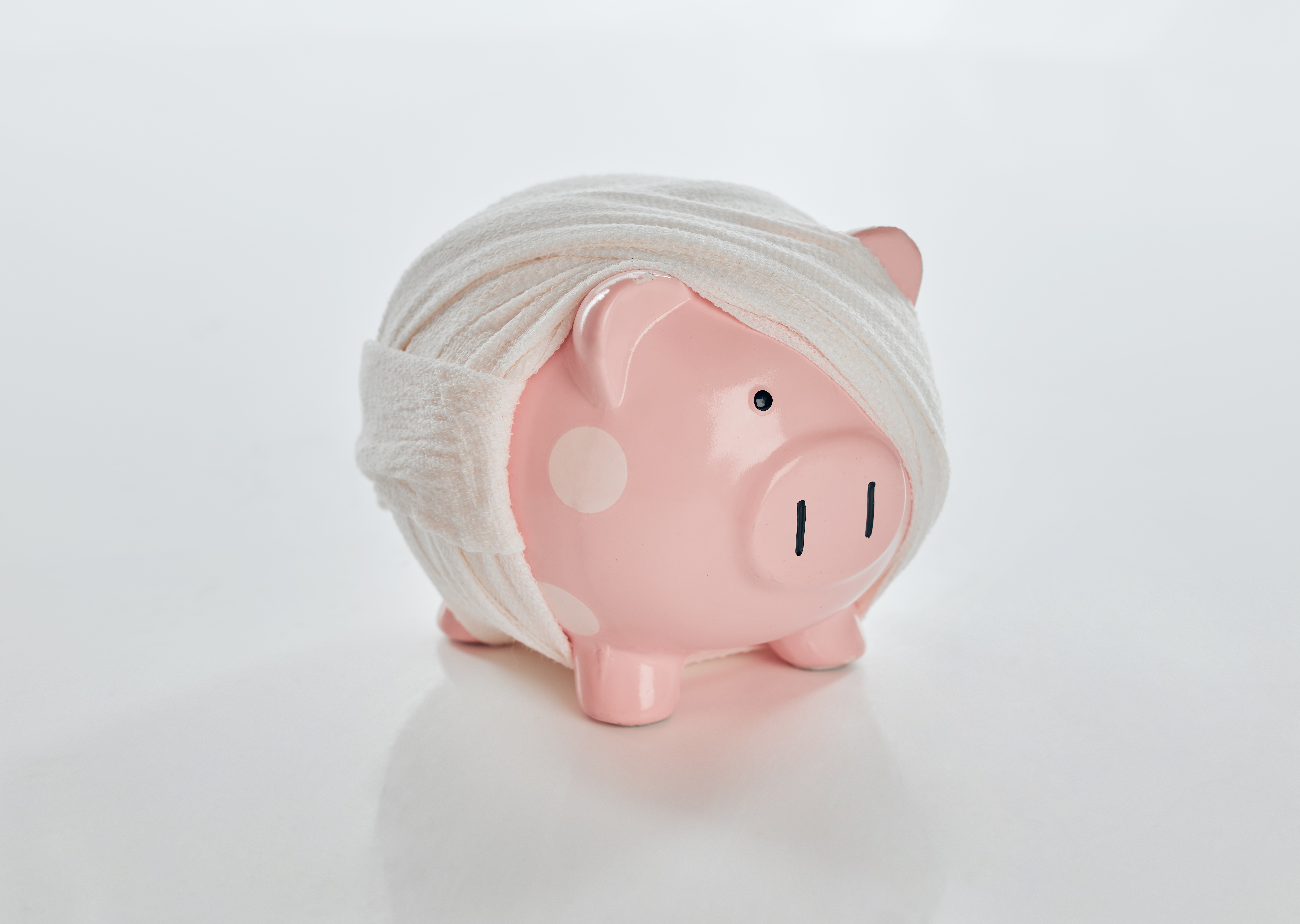
In any falling-rate environment, you’ll see yield-hungry investors diving into riskier and riskier assets. Stay grounded—there’s no sense in grabbing onto shaky investments for a few extra points. Also, watch out for companies piling on too much debt. What looks like smart leveraging today can become a disaster when the tide turns.
Additionally, yield compression in traditional fixed income means that investors might be tempted into riskier credit profiles. Be cautious of funds or investments that promise unusually high returns in this environment, as they could be taking on risk levels that are unsustainable if economic conditions change.
As always, if you want to chat about how this environment affects your portfolio, feel free to reach out. Let’s make sure your strategy is working for you, not against you.
Market Minute
As we approach the US Federal elections, we are seeing greater volatility in the major markets. Last week saw noticeable movements influenced by the uncertainty in who the next US president will be, as well as corporate earnings and economic data releases.
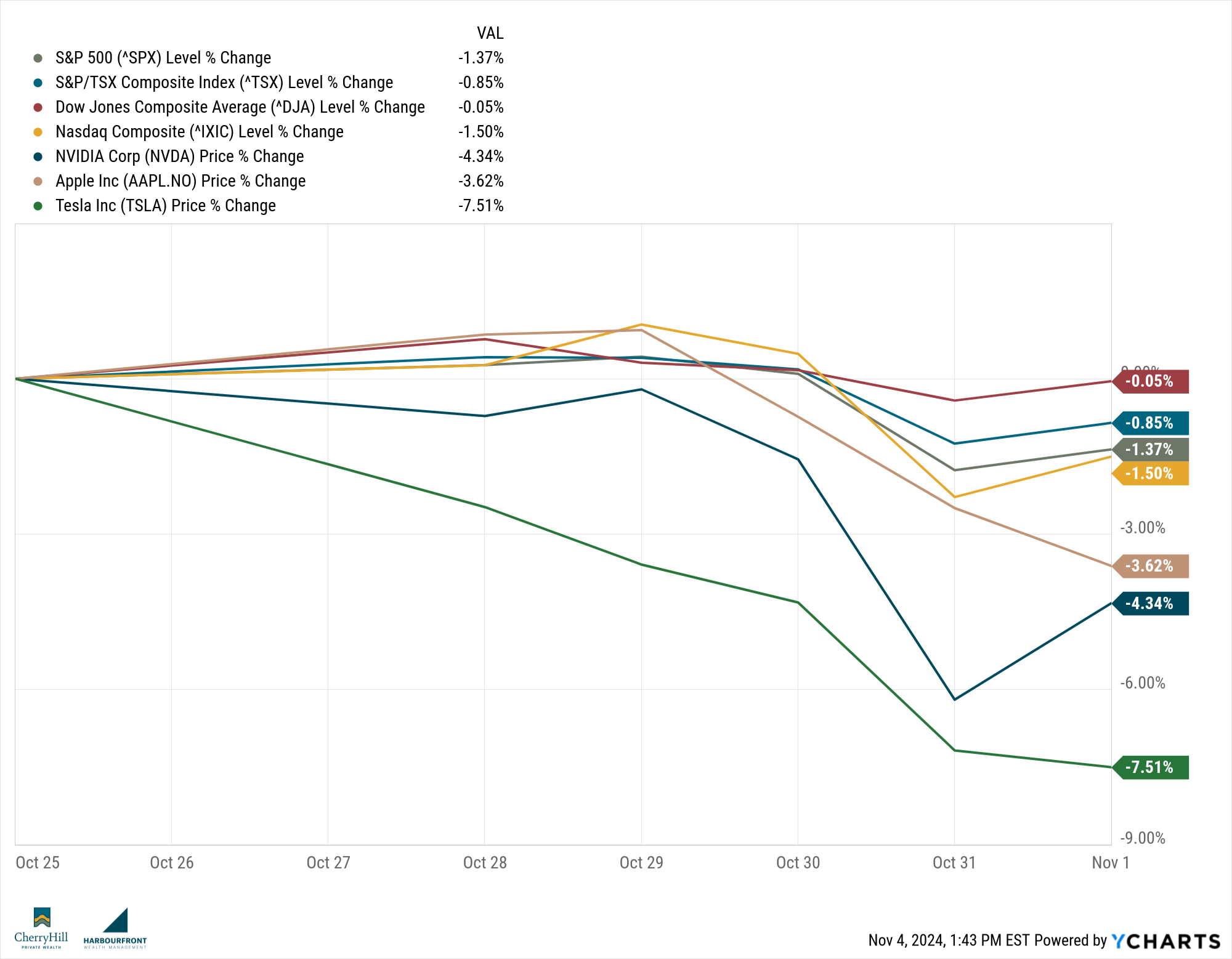
In the US, we saw decreases across the markets. The S&P 500’s decline was reflective of caution ahead of the election and upcoming Federal Reserve meeting. The tech-heavy Nasdaq Composite also saw a decline, largely influenced by mixed earning reports from major technology firms.
North of the border, the Canadian market faced downward pressure primarily due to the energy sector’s underperformance. The S&P/TSX Composite Index experienced a modest decline, with the energy sector being a significant contributor to this downturn. Factors such as declining oil prices and reduced demand forecasts negatively impacted energy stocks, leading to a broader market pullback. In contrast, sectors like financials and technology showed resilience, helping to offset some of the losses from the energy sector.
Trends to Watch
- **U.S. Presidential Election: **This election is one for the books and is leading to uncertainty in the major markets. Although the election is happening today, we might not know who won for some time. It might even be shrouded in more controversy if Harris appears to be the winner early on as we could be seeing recounts and court challenges for weeks to come. Markets don’t like uncertainty, so this could cause volatilty for quite a while.
- **Federal Interest Rate Decision: **Many are anticipating a second consecutive interest rate cut from the Fed, so this will be closely monitored.
- **Corporate Earnings Reports: ** Companies like Nvidia and Marriot International are releasing their earnings this week, which could significantly affect investor sentiment.
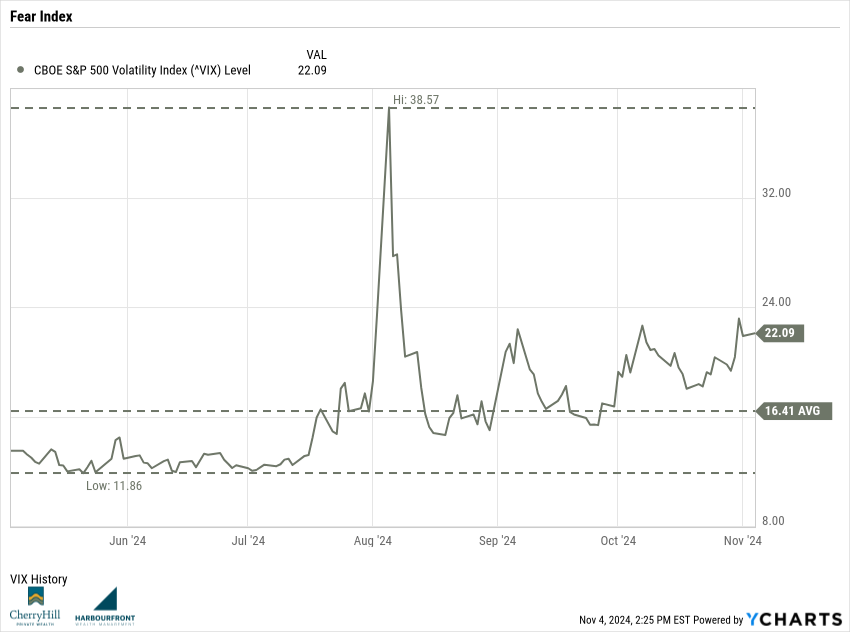
- **Market Volatility: ** We are continuing to watch the CBOE VIX, which measures volatility and is often referred to as the “fear index”. This has been trading above its average, which is reflecting investor uncertainty.
Our team just released their Month in Review, where they discussed everything that happened in October, plus shed some light on what they’re looking at in the upcoming months.
The Lighter Side
This might be the most stressful U.S. election in memory with so much seeming to ride on today. There have been some weird things to happen in the U.S. elections over the years - here are a few that I thought were too good to share.
- The “Daisy” Ad of 1964: Almost nothing is off the table in today’s presidential ads, yet the most shocking might just be the Daisy ad that Lyndon B. Johnson ran in 1964. It only ran once, but was extremely effective in painting his opponent, Barry Goldwater, as a dangerous choice.
- **The Red and Blue: **Believe it or not, the Red-Blue colour scheme isn’t very old. This was first popularized in the 2000 election. Before then the colours were not standardized, and often were reversed.

- A Drunken Inaugural Party: Andrew Jackson threw an inaugural party in 1829 that spiralled out of control. He invited the public to the White House, and thousands of rowdy attendees showed up, drinking and damaging the White House. To control the chaos, White House staff reportedly placed tubs of liquor outside, encouraging the crowd to leave the premises.
- A Candidate Was Once Arrested During His Campaign: In 1920, Socialist candidate Eugene V. Debs campaigned from a prison cell. He had been arrested for speaking out against U.S. involvement in World War I, yet he still received nearly a million votes.
Ok, so the last one doesn’t seem as far fetched given what we’ve witnessed during this election cycle. Let us know if you have any weird or interesting election facts that you’ve heard!
The CHPW Team
Last week Adrian and I released our U.S. Elections podcast. If you haven’t seen it, I highly recommend it. You can check it out here to listen to us talk about what typically happens to investments during an election. We also discuss how the markets react to Democrat and Republican Presidents - don’t miss it!
Another Halloween has passed and the team at Cherry Hill had our little goblins out in full swing!
Christine’s little guy (top left) had quite the crew to go trick-or-treating this year! Adrian’s whole family (top right) got into the spirit of the holiday as they embarked on their Halloween adventures. Ashley’s daughter (bottom left) looked absolutely adorable with her curls poking out of her cow costume. My little guy (bottom right) didn’t have the “scary” affect he was going for with the neighbour’s daughter.


We hope you had a great Halloween! We would love to see any pictures or hear any fun stories from your Halloween!
Until next week, happy investing!
Trevor