


What is the Fear Index Saying?
What’s scarier than ghouls and goblins? The “Fear Index” and what it could be forecasting for your investments.
In today’s email:
- The VIX, or “Fear Index”, can be a great tool to help track investor sentiment and make better investment decisions.
- Mixed messages in the major markets last week.
- Interest rates continue to be a major factor with a potential large reduction in Canada coming tomorrow.
- Less than 50% of Canadians have a valid will, check out our chat with an expert as we figure out what you should have to leave the legacy you want.
The Scoop
When we talk about market volatility, the VIX often enters the conversation. But what exactly is it, and why should it matter to us as investors? Let’s break it down.
The VIX, or the Volatility Index, is often called the “fear gauge” of the market. It measures the expected volatility of the S&P 500 over the next 30 days, based on options prices. In simpler terms, it gives us a sense of how much uncertainty—or, in financial terms, “volatility”—investors expect to see in the stock market in the near future. It doesn’t predict the direction of the market, just how bumpy the ride might be.

Normal vs. Elevated VIX Levels
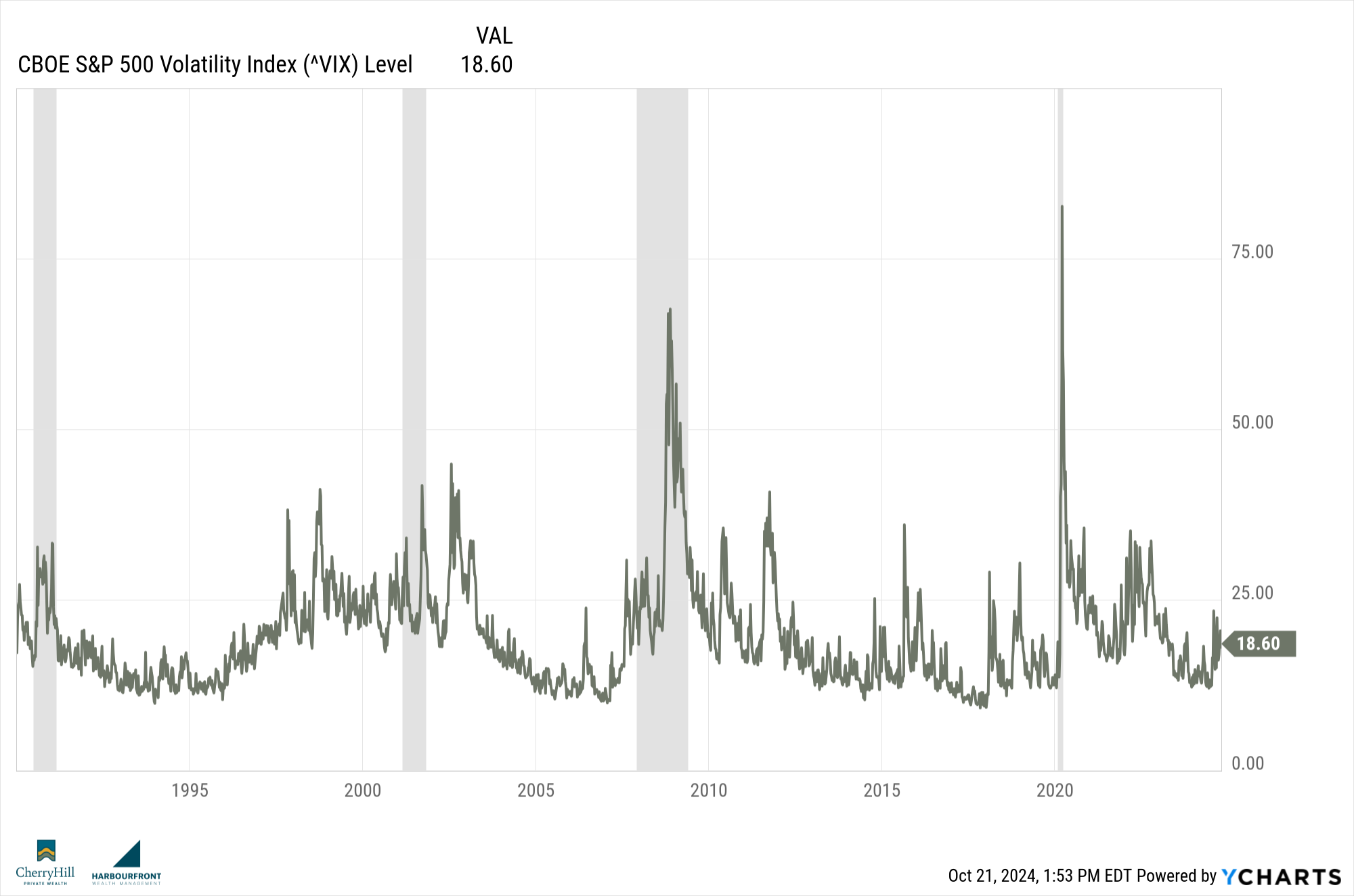
Typically, the VIX hovers around 12-20 during times of relative calm. Think of it as a period when markets are functioning smoothly, investor sentiment is stable, and major economic shocks aren’t looming. If you see the VIX hanging around these levels, you can usually breathe easy—investors aren’t overly worried.
When the VIX starts to climb above 25, that’s when things get more interesting (or concerning, depending on your point of view). A VIX in the 25-30 range signals rising investor anxiety, often due to uncertainty about earnings, geopolitical events, or unexpected economic data. Above 30, and we’re really in fear territory, usually indicating a significant market disruption, like a recession, a major financial crisis, or some other shock that sends investors scrambling for safety.
Historically, the VIX has spiked to extreme levels—above 40—during major recessions and economic downturns. For example, during the 2008 financial crisis, the VIX shot up to around 80, reflecting the sheer panic gripping markets at the time. While we don’t want to rely on any single indicator, an elevated VIX is often a red flag for larger economic problems on the horizon.
How the VIX Is Used
The VIX is more than just a number on a screen. It’s used by traders, economists, and financial professionals to gauge market sentiment. Investors can also trade financial products tied to the VIX, such as VIX futures or ETFs, allowing them to hedge against market volatility or even speculate on how choppy the market might get.
For those of us focused on long-term investing, the VIX is a useful sentiment barometer. While we don’t need to react to every tick up or down, keeping an eye on the VIX can help us understand when markets are entering a more volatile phase. This could be the time to review our portfolio’s risk exposure, make sure we’re diversified, or prepare for potential market corrections.
What the VIX Indicates Today
This past few weeks, the VIX has been creeping into the low-20s, which suggests a mild level of concern among investors. We’re not in panic mode, but there’s definitely some uncertainty in the air. This likely reflects ongoing concerns about inflation, central bank policy, and global economic growth. While these aren’t shocking developments, they have certainly made investors more cautious, and we’re seeing that reflected in slightly elevated volatility levels.
When Do We Typically See Higher VIX Levels?
Typically, the VIX spikes during times of economic stress or uncertainty. Market sell-offs, geopolitical crises, unexpected interest rate hikes, or negative earnings surprises can all drive the VIX higher. The key takeaway is that higher VIX levels are often tied to investor fear—whether that’s fear of a recession, fear of earnings declines, or fear of the unknown.
That said, higher VIX levels can also present opportunities. Historically, periods of elevated VIX readings are often followed by market recoveries, as fear subsides and the market stabilizes. The key, as always, is to remain patient and stick to your long-term strategy.
Adrian and I discuss how volatile the markets typically get leading up to and following a US election in this week’s podcast, so make sure to have a listen to see what you could expect over the next few months.
If have any questions about how the VIX might affect your portfolio, or want to discuss adjusting your investment approach during these volatile times, feel free to reach out. Understanding market volatility is one thing—knowing how to navigate it is another.
Market Minute
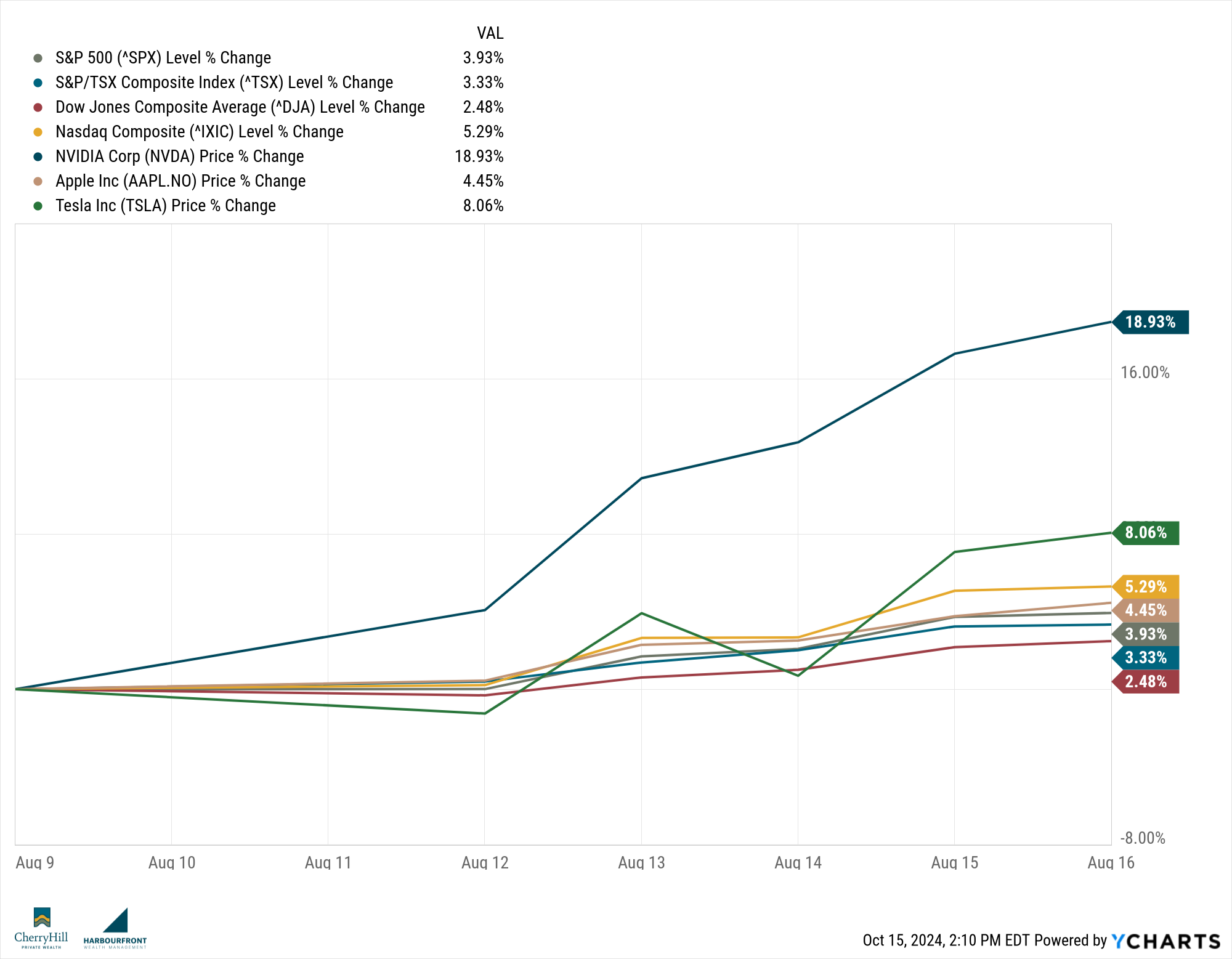
Last week, both the US and Canadian markets experienced a mix of caution and optimism. In the US, the S&P 500 saw a slight rebound, closing the week with modest gains after a choppy few days. Investors digested key inflation data, which showed a slight cooling in prices, raising hopes that the Federal Reserve might pause future rate hikes. However, the optimism was tempered by ongoing concerns over corporate earnings and economic growth, especially as major companies reported mixed results for Q3. Tech stocks, in particular, helped lead the rally toward the end of the week, though volatility remained present as bond yields continued to rise.
In Canada, the TSX had a similar story, posting small gains by the week’s end. The energy sector saw some positive momentum with rising oil prices, while financials remained relatively flat as investors continue to weigh the Bank of Canada’s next moves on interest rates. The Canadian inflation data, released mid-week, showed inflation edging lower, which gave a slight boost to market sentiment. However, concerns over slowing global growth and its potential impact on Canada’s resource-driven economy kept a lid on any major upward movement.
Trends to Watch
- **Corporate Earning Season: **With earnings reports continuing to roll in, investor focus will remain on how companies across sectors are performing in this high-rate, inflationary environment. In particular, tech and consumer discretionary sectors are under scrutiny as investors gauge how well businesses are managing rising costs and softening demand. Any major misses or outlook downgrades could spark volatility.
- **Interest Rates & Inflation: **Inflation data remains in the spotlight, with both the US and Canadian central banks closely monitoring trends. While recent data suggested some cooling, any surprise upticks could reignite concerns over further rate hikes. In Canada, the Bank of Canada’s next move is especially critical, as the market debates whether we’re near the end of the tightening cycle or if another rate increase might be in the cards.
- Global Economic Slowdown: Investors are keeping an eye on signs of slowing global growth, particularly in China and Europe. Any further deterioration in economic data from these regions could have ripple effects on both the US and Canadian markets, especially in commodities and energy, which are closely tied to global demand.
- **Oil Prices: **Rising oil prices are another key trend to follow, particularly for the Canadian market, where the energy sector plays a significant role. Higher prices are helping energy stocks, but there are concerns that sustained increases could fuel inflationary pressures, potentially complicating central bank policies in both Canada and the US.
As these trends play out, market volatility could remain elevated, so it will be important to keep a close watch on how they impact both sentiment and economic forecasts in the weeks ahead.
The Lighter Side
The way we listen to music has transformed dramatically over the past few decades, and one of the most pivotal moments in that evolution came with the launch of the iPod in 2001. Before its arrival, people carried bulky CD players or dealt with cassette tapes to enjoy music on the go. Digital music was still in its infancy, and MP3 players existed but were clunky and could hold only a handful of songs. Then, on October 23, 2001, along came the iPod with its promise of “1,000 songs in your pocket,” marking a massive leap forward in both technology and user experience.
What made the iPod revolutionary wasn’t just its sleek design, but the seamless integration it offered between hardware and software. Paired with iTunes, the iPod allowed users to easily transfer songs from their computer to their pocket device, organizing music into playlists and giving people control over their music libraries in a way that hadn’t been possible before. The scroll wheel made navigating large libraries intuitive, and its portability made it easy to bring music everywhere—whether you were on a jog, commuting, or relaxing at home.

This innovation not only changed how we consumed music but also how the music industry operated. The success of the iPod led to a digital music revolution, making the idea of purchasing single songs or albums from online stores mainstream. It also laid the groundwork for the streaming services we rely on today, where music libraries aren’t stored on our devices but in the cloud, accessible anywhere with an internet connection. The iPod was the first step in a digital journey that transformed music from a physical, tangible product to a completely digital experience.
Looking back, it’s hard to overstate the iPod’s impact. It set the stage for the creation of the iPhone and the App Store, both of which further transformed entertainment consumption. More importantly, it empowered individuals to become their own DJs, creating personal music experiences that shaped the way an entire generation enjoyed music. The iPod’s legacy continues to echo today, even as we’ve moved from dedicated devices to an always-on, always-connected music world.
The CHPW Team
If you missed it, this might be one of the most important podcasts we’ve done so far. Less than 50% of Canadians have a valid will, and of those, many are not leaving the legacy they envisioned. Check out this meaningful conversation we had about leaving the legacy you want for your loved ones.
Don’t miss this very important conversation! Check it out here.
Until next week, happy investing!
Trevor