


Interest Rates are Finally Going Down:
How do we Capitalize?
One more long weekend before back-to-school happens - what are your big plans for the unofficial end of summer long weekend?
In today’s email:
- Interest rates are declining in Canada and the US is likely falling suit - how should our portfolios be set up to take advantage?
- Markets switched from defensive to back to tech, but is this trend going to stay?
- Has back-to-school shopping changed from when we were kids?
- What to know if you are looking to go back to work in retirement.
The Scoop
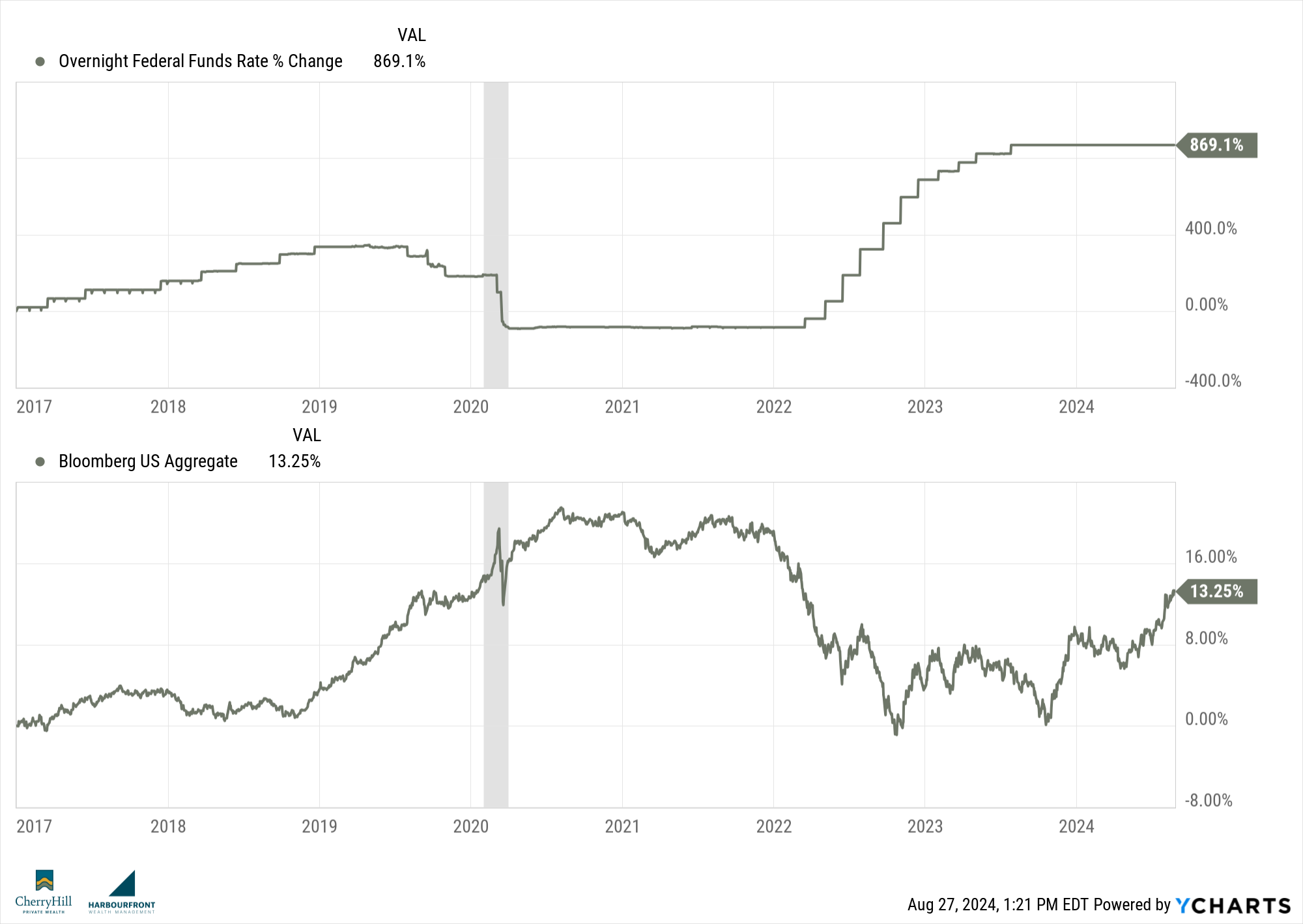
As we look ahead to the changing seasons, it’s a good time to consider how potential shifts in the economic landscape might impact our investments. One of the key factors that could be on the horizon is a decrease in interest rates, and it’s worth exploring what that might mean for various asset classes.
Equities: A Tailwind for Growth?
In a decreasing interest rate environment, equities often receive a boost, especially growth stocks. When borrowing costs are lower, companies find it cheaper to finance expansion, which can lead to increased earnings and, subsequently, higher stock prices. Additionally, investors tend to seek higher returns than what’s available in the bond market, driving more money into equities.
However, it’s essential to keep in mind that not all sectors benefit equally. Companies with strong balance sheets and high growth potential, like those in the tech or consumer discretionary sectors, often outperform. On the other hand, defensive stocks, which tend to do well in times of economic uncertainty, may not see as much of an uplift.
Bonds: Interest Rate Sensitivity
Bonds have an inverse relationship with interest rates, so when rates go down, bond prices typically go up. This is especially true for longer-duration bonds, which are more sensitive to interest rate changes. If you’re holding bonds, you might see their value increase, which could be an opportunity to lock in gains or reposition your portfolio.
For those considering new bond investments, lower rates mean yields will be less attractive. However, bonds will continue to play a crucial role in portfolio diversification, particularly as a buffer against equity market volatility.
Private Equity: A Mixed Bag
Private equity can be a bit more nuanced in a decreasing rate environment. On one hand, lower borrowing costs can fuel leveraged buyouts, making it easier for private equity firms to finance acquisitions. This can potentially enhance returns for investors in these funds.
On the flip side, if the broader economy is slowing down, the underlying businesses in these portfolios might face challenges, which could dampen returns.
With so much “dry powder” sitting on the sidelines, many investors have been waiting for lower borrowing costs before redeploying back to private equity.
Real Estate: Favourable Conditions Ahead
Real estate tends to benefit from decreasing interest rates as well. Lower mortgage rates make it cheaper for individuals and companies to finance property purchases, which can drive up demand and, consequently, property values. For real estate investors, this can mean higher returns, especially in markets where demand is robust.
However, much like with equities, the type of real estate matters. Residential real estate often sees the most direct benefit, but commercial properties, particularly those tied to retail or office space, may face headwinds depending on broader economic trends.
Final Thoughts
As we navigate what could be a period of declining interest rates, it’s important to stay focused on the fundamentals. Diversification remains key, and understanding how each asset class might respond to lower rates can help you make informed decisions. Whether it’s adjusting your equity exposure, considering bond duration, or exploring opportunities in private equity and real estate, there are several ways to position your portfolio for potential changes ahead.
If you’d like to discuss how these potential shifts might impact your specific situation, feel free to reach out. Together, we can ensure your investment strategy is well-aligned with whatever the economic environment throws our way.
Market Minute
As we move through summer, we are continuing to focus on the tech sector and the central bank’s policies.
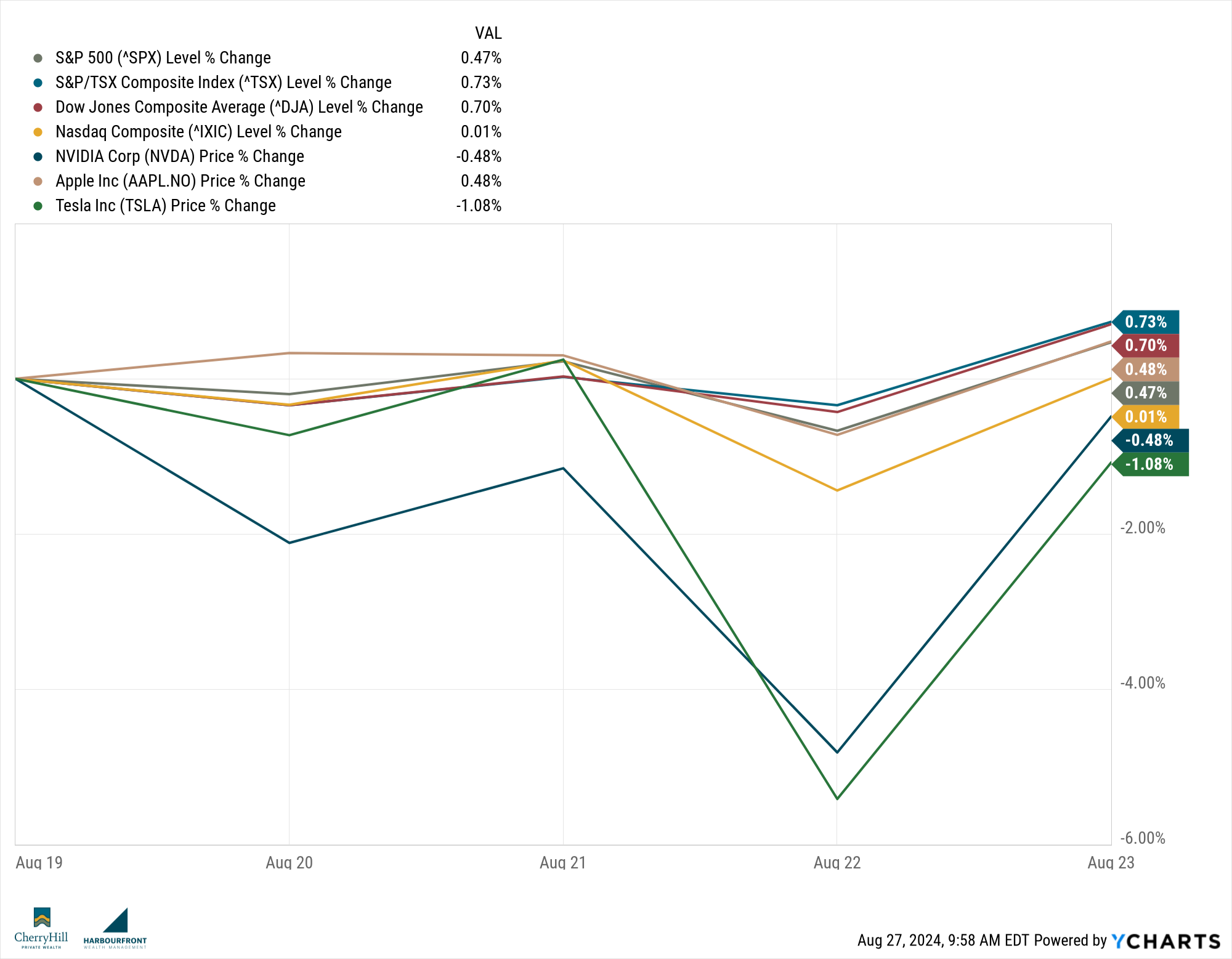
In Canada, we saw a relatively stable week, with the energy sector being supported by a slight uptick in oil prices, despite the continued global uncertainty surrounding commodities. On the economic front, Canada’s inflation continued to ease, which provided some relief for consumers, but also raised concerns about the sustainability of economic growth.
South of the border, the markets exhibited a mixed performance. Both the S&P 500 and NASDAQ posted gains, driven by strong tech performance, while the Dow Jones lagged slightly. The major news that we have been watching has been the Federal Reserve signalling potential rate cuts at their September meetings. Speculation has been that rates could be cut as much as 50bps after weakening employment numbers and recent downward revisions to past numbers.
Trends to Watch
- Interest Rate Speculation: This continues to a major focus for investors with potential implications for rate-sensitive sectors like real estate and technology. Growing speculation in the US is that we’re likely going to see the policies shift towards easing of rates.
- Sector Rotations: This past week saw the tech and energy sectors gaining strength, while more defensive sectors saw mixed performance as sentiment shifted towards a decrease in interest rates.
- **Housing Market Signals: **The US housing market showed some signs of life with an increase in home sales. In Canada, the housing market remains under pressure from the high rates and economic uncertainty.
The Lighter Side
Most parents are excited preparing for life returning to a normal schedule with school about to resume. With the calendar about to shift to September it signals back-to-school shopping once again.
Many of you remember the “good ol’ days” of back-to-school shopping, which largely consisted of heading to stores like Zellars, Woolco, and Kmart to stock up on binders, “school clothes”, and new pencil crayons.
Today, the trend has shifted slightly. Here are the top trends today for making sure our kids are ready for the school year.
- **Customizable School Supplies: **Gone are the days of plain, boring notebooks and backpacks. From customizable notebooks with personalized covers to monogramed backpacks, the trend is all about personalization. Some companies even offer scented or colour-changing supplies.
- **Nostalgia-Inspired Gear: **There has been a resurgence of retro and vintage-themed school supplies with ‘90s style lunch boxes and Lisa Frank designs being all the rage.
- Sustainable & Eco-Friendly Products: The kids get it and the demand for backpacks made from recycled materials to bamboo pens has been increasing. Finding eco-friendly options are becoming more mainstream and zero-waste lunch containers are becoming the norm.

- **Tech-Integrated Backpacks: **The rise of technology in the classrooms has led to some interesting supply trends, like backpacks with built-in charging ports or solar panels. These high-tech bags allow students to charge their devices on the go.
What are some of the most interesting back-to-school trends you’ve seen, heard about, or are purchasing for your kids or grandkids this year?
The CHPW Team
We wanted to take a minute to thank everyone for all the referrals we’ve received over the summer. It’s been a busy time for us at CHPW with a lot of changes happening, but it’s always wonderful to get introduced to new people. We have had the opportunity to meet several new families that are looking for a change and are looking forward to continuing to meet more new people as we approach the fall. We have seen the best introductions result from a casual email connecting us, and we take it from there!
The podcast continues to build momentum - thank you to all who have listened/watched! If there’s someone you want us to get on or a topic you want to know more about, please let us know. Also, forward it on to anyone you think would love to hear it!
We talked to Brian Gottheil on the last podcast. Brian is a transformed human resource lawyer, who discussed all the crazy things happening in the employment world. We also picked Brian’s brain on what is happening with employees who are either not ready to call it quits at the “typical” retirement age, or those looking to go back in their 60s and 70s.
Until next week, happy investing!
Trevor