


What Does a Bubble Burst Look Like?
It’s a controversial newsletter this week with a look back at an unspeakable rock story!
In today’s email:
- We’ve been hearing a lot about this “AI Bubble”. We dive into Nvidia and whether it and other companies at the forefront of the AI wave are in store for a pullback.
- A shift is happening in the investment markets - are you prepared?
- The audacity of this move changed rock and roll by a folk legend.
- Does your financial institution have your back in the toughest times?
- How do you stay healthy and fit in your retirement days? A fitness expert shares his secrets.
The Scoop
Are We at the End of the AI Bubble?
You might have heard comparisons between the current AI craze and past bubbles, such as the dot-com implosion. While there may be some truth to these comparisons, today we will examine what causes a bubble and how to avoid getting caught in one.
Several podcasts and publications have started discussing companies like Nvidia, questioning if they are overpriced and examining their exposure to AI. If you’ve been investing in AI over the past year, you are likely pleased with your returns. Earlier this year, The Motley Fool published an article comparing Nvidia to Cisco. Those who remember the dot-com crash might recall that Cisco became the most valuable company in the world during that period.
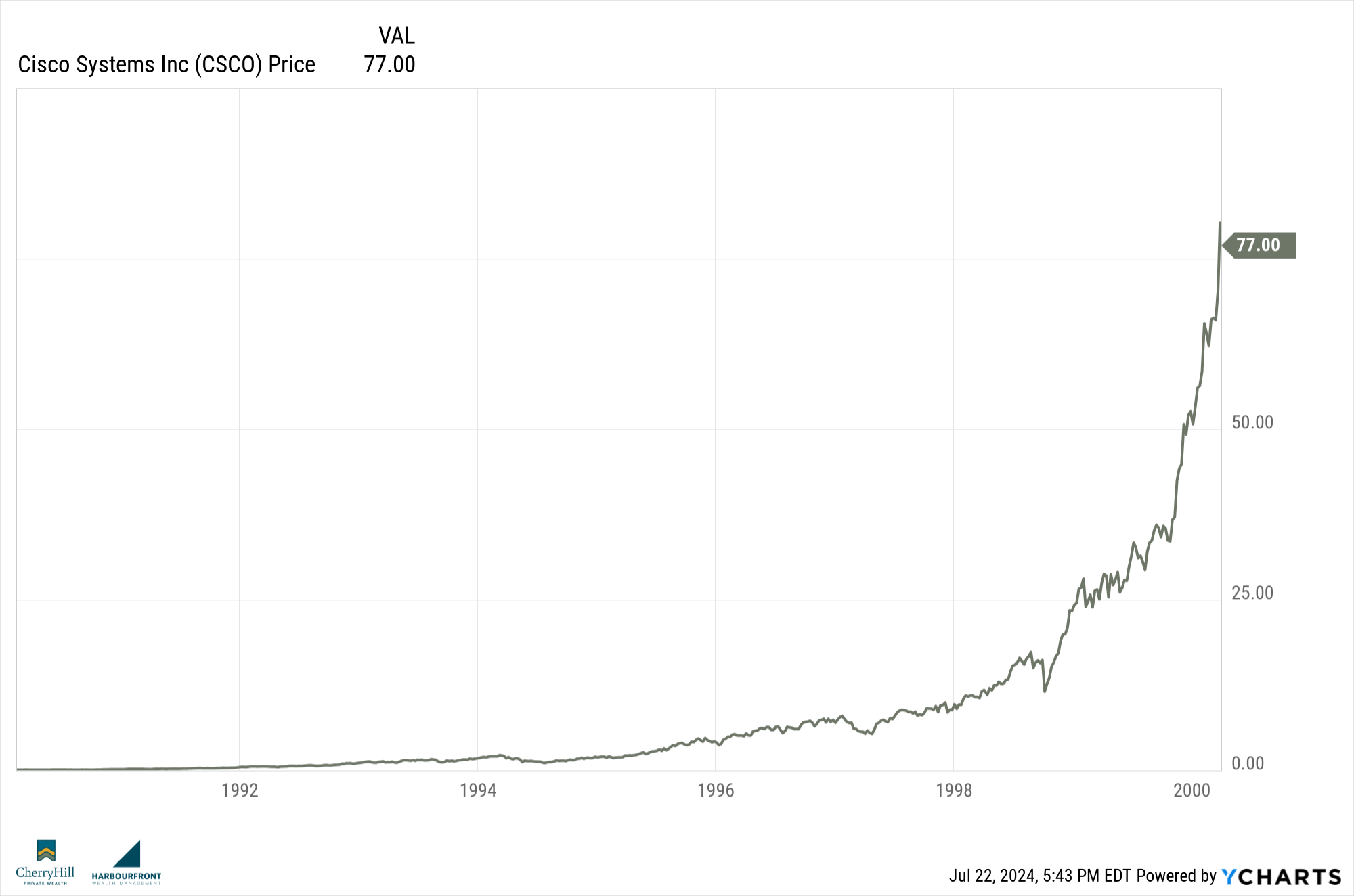
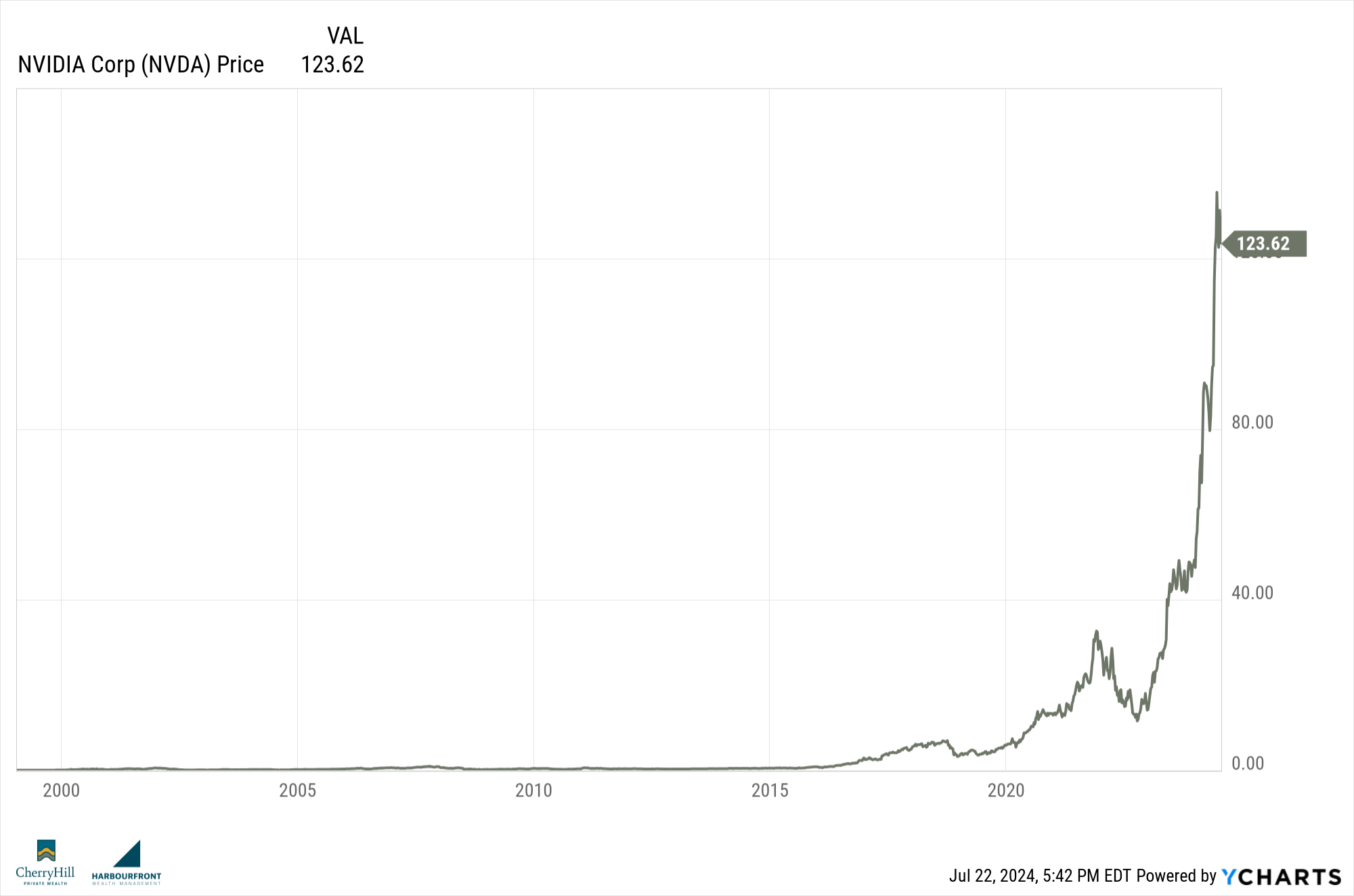
While they are not perfect comparisons, both companies are hardware providers (software companies tend to have more value) at the forefront of a technological revolution. Cisco led the internet boom with its infrastructure hardware, while Nvidia is powering the AI revolution.
The problem does not lie in whether Nvidia or AI will succeed, but rather in the mindset of investors when they start saying, “this time is different.” I have heard sentiments that Nvidia operates in a different market than Cisco did and that it’s too big to fail. This is not a strong argument. AI is still in its infancy and, at present, is more of a novelty than a source of viable changes. On the All-In Podcast, it was discussed how new advances in technology tend to replace higher-paid employees with cheaper tech. However, this situation is somewhat different. The GPUs that Nvidia sells range from $30,000 to $40,000 and currently power tools like ChatGPT, which is excellent at editing newsletters and similar tasks but lacks broader applications at this point.
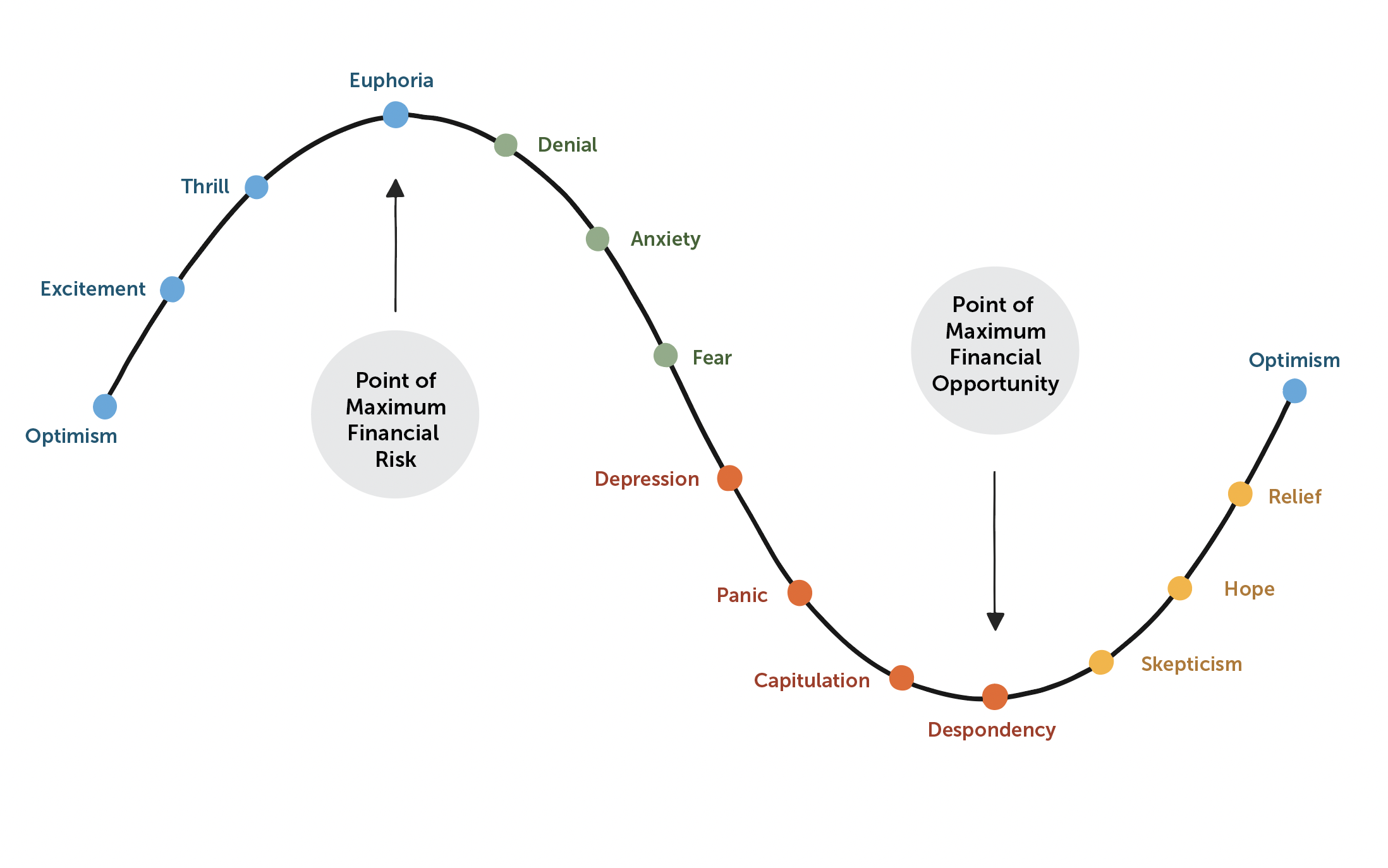
I get nervous when investor sentiment mirrors the “Cycle of Investor Emotions.” When we reach the “Greed” or the “it’s too big to fail” stage, investors (and advisors) are prone to making irreparable mistakes. We start justifying our investment choices to avoid missing out. Not long ago, I received several calls a week inquiring about buying weed stocks – and that didn’t end well. There are great companies to own, and it might make sense to have some Nvidia in your portfolio, but you should only do so if you can look past the hype and determine if it’s a good fit for you and your portfolio.
Market Minute
As we moved through the middle of July, we saw significant volatility from the US markets, mostly led by the “Magnificent 7” tech companies. Nvidia, as seen below, fell nearly 10% this past week. The Russell 2000, which tracks smaller companies, had an early week surge, largely due to expectations of future rate cuts.
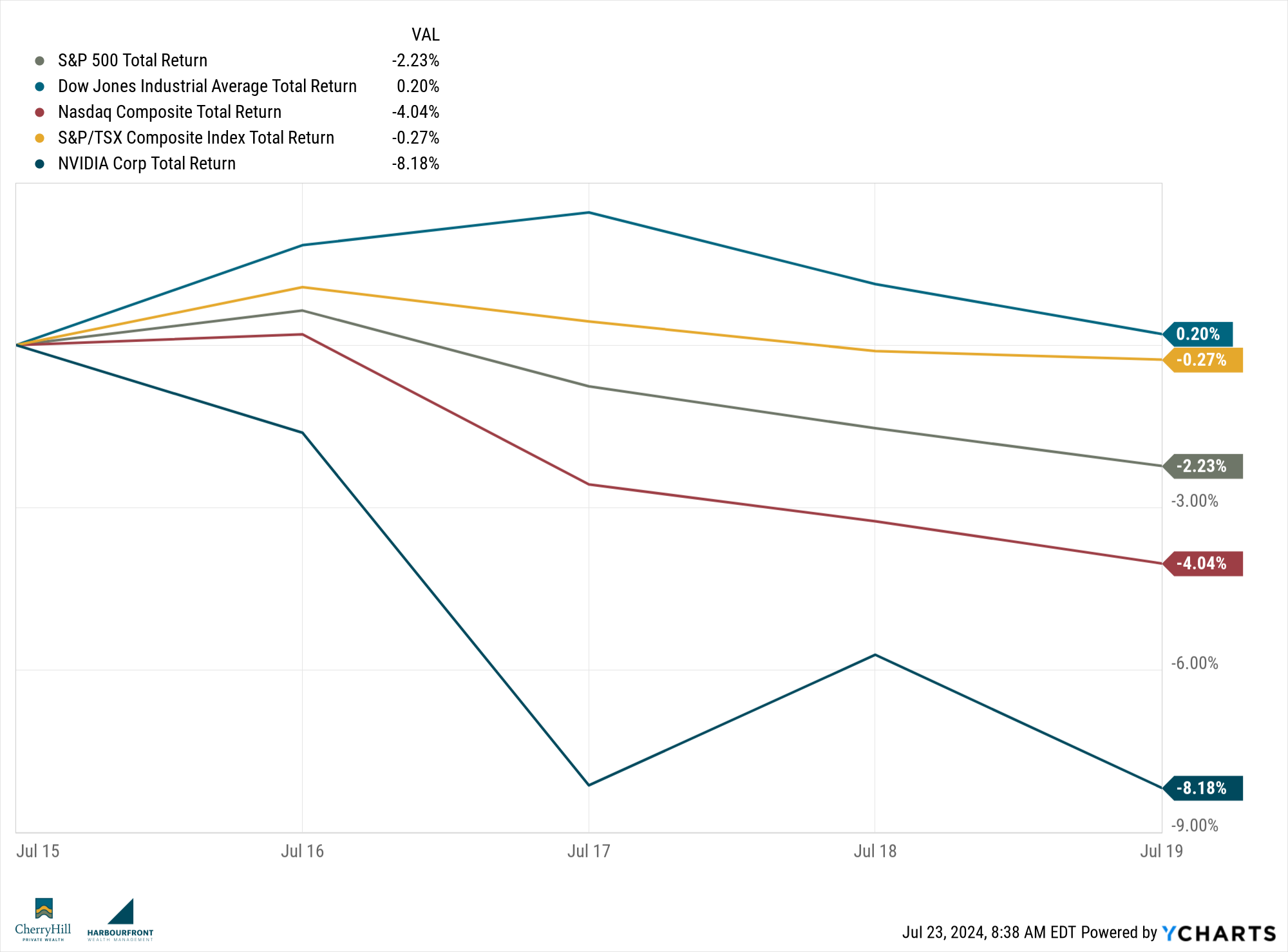
In Canada, we saw the TSX mostly flat with a shift towards cyclical investments, which has positively impacted energy and financials.
Trends to Watch
- Sector Rotation: There has been a noticeable shift towards cyclical sectors like financials, industrials, and energy.
- Small-Cap Performance: Increased confidence in a central bank rate cut has boosted small-cap stocks. This sector relies heavily in favourable monetary policies. The same is true for private equity, so we’re keeping an eye on this sector as well.
- Interest Rate Expectations: There have been more indications that the US Fed is closer to a rate reduction and this could impact the markets in a huge way. We’re also expecting further reductions in Canada as early as tomorrow.
The Lighter Side
There is a lot of controversy happening South of the Border with the presidential race. But if you think that is intense, you obviously forgot about the day Bob Dylan played the Newport Folk Festival on July 25, 1965.
Bob Dylan was leading the folk music wave, but in Newport he did the unthinkable - played an electric guitar live for the first time in his career.
The audience reaction was mixed with loud boos shaming Dylan for his abandonment of folk purity, while several others cheered for this bold new direction.
This moment is etched in folk rock history as it symbolized the merging of folk and rock. This was also the defining moment that transformed Dylan from folk icon to rock star, influencing countless musicians and reshaping popular music.

The CHPW Team
Coming from a bank setting, Ashley is already seeing how having more options can lead to much better client experiences. While having a conversation with a client she determined that the main financial issue that this client was having was getting a new mortgage. This client is going through a separation and the major institutions don’t like this level of uncertainty. We all go through different obstacles in our life and expect our lenders and companies that we have entrusted with our finances to have our back as we navigate these challenging times.
After being declined by the bank, this client reached out to Ashley for a solution. Ashley made a couple calls to her extensive network and found a mortgage broker that would be able to help. Ashley facilitated an introduction and this client is well on their way to getting new mortgage.
This week we also released our 3rd podcast episode! You can check out the full episode here as we talk to fitness expert, Raymond Lambert. He works with the 40+ crowd and is an expert at keep you fit and healthy all the way through retirement!
Until next week, happy investing!
Trevor