

Are We in Recession?
Experts Say No, But Why is Everything So Tight Right Now?
Happy Canada Day, !
For many in Canada and the US, life feels tighter than before, despite unemployment being at all-time lows and the stock market reaching all-time highs. We’ve been hearing for two years that a recession is imminent, yet the economy has remained resilient.
Why is that?
Coming out of the pandemic, American households had saved approximately $2.1 trillion, driven by stimulus support payments and reduced consumer spending. Canada was in a similar situation, with about $350 billion added to savings accounts. However, in both countries, these savings have been depleted. The US has been drawing down their savings by about $85 billion per month, fully depleting them by March of 2024. In Canada, savings have been unevenly distributed, with higher-income households saving much more than their lower-income counterparts. This has led to a greater financial squeeze for lower-income households, while many with higher incomes continue to maintain or even add to their savings.
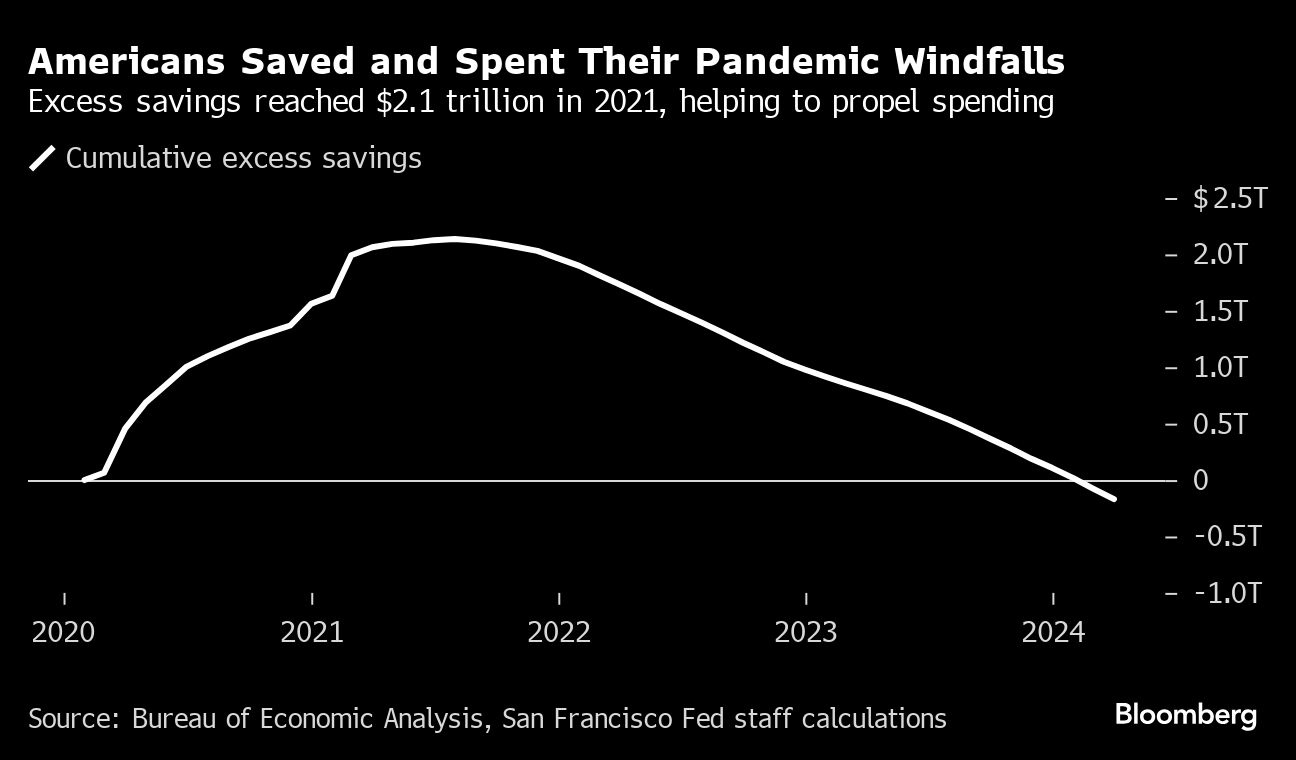
One reason for the discrepancy in Canada is that the financial pinch is largely due to rising interest rates and inflation over the past two years. In Canada, about 34% of homeowners are mortgage-free, and a notable portion of the wealthier population owns their vehicles outright, allowing them to better weather the increases in food and other prices. However, many with mortgages have seen increased payments of over $500 per month, and new vehicle costs have risen by almost $250 per month.
These factors have left many in Canada and the US feeling like we’re already in a recession, even though employment remains stable and GDP hasn’t dipped into negative growth. According to a June 5th Bank of Canada press release, “Overall, recent data suggests the economy is still operating in excess supply.” The Financial Post noted that Canada entered this territory last summer, prompting the BoC to raise rates twice more.
In Canada, these economic cracks are starting to widen. In recent months, unemployment has climbed by 140 basis points. Over the past sixty years, not once was a recession avoided with such an increase in the jobless rate. Additionally, business sectors are facing challenges, with insolvencies hitting their highest rates since the Great Recession. New data shows business insolvencies are up 32% from the last quarter and almost 90% from the same quarter last year. Discretionary spending cuts have hit sectors like food and accommodations the hardest, but construction, transportation, and manufacturing are also becoming insolvent.
A recent Business Insider article discusses the potential implications if the US economy sinks into recession and the stock market bubble pops. Legendary investor Warren Buffett’s market indicator, commonly called the “Buffett Indicator,” suggests stocks would be cheap at a 70% or 80% reading and fair at 100%. Currently, the indicator reads 188%, higher than during the 1929, dot-com, and Great Recessions. This might explain why Berkshire Hathaway has increased its cash holdings by 70% in the last 24 months.
With seven tech stocks currently making up 30% of the S&P 500, some economists predict the index could plunge by up to 48% if the economy enters a recession. Historically, during a recession, the market drops by 36% from its 200-day moving average. Given current levels are 12% higher than the 200-day average, this could result in a greater-than-normal drop.
I reached out to our team for their take, and they agreed that stocks are currently overvalued but could climb to 6,000 before a big reversal. They have recently taken a large position in the Dynamic Active Enhanced Yield Covered Options ETF (DXQ). This ETF participates in the current upside while also offering downside protection. By writing puts at 10% lower than the current price, this strategy should yield about 12% per year and can remain positive even with drops of 3% per month over the next 12 months. Paired with our private holdings, our team believes we can take advantage of this upswing and shield our clients from the brunt of a potential bubble pop.
Until next week, Happy Investing!
Trevor
If you missed the new podcast, you can catch it here in video or audio formats!
In Lighter News:
Canada Day has always been a special day for me. In recent years Canada Day has taken on a different meeting for some. As much as I believe we need to understand the good and bad from our history, I have always taken this day to celebrate the good. I truly believe that we are lucky to be able to call Canada home. There’s no place I’d rather live - Happy Canada Day!

In The Markets:
Last week, major US and Canadian markets experienced notable movements. In the US, the S&P 500 saw a modest gain of 1.2%, driven by a rally in tech stocks following stronger-than-expected earnings reports from key players. Meanwhile, the Dow Jones Industrial Average edged up by 0.8%, buoyed by robust performances in the energy and financial sectors. In Canada, the TSX Composite Index climbed by 1.5%, supported by a surge in commodity prices, particularly in oil and precious metals, as well as positive economic data indicating continued resilience in the domestic economy. Overall, both markets reflected cautious optimism amid ongoing economic uncertainties.