

Biden vs. Trump
Hi, !
Happy May 2-4! Time to open cottages, fight mosquitos, and think about the upcoming US election!
There are few predictable events that get us talking about the impact on “the markets” like the US election. This year’s election is particularly interesting as it involves a nominee that would be one of my oldest clients, and the other may or may not be in jail by the time the election roles around. Yet, the Blue vs. Red debate still remains strong as ever.
This week, I’m relying more heavily on graphics from our market analysis tool, YCharts. It’s important, however, to remember that past performance does not predict future performance. Trying to time markets often leads to major mistakes with irreversible consequences for your family’s wealth. I’ve handpicked a few graphics that I find most intriguing, but please let me know if you want to dive deeper into this fascinating topic!
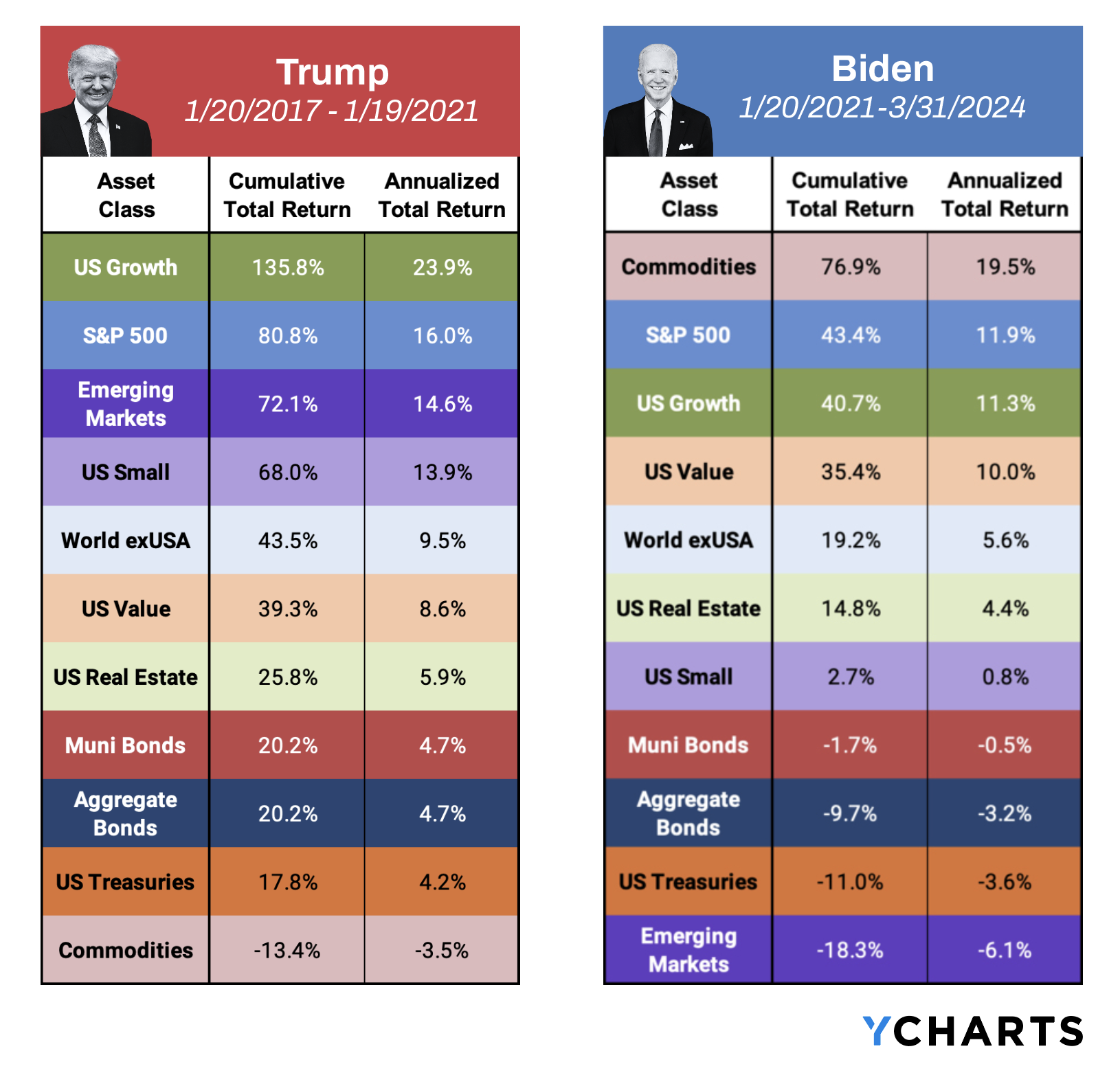
Both Biden and Trump have previously held the highest office, giving us some insight into their policies and market impacts. Surprisingly, both saw positive performance in the S&P 500 and other major markets through their terms. Under Trump, who pulled back manufacturing to the US, Emerging Markets rose, while under Biden, they fell. This could be due to more expensive borrowing costs in these areas, counter to each president’s nationalistic policies and perceptions. Similarly, commodities performed unexpectedly. Commodities fell drastically under Trump despite his pro-oil stance and have been Biden’s top performer.
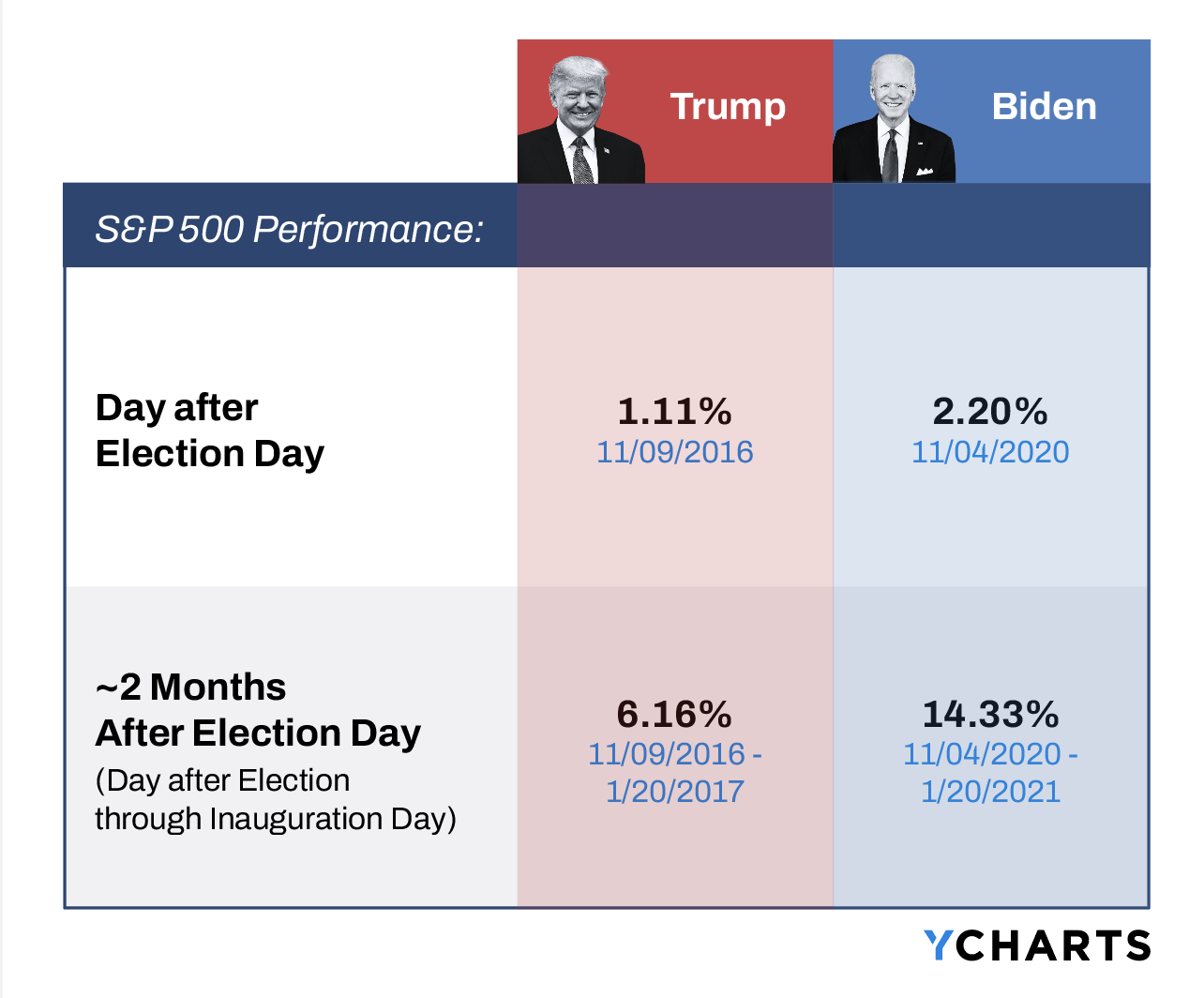
Focusing specifically on the S&P 500, you might be surprised to learn that Biden had the upper hand both the day after the election and in the following two months – and it wasn’t even close. Long-term trends also favoured Biden.
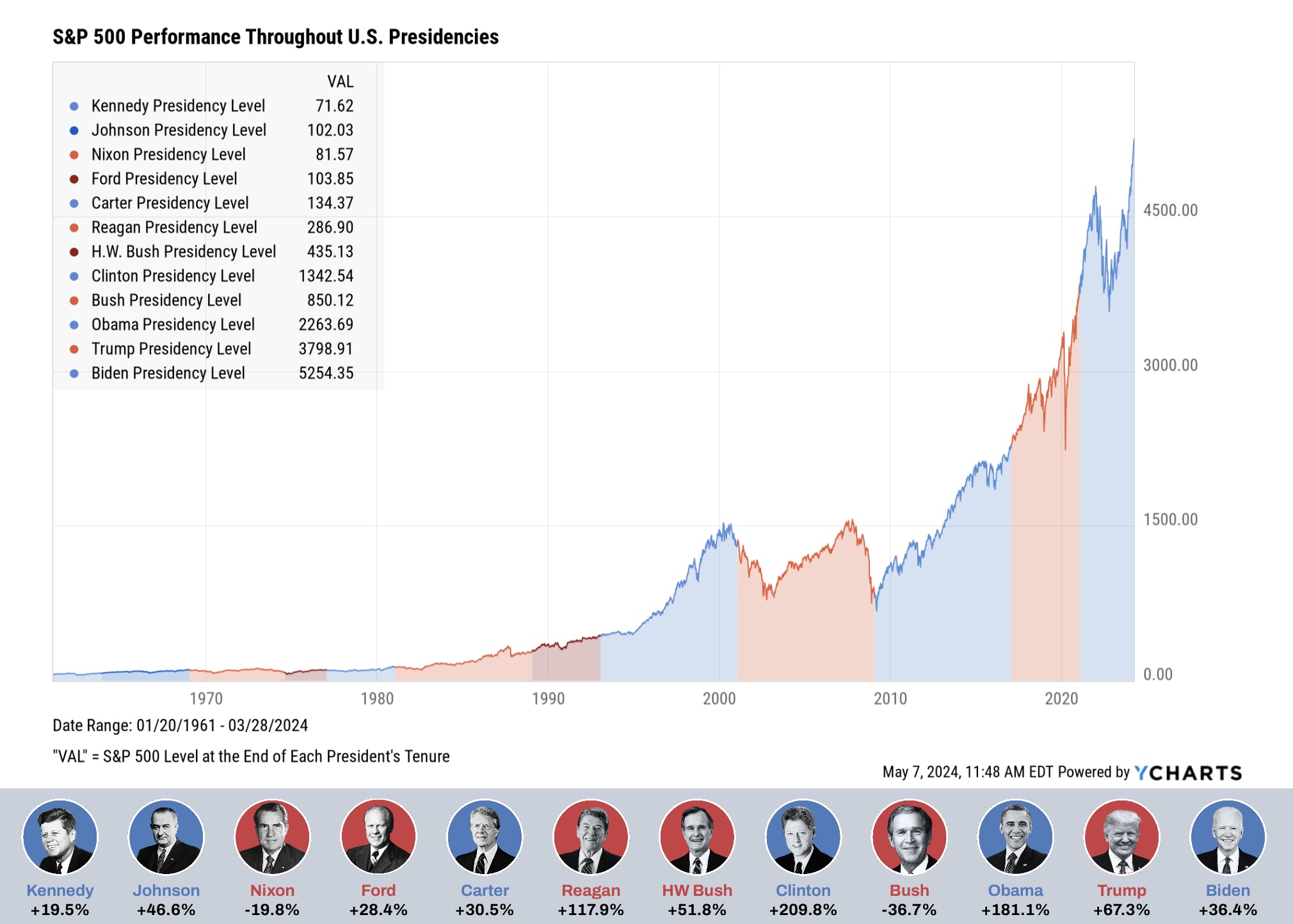
Looking beyond the Biden vs. Trump conversation to the broader Republican vs. Democrat debate, only two presidents have seen negative S&P performance during their tenure since 1961: George W. Bush, who left office in January 2009 during the Financial Crisis, and Richard Nixon.
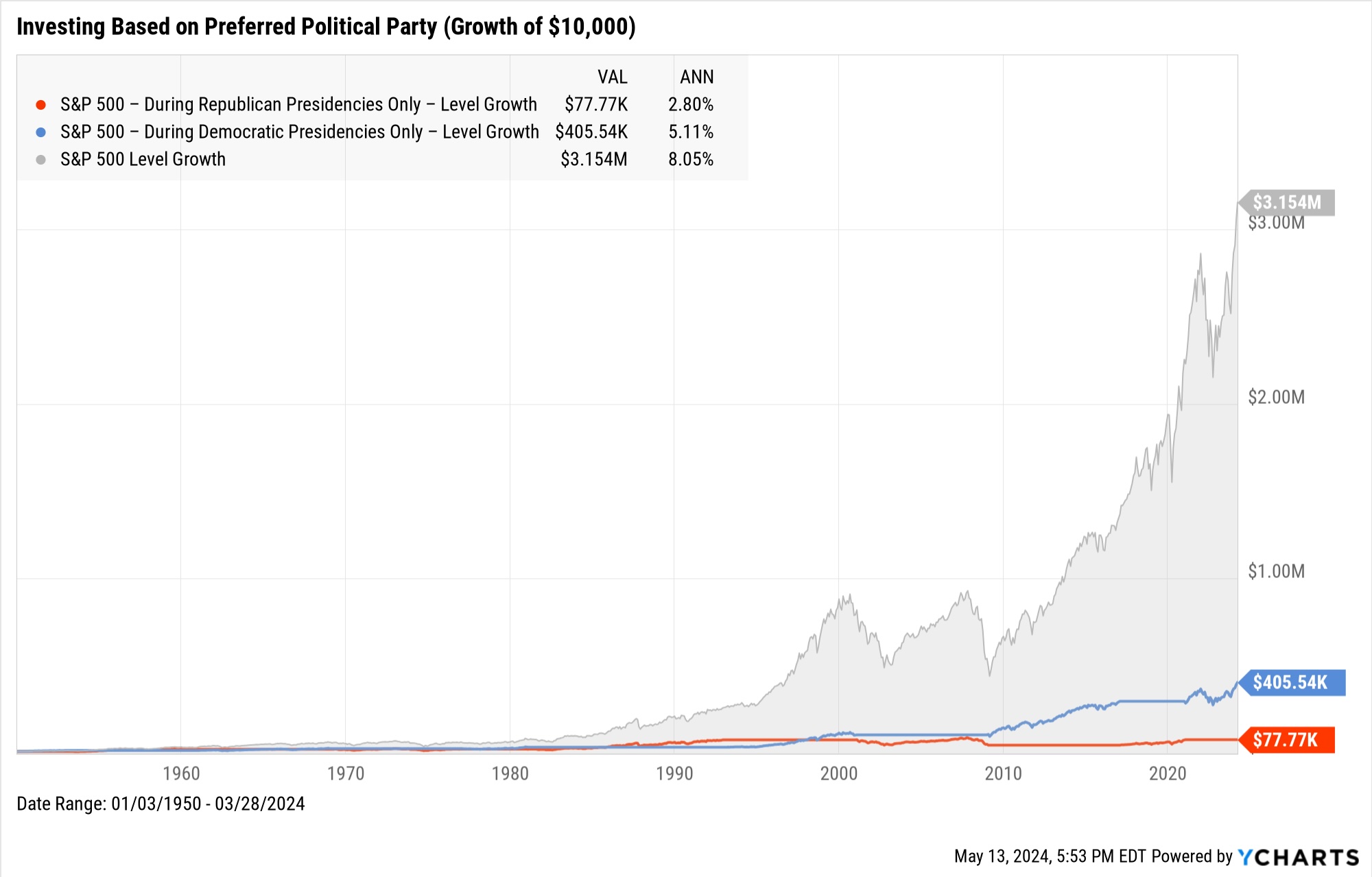
If you based your investment decisions solely on which party was in power (not recommended!), you would have seen positive returns regardless of the party. However, you would have been much better off investing regardless of the party in power.
What happens when the incumbent president wins or the challenger takes over? The only time there has been a negative market reaction is when a termed-out president is succeeded by a Democrat, regardless of which party was previously in power. From election to inauguration, Democrats have seen the best results as both challenger and incumbent, but both parties have had positive results otherwise.
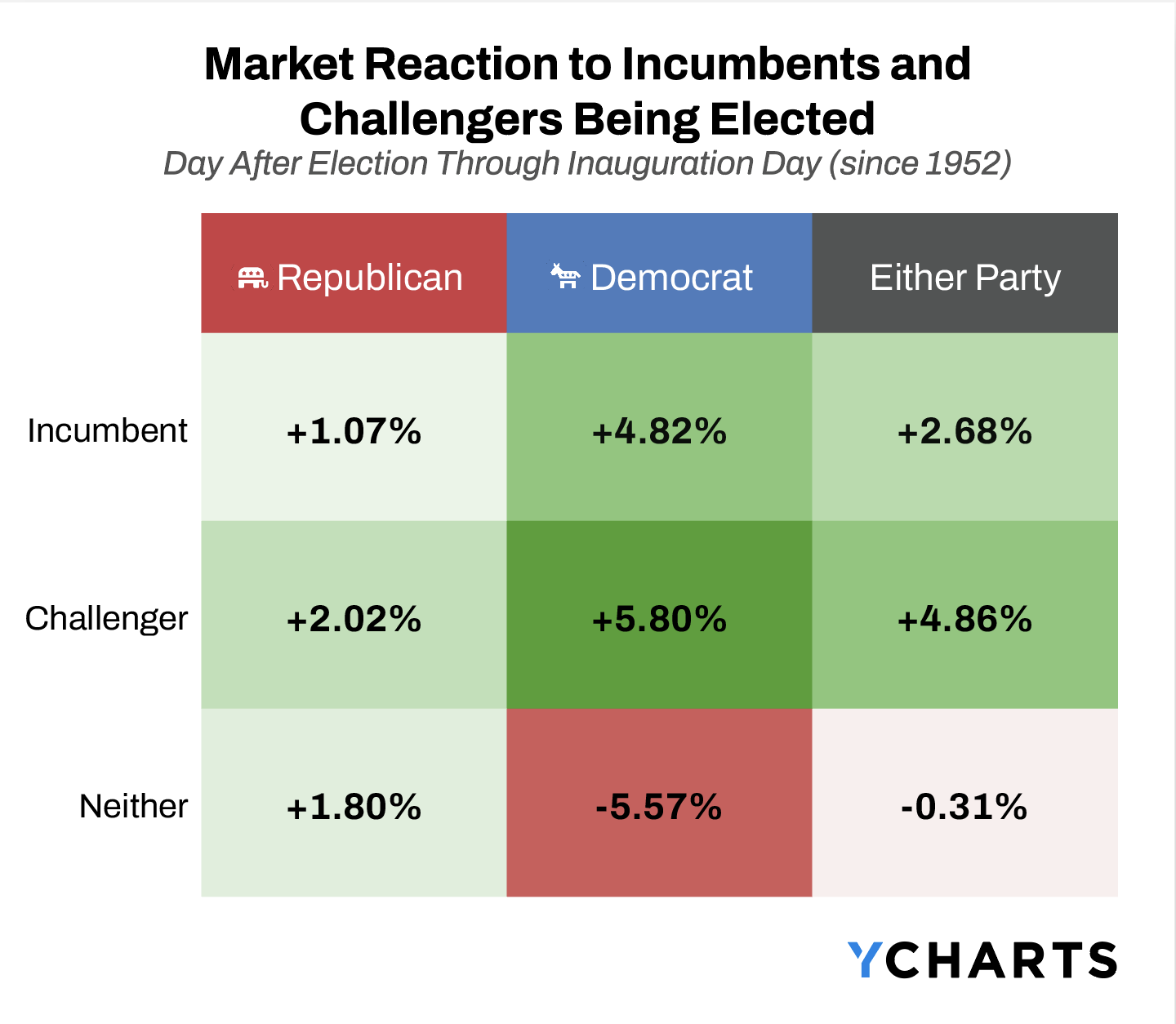
While market performance has been better under Democratic leadership, the real winning formula is trusting “the market.” Companies tend to be resilient regardless of which party is in power, and consumers typically don’t change their spending behavior based on presidents and their policies. Despite the shady mortgage practices during Bush’s presidency and various issues during Nixon’s, the most powerful person in the US often has little effect on market performance.
Our newsletter is growing beyond just our clients, largely thanks to you forwarding these to friends and family. If you know someone who would find this interesting, please send it to them and have them subscribe
here.
Until next week, Happy Investing!
Trevor
In Lighter News:
Leave it to Canadians to change the name of a holiday commemorating Queen Victoria’s birthday to how many beer they plan on consuming over the long weekend. Some would argue that it’s a reference to her birthday, which is May 24, but I don’t buy it. Canada is not the only country to celebrate this date, with parts of Scotland and the Caribbean also taking an extra day off.

In The Markets:
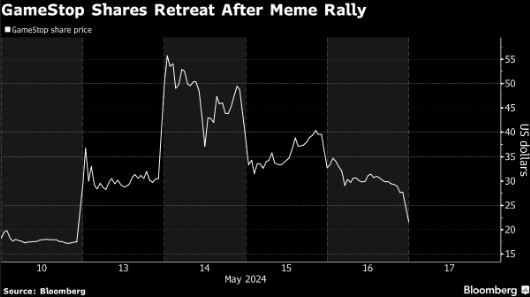
Roaring Kitty was back, which caused Game Stop and AMC stocks to surge once again. However, when Game Stop announced plans to sell as many as 45 million shares. US equities closed on an up note for the fourth consecutive week with the Dow closing above 40,000 for the first time.
Our team also made some trades in our Private Portfolios, which you can find here.