

No End in Sight
Hi, !
I hope your week is off to a wonderful start with the sun out and temperatures starting to creep higher!
Why hasn’t the Bank of Canada Cut Interest Rates Yet?
The Bank of Canada (BoC) has consistently pledged to maintain inflation between 2-3%, and as of much of 2024, this target has been met. Yet, with a plethora of mortgages set for renewal facing steep rate increases, the question arises: isn’t it time to reconsider these “historically” high interest rates?
This past Wednesday, the BoC chose to maintain the benchmark rate at 5%, though it hinted at a potential reduction come June. So, what’s the rationale for keeping rates elevated for such an extended period?
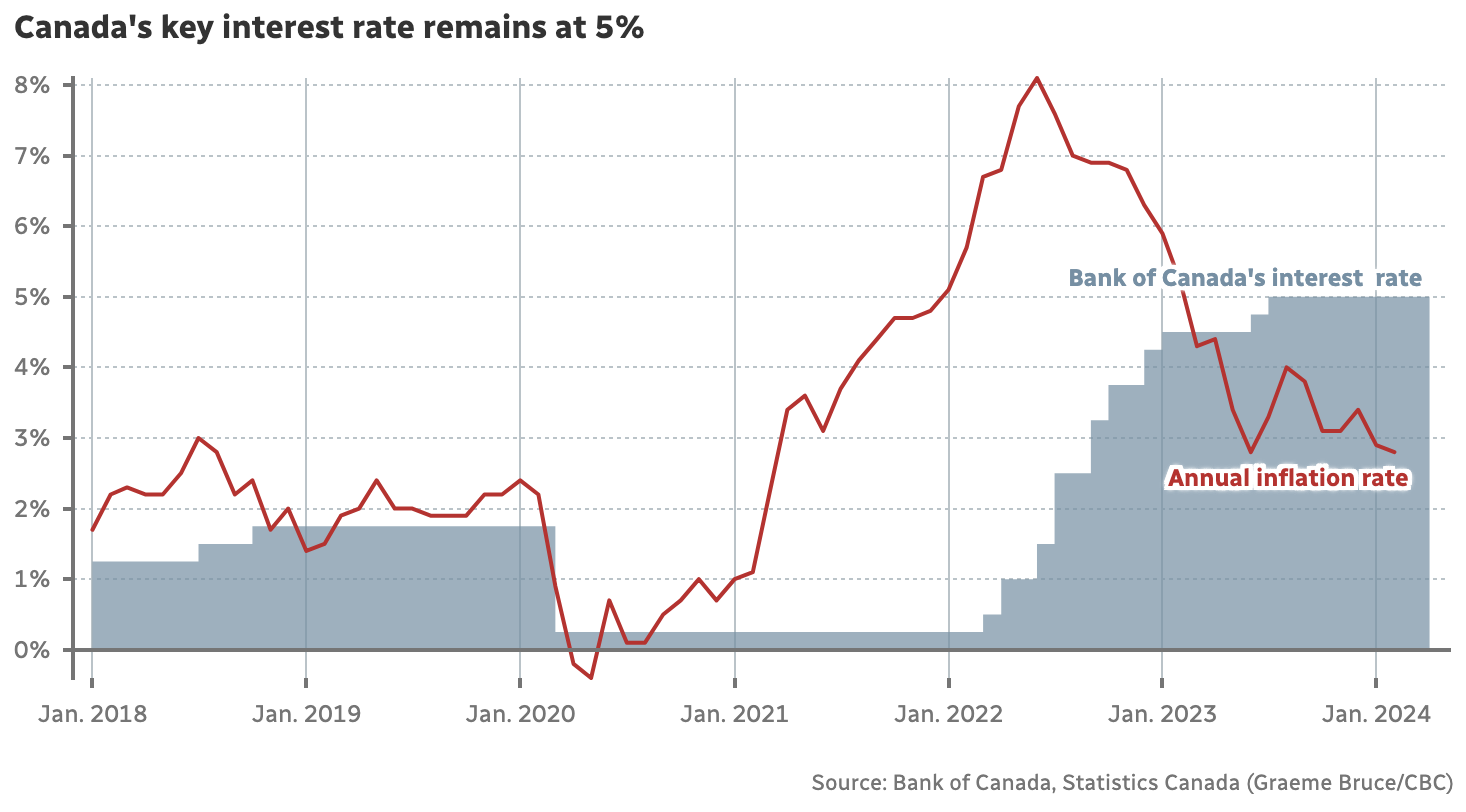
Our longstanding theory suggests that high rates are here to stay for a while, and here’s why:

**The First Cut is the Deepest: **Borrowing a line from Rod Stewart, the BoC is wary that the first rate cut might be the most impactful, signaling a significant policy shift with broader implications beyond just the rate decrease.
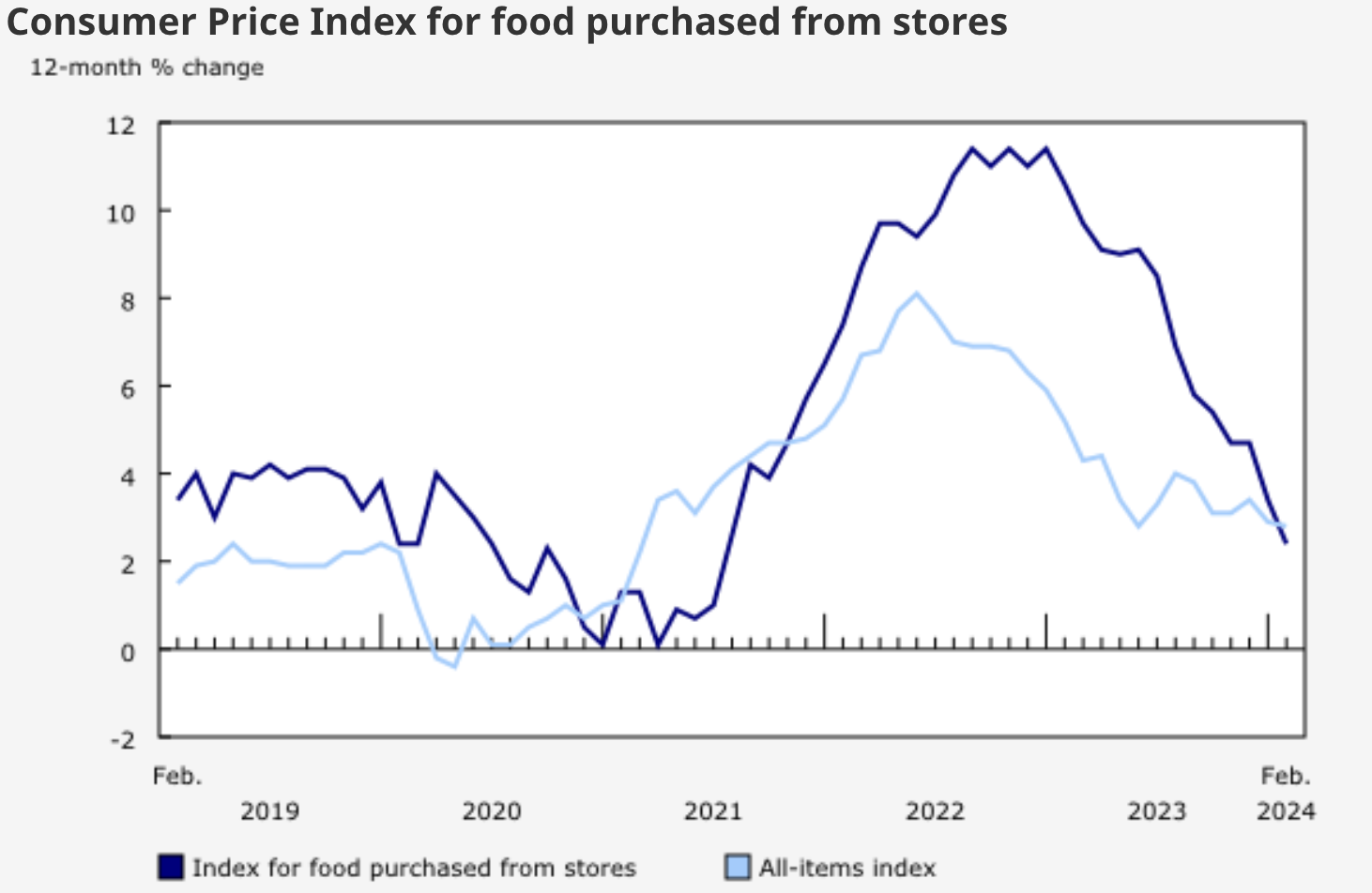
**Persistent High Costs Despite Falling Food Inflation: **While food inflation has notably decreased, grocery prices remain high. There’s considerable public and governmental pressure on retailers to lower prices. The BoC is concerned that reducing interest rates might send a premature signal that inflationary pressures have fully abated, potentially easing off the pressure on price reductions.
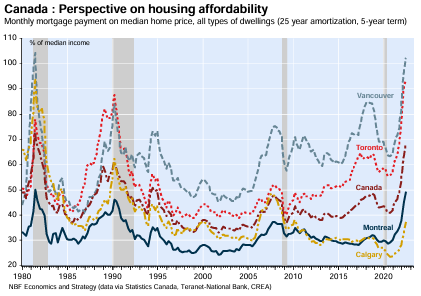
The Housing Market Balancing Act: Rental vacancies are at a historic low nationwide at 1.5%, with average rents climbing 8% in 2023. Those renewing mortgages are bracing for higher rates. While lower BoC rates might suggest a decrease in mortgage and rental prices, the reality isn’t so straightforward. Property costs significantly influence housing affordability, not just mortgage expenses. A rate reduction could potentially trigger another buying spree, pushing housing prices to even less affordable levels. Despite a cut in temporary resident applications, the federal government plans to welcome 500,000 new residents annually in 2025 and 2026, exacerbating the housing shortage.
**Government Spending Concerns: **Both federal and provincial governments, including Ontario, struggle to control spending, which injects more money into the economy, leading to inflationary pressures. The upcoming federal budget is anticipated to reveal a deficit of $46.8 billion—significantly higher than the previous forecast of $40.1 billion. Ontario is also facing a record $9.8 billion deficit for the 2024-25 fiscal year.
With the BoC and government policies not fully aligned in their approach to managing inflation and ongoing concerns about the housing market, the “higher for longer” interest rate scenario seems increasingly likely. While there were subtle hints at potential rate cuts, significant reductions seem improbable in the near term.
Until next week, Happy Investing!
Trevor
P.S. Check out our Quarterly Market Outlook here.
P.S.S. I hope you were in one of the areas that wasn’t fully covered in cloud. The clouds parted at just the right time for my family to get a few glimpses of the eclipse!