
It’s Spring!
Time for Our Economic Update
Happy Monday, !
Are you tired of hearing about interest rates, inflation, and the looming recession? As we welcome in spring with a snow storm, these key economic themes keep plowing on. In October, 2022, Bloomberg predicted a 100% chance of recession in 2023 (here), yet here we are, finishing Q1 of 2024 without a recession - though the topics persist.

This week, we’ll delve into the current economic landscape and shed some light on what’s on the horizon. While the recession remains a talking point, it’s not the primary focus right now.
Every time the Fed announces its rates, like it did last week, the financial world holds its breath. This time, the US Fed opted to keep rates steady but projected three interest rate cuts in 2024, with a target of around 4.6%, down from the current 5.25% to 5.5%. This spurred a broad-based rally, with equities, gold, silver, and bitcoin all gaining.
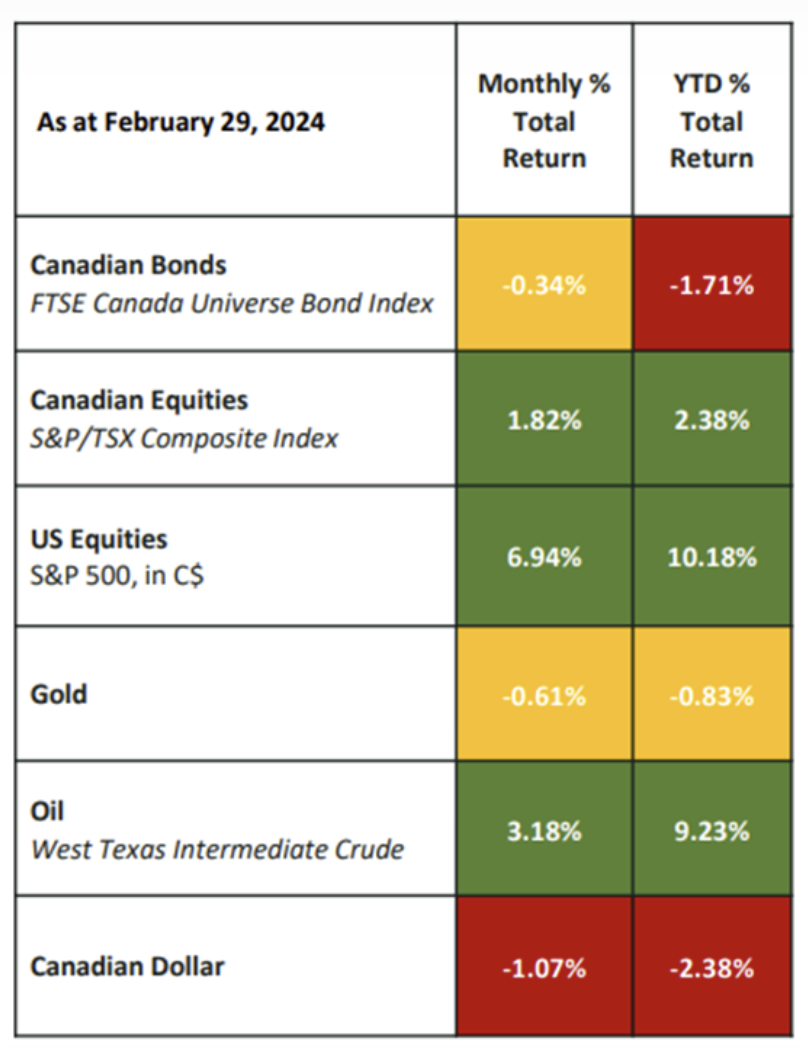
As mentioned in previous newsletters, inflation remains stubborn in Canada, and we expect interest rates to stay elevated longer. Rate cuts are likely to be slower and fewer than initially expected, with inflation hovering around 2.5-3%. However, there has been some relief in sectors like energy, food, airfare, and clothing, which is a positive development.
Canada and the US are showing distinct economic trends, with the US increasing its GDP forecast from 1.4% to 2.1%, while Canada’s recent CPI numbers have dropped from an expected 3.4% to 2.9%. This suggests a slowdown in the Canadian economy, with both consumers and businesses cutting back on spending. Canadian equities have not performed as well as US equities, highlighting the importance of diversification.
For many in the private markets, 2023 was sluggish due to rising interest rates. However, March numbers indicate a resurgence in M&A activity, driven by economic resilience and pent-up demand. There is optimism for a significant increase in IPOs in 2024, with PwC expecting “the M&A markets to embark on a new upward trajectory, with a steady increase in activity as the year progresses”.
As we navigate through inflation, interest rate uncertainties, and the prospect of a recession, there are numerous opportunities for those who are vigilant. This new economic environment rewards active investment management. While many financial institutions claim to be “active managers,” their rigid investment strategies may not be in your best interest.
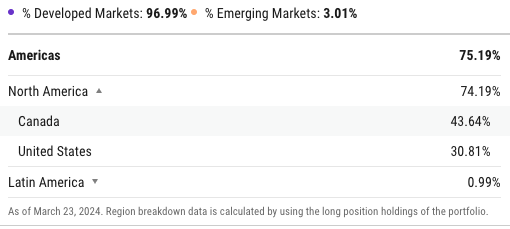
Take, for instance, a high net worth portfolio (above), exclusive to this company, heavily weighted towards Canadian equities. A 10-year analysis shows that US holdings in this fund have outperformed Canadian holdings by more than double annually. I would ask myself why is it like set up like this? It’s essential to assess if your investment strategy aligns with your goals and not blindly follow institutional mandates that might leave you at a disadvantage.
With more information and options available, it’s crucial to question why your advisor is investing your money as they are. While there’s a case for owning great Canadian companies, it must align with your objectives, and likely not at a 30%+ allocation.
Until next week, Happy Investing!
Trevor
- Last week I said self employed business owners have until April 15 pay any amount outstanding. This was incorrect, they have until April 30.
** We’re working on getting you more information on Bare Trusts. If you think you might have one, the rules have changed, so let’s talk.