

Have You Mapped Your Shopping Route Yet?
Hi, ! It’s the biggest shopping weekend of the year - are you ready?
Black Friday dates back to the 1950s and 60s when utter chaos would ensue in Philadelphia after American Thanksgiving. Hordes of shoppers and tourists would flood the city in advance of the Army-Navy football game, causing an absolute mess trying to deal with the crowds and traffic.
Black Friday really started to take off in the 70s and 80s when retailers would mark this as the beginning of the period in which they were no longer “in the red” (operating at a loss) and instead “in the black” (operating at a profit). Of course, today, it’s taken on a whole life of its own with fights routinely breaking out in Walmarts and Targets across the US.
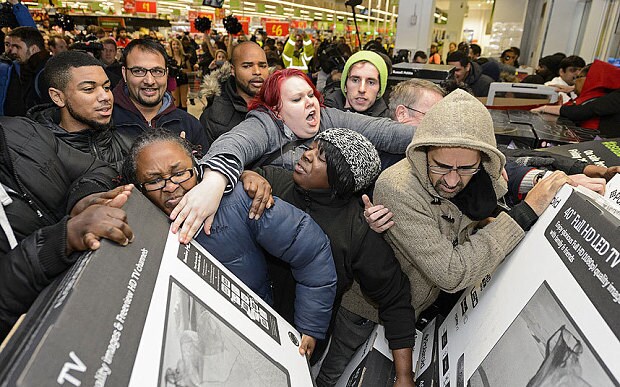
Black Friday has recently started to mirror the broader economic, social, and technological trends. I started to wonder if there was any link between the sales numbers for this crazy weekend and market performance. I went back as far as 2008 to look at Black Friday Sales and the Stock Market Response.
It would make sense that if we’re investing in companies and they have good sales, we should see an increase in their value, especially over the short term. The Keynesian assumption is that spending drives economic activity, so this should be a leading indicator for us, right?
But could the sales numbers really predict what was going to happen for the rest of the year?
After doing much research on this myself, I found an expert who did just this and he looked at a 114-year sample, which was more than I was willing to do. He is a also a doctor of finance, has published a couple of books and appears to teach postgraduate courses in every finance area imaginable. I quickly abandoned my research and focused on the University of Kent’s findings.
What they found surprised me. There were occasional times where Black Friday had temporary effects on the market, but overall it was a non-factor.
In 2011, the DJIA increased by almost 300 points on the following Monday after better than anticipated sales numbers. Conversely, if we look to 2008 (my research) the Black Friday numbers were robust, eclipsing 2007’s numbers, yet the stock market continued it’s volatility to end the year.
When I looked at the comparisons year-by-year it was pretty obvious that we shouldn’t put too much stock into the Black Friday or Cyber Monday sales numbers as there were times in which a short rally occurred and others that it appeared to have no impact at all.
In recent years the market performed exactly the opposite of the Friday and Monday numbers - if the numbers were up on those days, stocks were typically down till the end of the year and visa versa.
One off events like a big shopping weekend often tend to get sensationalized in the media and often we can get caught in the hype, making long-term decisions on events that don’t have any impact on our goals. As I discussed a couple weeks ago, our approach is very strategic and we tend to avoid chasing returns. Instead we have a plan that we re-evaluate systematically and follow that plan to give you the best returns.
For next year’s Black Friday newsletter I may take a look to see if there is a correlation between how many fights occur and stock market performance - if nothing else it might be some interesting reading!
Have a great weekend and happy shopping,
Trevor
PS New video on the 2 blind spots the rich make when it comes to retirement. Check out this and most of our videos on our website here! Also like and follow our social pages (below) to stay up to date on anything that’s happening that you need to know!