

What’s Up With Private Credit?
Hi , is it the weekend yet?
I hope your week has been fantastic and you have some exciting plans for the weekend!
Historically, most headlines about investing are on the “stock market”. Since March 2, 2022 we have started hearing more and more about fixed income, bonds, and credit. For most of us, this part of our portfolio has been largely been to try and offset some of the volatility or simply put, to smooth out the ups and downs. With interest rates being as low as they have, for as long as they were, the fixed income part of our portfolio has been at a loss or at the best has made minimal gains.
We saw throughout 2022 how volatile the bond market can actually be (see below if you’ve blocked it out of your mind). With interest rates going up there has been a refocus on this type of investment. Last year we saw the Bloomberg Global Aggregate have a loss of -16.25% and many of the fixed income funds dragged down already stressed portfolios - and some by double digits.
Some Fixed Income Funds and their performance during 2022.
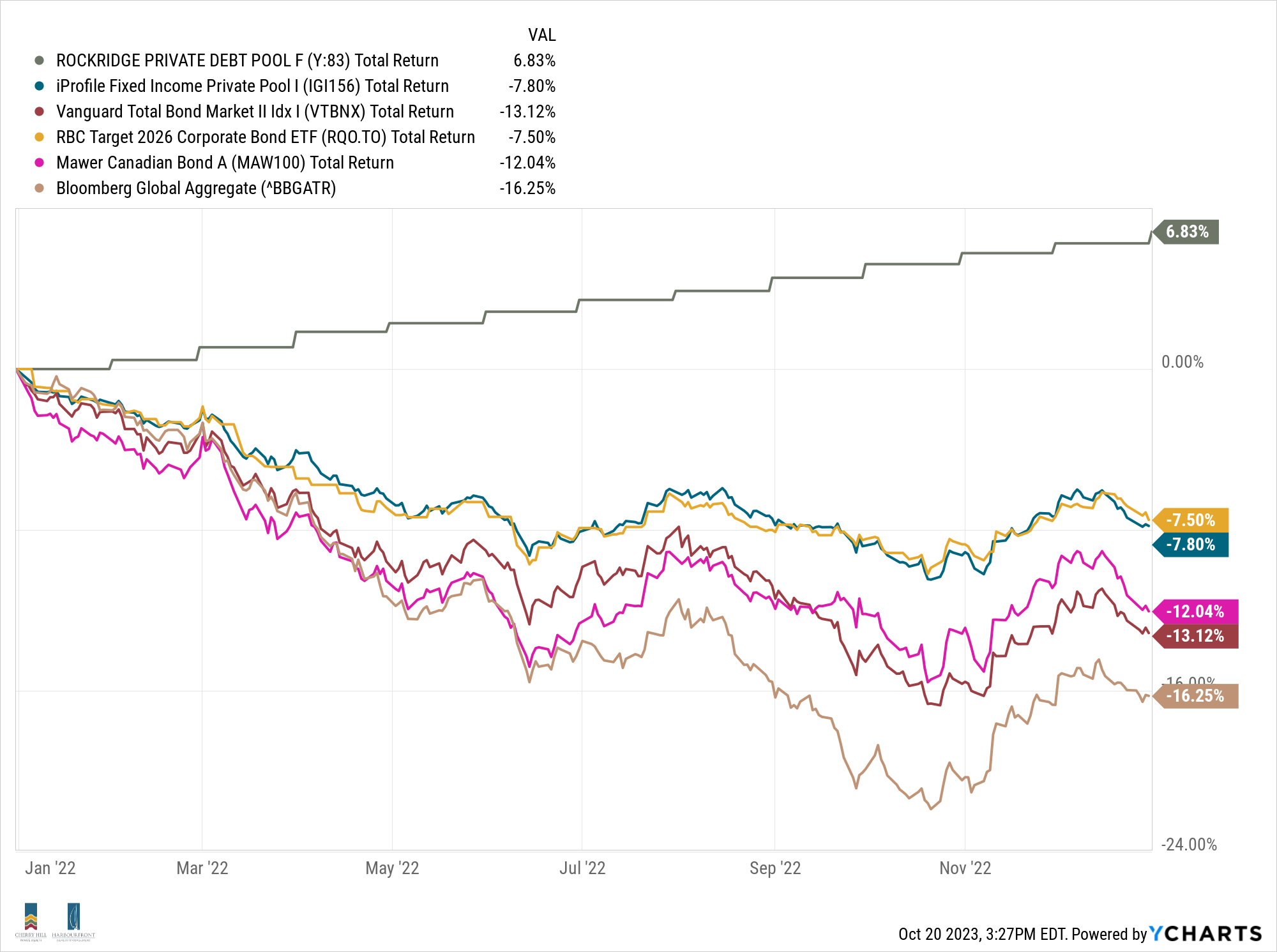
In Balanced Portfolios the fixed income portion can account for around 40% of your entire holdings. If we don’t get this right, this could be a huge drain on an otherwise good portfolio.
If you read the Wall Street Journal (here), Bloomberg (here), or many other financial publications you might have heard more and more talk about Private Credit. Since the financial crisis back in 2008-2009 there has been a growing interest (no pun intended) in this asset class, but it wasn’t until the collapses of Credit Suisse, Silicon Valley Bank amongst others that the headwinds really started picking up.
Private Credit is essentially just any non-bank lending that is not traded on public markets. Some might refer to it as direct lending.
So why do you need to know about this?
With a tightening fiscal policy, especially in the US, as well as more stringent lending policies, companies such as Cole Haan (one of my favourite shoe companies!), and many software companies are looking to payout major lenders like JP Morgan and Morgan Stanley and move to a direct lending model (increasing from $726 billion in 2018 to $1.5 trillion in 2022). There are lots of reasons for this, which I won’t bore you with here (you can check out my video that should be available over the weekend if you want to dive into it deeper).
With a movement towards private lending, more stable returns, as well as greater upside, this is an area that many of the major companies like BlackRock are starting to explore. There is now a rush for many fund companies to try and compete in this world as they are starting to see a movement away from “traditional” lending.
If you want to discuss how to make sure you have exposure to this asset class, please click on the link below and let’s chat!
Have a great weekend,
Trevor
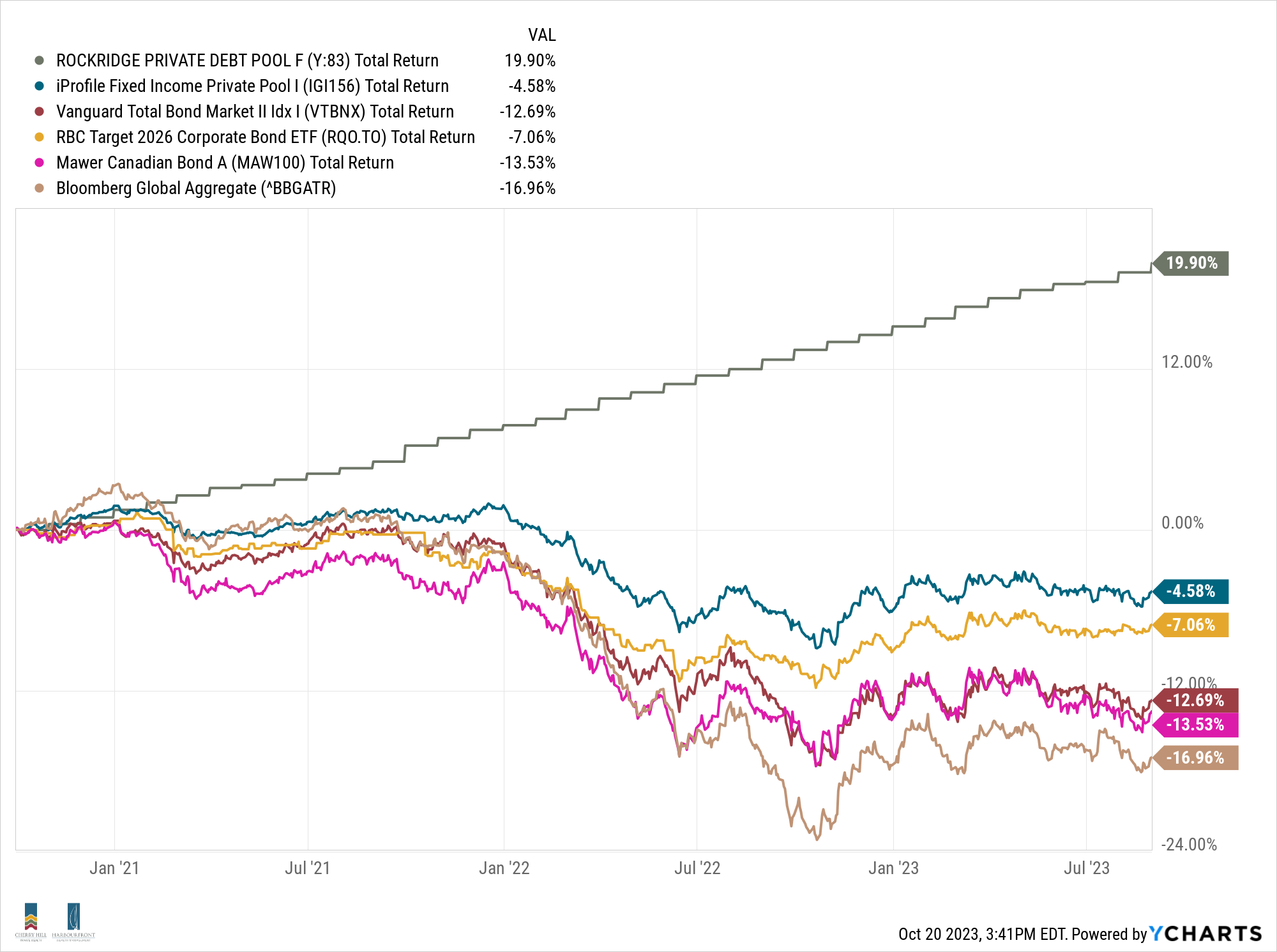
Some Fixed Income Funds and their 3-year performance.
PS. Check out the new Wealth Building video (here) or on our Facebook page!